Learning how to grow and care for lavender turns any garden into a fragrant retreat. This Mediterranean herb loves full sun and well-drained soil. It rewards you with purple blooms and a calming scent. Gardeners in the USA, UK, Canada, and Australia can all grow it. The basics stay the same everywhere. This guide covers planting, watering, pruning, and winter care. You’ll learn fixes for mild, moderate, and severe problems. Global measurements keep every step clear.
Before You Start: Your Must-Have Checklist
Gather these items before you plant lavender. Having everything ready saves time and prevents frustration.
- Lavender plant or seeds (English lavender works in most climates)
- Well-draining soil mix (add sand or gravel to heavy clay)
- Garden trowel or hand fork
- Pruning shears (clean and sharp)
- Mulch (gravel or bark chips, kept away from the stem)
- Watering can (for deep, infrequent watering)
- pH test kit (target 6.5 to 7.5)
- Frost protection (evergreen boughs or horticultural fleece for cold zones)
- Gloves and eye protection (for pruning and soil work)
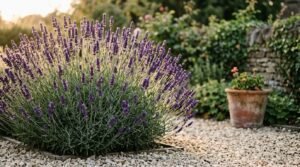
Lavender Care at a Glance (Quick Table)
Use this table for instant reference. It sums up lavender’s core needs across all growing regions.
| Care Factor | Requirement | Details |
|---|---|---|
| Light | Full sun | 6-8 hours daily minimum |
| Water | Low | Let soil dry between waterings |
| Soil | Well-drained | pH 6.5-7.5, sandy or gravelly |
| Feeding | Minimal | Compost at planting; light fertiliser in spring |
| Hardiness | Zones 5-9 | Varies by variety; English most cold-hardy |
| Spacing | 12-18 inches (30-45 cm) | Good air circulation prevents disease |
| Pruning | After flowering | Remove up to one-third of green growth |
The Root Cause: Why Lavender Is Different
Lavender is not like most garden plants. It evolved in the rocky, sun-baked hills of the Mediterranean. Summers there are hot and dry. Winters are cool and moist. The soil is poor, stony, and drains water almost instantly.
This history shapes every care requirement. Lavender roots need oxygen. When soil stays wet, roots suffocate and rot. The plant also makes aromatic oils called linalool and linalyl acetate. These compounds give lavender its famous scent. They also help repel certain insects.
Why does lavender hate wet feet? Lavender roots are adapted to dry, aerated soil. Constant moisture blocks oxygen flow. Fungal pathogens like Phytophthora species then multiply fast. Root rot follows. This is why drainage matters more than any other factor.
Light and Placement
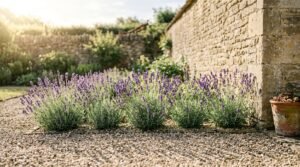
How much sun does lavender need? Lavender needs at least 6 to 8 hours of direct sunlight every day. Full sun produces the strongest fragrance and the most blooms. Shade causes weak, spindly growth and few flowers.
Where should you plant lavender? Choose the sunniest spot in your garden. A south or west-facing position works best in the Northern Hemisphere. In the Southern Hemisphere, a north-facing spot is ideal. Lavender also needs good air circulation. Breezy locations reduce humidity around the foliage. This prevents fungal problems.
Lavender Flower
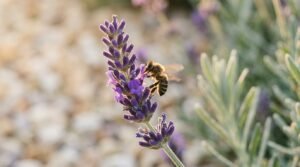
Lavender flowers form on new growth. The plant produces spikes of small blooms in purple, blue, pink, and white. Flowering typically runs from late spring through summer. English lavender blooms earlier than French varieties. Deadheading spent flowers encourages a second flush in some varieties.
Watering and Humidity
How often should you water lavender? Water deeply but infrequently. Let the top 2 inches (5 cm) of soil dry completely between waterings. Established lavender is drought-tolerant. It may need water only every two to three weeks in dry conditions.
Important warning: Overwatering is the number one problem for lavender. Signs of overwatering include yellowing lower leaves, drooping stems, and soft, dark roots. If you see these signs, stop watering right away. Improve drainage or move the plant to a drier spot.
Types of Flowers
Lavender belongs to the mint family (Lamiaceae). Its flowers attract bees, butterflies, and moths. Companion plants that share its water needs include rosemary, thyme, and sage. Avoid pairing lavender with moisture-loving plants like hydrangeas. If you want to expand your garden beyond lavender, explore this flower care and growing guide for more ideas.
Seasonal Adjustments
Watering needs change with the seasons. In spring, water when new growth appears. In summer, water during extended dry spells. In autumn, cut back watering as growth slows. In winter, water only if the soil is completely dry and the temperature is above freezing.
Soil, Potting and Feeding
What is the best soil for lavender? Lavender needs well-drained, sandy or gravelly soil with a pH between 6.5 and 7.5. Heavy clay soil traps moisture and causes root rot. If your garden has clay, amend it generously.
How to improve clay soil for lavender: Mix in coarse sand, horticultural grit, or small gravel. Aim for a ratio of one part grit to two parts native soil. Or plant lavender in raised beds or containers. This gives you full control over drainage.
Cestrum Nocturnum
Cestrum nocturnum (night-blooming jasmine) is sometimes confused with lavender because of its fragrance. But these plants have very different needs. Cestrum nocturnum prefers moist soil and partial shade. Lavender needs dry soil and full sun. Do not treat them the same.
Fertiliser Schedule
Does lavender need fertiliser? Lavender is a light feeder. Too much nitrogen produces leafy growth at the expense of flowers. Mix compost into the soil at planting time. In early spring, apply a balanced, slow-release fertiliser at half the recommended rate. Avoid feeding after midsummer. Late feeding encourages tender growth that winter cold can damage.
Pruning, Propagation and Repotting
Pruning Lavender
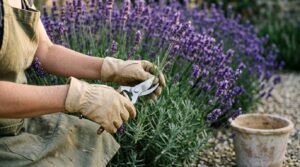
When should you prune lavender? The best time is right after flowering. This is usually late summer to early autumn. In warm climates, prune in autumn. In cooler climates, wait until early spring.
Step-by-step pruning process:
- Gather clean, sharp pruning shears. Wipe blades with rubbing alcohol before and after use.
- Identify the current season’s green growth. Do not cut into the old, woody stems. Woody stems may not regrow.
- Remove spent flower spikes. Cut back to the first set of leaves below the flower head.
- Shape the plant into a tidy mound. Remove up to one-third of the green growth. This encourages bushy growth.
- Leave at least 2 inches (5 cm) of green growth on every stem. Cutting too low can prevent regrowth.
- Dispose of cuttings. Do not compost diseased material.
Lavender Plant Propagation
How do you propagate lavender? Cuttings are the most reliable method. Take softwood cuttings in late spring or early summer.
Step-by-step propagation from cuttings:
- Choose a healthy, non-flowering stem. It should be 3 to 4 inches (8-10 cm) long.
- Cut just below a leaf node at a 45-degree angle.
- Strip the lower leaves from the bottom half of the cutting.
- Dip the cut end in rooting hormone (optional but improves success).
- Insert the cutting into a pot filled with well-draining seed-starting mix.
- Water lightly and cover with a clear plastic bag to maintain humidity.
- Place in bright, indirect light. Roots form in 4 to 6 weeks.
- Transplant when new growth appears.
Propagation success rates: Softwood cuttings root at 60-80% success. Seeds germinate at 30-50% and take 2-4 weeks. Cuttings produce identical plants. Seeds may produce variations.
Repotting Lavender
Container-grown lavender needs repotting every 1 to 2 years. Choose a pot only 1 to 2 inches (2.5-5 cm) larger than the current one. Use a gritty, well-draining potting mix. Repot in early spring before new growth begins. Trim any circling roots before replanting.
When you handle lavender essential oil during pruning, protect your clothes. Accidental oil drips can leave marks. Learn how to remove oil stains from clothes before you start working.
Method Variations by Severity
Mild Problems: Sparse Blooms, Slow Growth
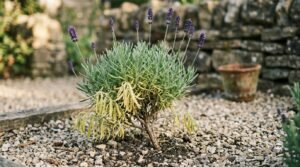
Symptoms: Few flowers, pale foliage, slow growth.
Solution: Increase sunlight exposure. Move the plant to a spot with 8+ hours of direct sun. Apply a light dose of balanced fertiliser in early spring. Check soil pH and adjust if below 6.5. Add lime to raise pH.
Moderate Problems: Yellowing Leaves, Wilting
Symptoms: Yellow lower leaves, drooping stems, stunted growth.
Solution: Check soil moisture right away. If the soil feels wet, stop watering. Improve drainage by adding grit to the top 2 inches (5 cm) of soil. Remove affected leaves. Let the plant dry out completely. Water only when the top 2 inches (5 cm) of soil are dry.
Severe Problems: Root Rot, Plant Collapse
Symptoms: Soft, black roots; foul smell; entire plant collapses.
Solution: Root rot is often irreversible. Remove the plant from the soil. Examine the roots. Cut away any soft, black, or slimy roots with sterilised shears. If all roots are affected, discard the plant. Do not compost it. Improve drainage in the planting site before replanting. Consider growing in a raised bed or container instead.
Step-by-step root rot rescue:
- Dig up the plant carefully with a garden fork.
- Wash the roots with clean water to remove soil.
- Trim all affected roots back to firm, white tissue.
- Soak the remaining roots in a fungicide solution labelled for root rot.
- Replant in fresh, well-draining soil in a new location.
- Water sparingly and monitor for recovery over 4-6 weeks.
Surface and Material Specifics
Treating Lavender in Ground Beds
In-ground lavender needs soil prep before planting. Dig a hole twice the width of the root ball. Mix native soil with grit at a 2:1 ratio. Plant with the crown 1 inch (2.5 cm) above the soil line. This prevents water from pooling around the stem. Apply a gravel mulch around the plant. Keep mulch 2 inches (5 cm) away from the stem.
Treating Lavender in Containers
Container lavender dries out faster than in-ground plants. Use a terracotta or unglazed ceramic pot. These materials wick moisture away from the soil. The pot must have drainage holes. Use a cactus or succulent potting mix. Add extra perlite for drainage. Water container lavender when the top 1 inch (2.5 cm) of soil is dry. In hot weather, this may mean watering every 2-3 days.
Treating Lavender on Slopes and Rocky Ground
Slopes offer natural drainage. This is ideal for lavender. Plant on the upper part of the slope. This prevents water from collecting around the roots. Rocky ground provides excellent drainage. Add compost to fill gaps between rocks. Lavender thrives in these conditions.
Indoor Lavender Care
Can lavender be grown indoors? Yes, but it needs specific conditions. Indoor lavender needs 3 to 4 hours of direct sunlight minimum. A south-facing window is best. Use a grow light if natural light is not enough. Keep temperatures between 50-55°F (10-13°C) at night and 70°F (21°C) during the day. Water when the top 1 inch (2.5 cm) of soil is dry. Provide good air circulation but avoid direct heat vents. Indoor lavender is more prone to whiteflies and spider mites. Inspect leaves weekly.
Many people place dried lavender sachets near bedding for a fresh scent. If you do this, keep your mattress clean too. Learn how to clean a mattress to keep your bedroom fresh and allergen-free.
Common Problems and Fixes
Sundew
Sundew is not a problem for lavender. Sundew (Drosera species) is a carnivorous plant that grows in boggy, acidic conditions. These are the opposite of lavender’s needs. If you see sundew near your lavender, the soil is too wet. This is a warning sign for root rot.
If a lavender oil bottle tips over on your carpet, act fast. Blot the spill and treat it right away. Here’s how to remove stains from carpet using simple household items.
Pests to Watch For
Aphids: Small, soft-bodied insects that cluster on new growth. They secrete honeydew, which attracts ants. Control aphids with a strong spray of water. Repeat every few days. Insecticidal soap also works.
Whiteflies: Tiny white insects that fly up when the plant is disturbed. They feed on leaf sap. Yellow sticky traps reduce populations. Neem oil spray controls heavy infestations.
Spider mites: Tiny pests that cause stippled, yellowing leaves. They thrive in dry, indoor conditions. Increase humidity around the plant. Spray with insecticidal soap.
Four-lined plant bugs: These pests cause dark spots on leaves. Handpick them early in the morning. Row covers prevent access during peak season.
What NOT to Do: Common Mistakes
Mistake 1: Overwatering. Lavender is drought-tolerant. Constant moisture damages roots faster than drought. Water only when the soil is dry.
Mistake 2: Planting in heavy clay. Clay soil holds water. Lavender roots suffocate and rot. Amend with grit or plant in raised beds.
Mistake 3: Cutting into old wood. Lavender does not regrow from old, woody stems. Always leave green growth on every stem when pruning.
Mistake 4: Using rich, nitrogen-heavy fertiliser. Excess nitrogen produces leafy growth and few flowers. Lavender thrives in poor soil. Feed sparingly.
Mistake 5: Planting in shade. Lavender needs full sun. Shade causes weak growth and raises disease risk.
Mistake 6: Mulching against the stem. Moist mulch against the stem causes crown rot. Keep mulch 2 inches (5 cm) away from the plant base.
Mistake 7: Pruning too late in autumn. Late pruning stimulates tender growth that frost damages. Finish pruning by early September in cold climates.
Toxicity, Pets and Safety
Is lavender harmful to pets? The ASPCA lists lavender as harmful to cats and dogs when ingested. The plant contains linalool and linalyl acetate. Cats lack the enzymes to process these compounds. Dogs may experience mild symptoms. Symptoms include nausea, vomiting, and loss of appetite.
Lavender essential oil is more concentrated. Never apply undiluted essential oil to pets. Cats are especially sensitive to essential oils. Keep diffusers away from cats. Contact your veterinarian if you suspect your pet has eaten lavender.
If your pet has an accident on your bed, act quickly. Learn how to get pee out of a mattress to remove odors and stains effectively.
Is lavender safe for children? Lavender plants are not harmful to children. But children should not eat the plant. Supervise young children in the garden. Lavender essential oil should be diluted before topical use on children.
Safety warnings for handling: Wear gloves when pruning large amounts of lavender. The aromatic oils can cause skin irritation in sensitive people. Work in a well-ventilated area when handling dried lavender. Avoid eye contact with essential oils.
Long-Term Prevention Guide
Daily habits: Check soil moisture before watering. Water only when the top 2 inches (5 cm) of soil are dry. Remove fallen leaves and debris from around the plant base.
Weekly tasks: Inspect leaves for pests. Look for yellowing, spots, or sticky residue. Remove any affected leaves right away. Check container drainage holes for blockages.
Monthly maintenance: Test soil pH every 2-3 months. Adjust with lime or sulphur as needed. Check mulch depth. Replenish gravel mulch if it has thinned.
Seasonal routines:
- Spring: Prune lightly to shape. Apply compost around the plant base. Begin watering when new growth appears.
- Summer: Deadhead spent flowers to encourage repeat blooms. Water during extended dry spells. Harvest flowers for drying.
- Autumn: Complete major pruning. Reduce watering as growth slows. Apply winter mulch in cold climates.
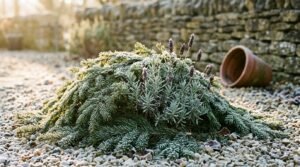
- Winter: Protect plants in zones below 5. Cover with evergreen boughs or horticultural fleece. Water only if the soil is completely dry and temperatures are above freezing.
Long-term soil health: Add organic matter to clay soil each year. This improves structure and drainage over time. Rotate container plants to fresh potting mix every 2 years. Avoid planting lavender in the same spot after a plant dies from root rot.
Dried lavender is a popular ingredient in homemade candles. But candle wax can drip onto tablecloths or cushions. If that happens, don’t panic. Learn how to remove candle wax from fabric with simple household tools.
Key Takeaways
- Lavender needs full sun (6-8 hours) and well-drained soil with pH 6.5-7.5.
- Water deeply but infrequently. Let soil dry between waterings to prevent root rot.
- Prune after flowering, removing up to one-third of green growth. Never cut old wood.
- English lavender is the hardiest and most versatile variety for global gardens.
- Lavender is harmful to cats and dogs when ingested. Keep pets away from the plant.
- Root rot is the most common killer. Improve drainage before planting.
- Container lavender needs repotting every 1-2 years with fresh, gritty mix.
Disclaimer: This content is for informational purposes only. Always consult local extension services or certified professionals for region-specific advice. Measurements are provided in both metric and imperial for global accuracy.
Before you start
Tick these off as you gather them. Nothing here is specialised, and most items are already in a basic garden kit.
0 of 9 ready · Ticks are for this visit only and aren't saved.
Don't use this on heavy clay soil without adding grit first. Lavender roots rot fast when water sits around them. Amend the planting hole or use a raised bed instead.
Common questions
How often should lavender be watered?
Water lavender deeply but infrequently. Let the top 2 inches (5 cm) of soil dry completely between waterings. Established plants in the ground may need water every 2-3 weeks in dry conditions. Container lavender dries faster and may need water every 2-3 days in summer. Overwatering is the most common cause of lavender decline.
Does lavender need full sun?
Yes, lavender needs at least 6 to 8 hours of direct sunlight daily. Full sun produces the strongest fragrance, the most blooms, and the healthiest growth. Shade causes weak, spindly stems and few flowers. Lavender also becomes more prone to fungal diseases in shaded, humid conditions.
How do you keep lavender blooming?
Deadhead spent flowers often to encourage new blooms. Prune after the first flowering period to stimulate a second flush in some varieties. Make sure the plant gets full sun and is not overfed. Too much nitrogen produces leaves instead of flowers. Water during extended dry spells but avoid constant moisture.
What is the best soil for lavender?
The best soil is well-drained, sandy or gravelly, with a pH between 6.5 and 7.5. Lavender roots need oxygen and dry conditions. Heavy clay soil traps moisture and causes root rot. Amend clay with coarse grit or plant in raised beds. Container lavender needs a cactus or succulent potting mix with extra perlite.
Can lavender be grown indoors?
Yes, lavender can grow indoors with the right conditions. It needs 3 to 4 hours of direct sunlight minimum, ideally from a south-facing window. Use a grow light if natural light is not enough. Keep temperatures between 50-55°F (10-13°C) at night and 70°F (21°C) during the day. Water when the top 1 inch (2.5 cm) of soil is dry.
How do you prune lavender?
Prune lavender right after flowering, usually in late summer. Cut back up to one-third of the green growth. Never cut into the old, woody stems, as they may not regrow. Shape the plant into a tidy mound. Leave at least 2 inches (5 cm) of green growth on every stem. In cold climates, finish pruning by early September.
Is lavender harmful to cats and dogs?
Yes, lavender is listed as harmful to cats and dogs by the ASPCA. The plant contains linalool and linalyl acetate. Cats are especially sensitive because they lack the enzymes to process these compounds. Symptoms include nausea, vomiting, and loss of appetite. Lavender essential oil is more concentrated and should never be applied to pets.
Why is my lavender turning brown?
Brown lavender usually points to root rot from overwatering or poor drainage. Other causes include fungal disease and frost damage. Check the soil moisture first. If the soil is wet, stop watering and improve drainage. If the roots are soft and black, root rot has set in. Remove affected roots and replant in well-draining soil.
How long does lavender live?
Lavender typically lives 5 to 10 years in ideal conditions. In heavy clay or overly wet soil, plants may decline within 2-3 years. Proper pruning, good drainage, and full sun extend lifespan. Old, woody plants can sometimes be rejuvenated by hard pruning in early spring, but success is not guaranteed.
Can lavender survive winter?
Yes, English lavender is hardy to zones 5-9 and survives winter with minimal protection. French and Spanish lavenders are less cold-hardy and need protection below zone 7. In cold climates, cover plants with evergreen boughs or horticultural fleece. Avoid pruning late in autumn, as tender new growth is vulnerable to frost.
What is the difference between English and French lavender?
English lavender (Lavandula angustifolia) is hardier, more fragrant, and better for culinary use. It blooms earlier and thrives in zones 5-9. French lavender (Lavandula dentata) has toothed leaves, a longer bloom season, and tolerates humidity better. It is less cold-hardy and thrives in zones 7-9. English lavender is the better choice for most gardens.
How do you propagate lavender?
Take softwood cuttings in late spring or early summer. Choose a healthy, non-flowering stem 3-4 inches (8-10 cm) long. Cut just below a leaf node. Strip the lower leaves and dip the cut end in rooting hormone. Insert into well-draining seed-starting mix. Cover with a plastic bag to maintain humidity. Roots form in 4-6 weeks. Transplant when new growth appears.
Was this article useful?
2 comments
Leave a comment
Corrections and model-specific notes are especially welcome.
Comment submitted
Thanks — it'll appear once a moderator has had a look, usually within a working day.
I planted English lavender last spring in a raised bed. It bloomed well, but the lower leaves turned yellow after a wet week. Should I cut back watering completely or just check the soil first?
ReplyThe pruning tip saved my lavender. I used to cut into the old wood and lost whole branches. Leaving green growth on every stem made a huge difference this year. The care table is handy too.
Reply