A mattress collects more than you’d think. Sweat, skin cells, the odd spilt cup of tea, sometimes worse. None of that shows up overnight, but give it a year or two and you get yellow patches, a musty smell, or both. You can sort most of it with things already in your cupboard, and none of it involves a washing machine. That last point trips people up more than anything else on this list.
What You Will Need
- Vacuum cleaner with an upholstery attachment.
- Clean white microfibre cloths or towels.
- A spray bottle.
- Baking soda.
- Distilled white vinegar.
- 3% hydrogen peroxide.
- Mild liquid dish soap, clear, non-bleach.
- Enzyme cleaner for mattress, useful for urine, blood, or anything organic.
- Soft bristle brush or an old toothbrush.
- Fan or dehumidifier.
- Waterproof mattress protector.
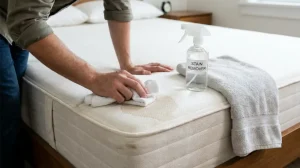
Why Mattresses End Up Looking Like This
The layers of sweat, oil, and dead skin on your mattress grow thicker each night. At first, none of this can be seen. It becomes a yellowish tint and a smell over the months that most people catch far too late when guests are on the way.
A mattress cannot be washed or soaked like a duvet can. Some outer covers come with a zipper that allows you to put it in the machine. Make sure that before you touch it with anything wet. Memory foam does not behave in the same way as a sprung mattress. It will hold on to moisture for much longer, so it is best to err on the side of less liquid rather than more.
The Core Cleaning Routine
Remove everything from the bed. To combat dust mites, run your washing machine on a hot cycle, 60°C or above.
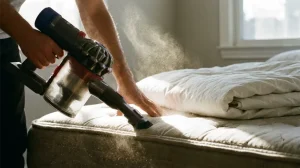
Ensure you vacuum the entire mattress with the upholstery attachment including the seams. If it’s been a while since the last one, do it twice. Remove stain using the method below, with a circular motion from the edge of the mark, to the inside.
After treating the stains, sprinkle abundantly with baking soda. If the scent has settled, allow it at least half an hour, or longer. Remove it all with a vacuum. It helps to stretch it in the direct sunlight because UV rays may help reduce dust mites and bacteria but it won’t replace an actual clean.
Only remake the bed once it’s completely dry underneath the sheets. The moid stain is not as big a headache as its source, which is damp trapped inside a mattress. If the air in the room is humid then a fan speeds up the process. Conclude utilizing a clean sheet of protective material.
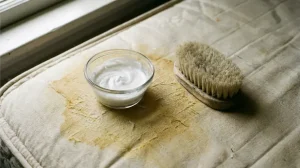
Treating Specific Stains
Every stain type behaves a little differently, so the same steps do not work for all of them.
Blood
Cold water only, never hot. Heat sets blood protein into the fibres permanently. Mix equal parts 3% hydrogen peroxide and cold water, apply to the mark, and leave for 15 minutes, then rinse with a damp cloth. Cover with baking soda and let it dry before vacuuming. Dried, older blood usually needs a thicker paste of baking soda and hydrogen peroxide left on for longer than the fresh version.
Urine
- Soak up whatever liquid you can with towels first.
- Apply an enzyme cleaner, which breaks down the compounds causing the smell rather than covering it up.
- Cover the area in baking soda and leave overnight.
- Vacuum thoroughly the next morning.
Older urine stains often need a light mist of equal parts vinegar and water first, given ten minutes to work before the baking soda goes on.
Sweat and Yellow Patches
Combine 1 cup of hydrogen peroxide, 2 tablespoons of baking soda, and a tablespoon of dish soap into a paste. Work it into the yellowed area with a soft brush. Leave for 30 to 60 minutes, a little fizzing is normal and nothing to worry about. Blot it away, then finish with a dry layer of baking soda for a few hours before vacuuming.
Worth knowing, most yellow marks come from sweat and body oil, not urine. People assume the worst when it is usually just years of ordinary use.
Food, Drink, and Everyday Spills
Blot fresh spills immediately with a dry cloth, before reaching for anything else. A few drops of dish soap in cold water handles most of these, dabbed on and then rinsed with a cloth dampened only with water. Dry it off, dust with baking soda, and vacuum once settled. Wine and coffee get harder to shift the longer they sit.
DIY Versus Commercial Options
None of these is universally best, it depends on the stain and how much you mind the faff.
| Method | Best For | Pros | Cons |
|---|---|---|---|
| Baking soda | Odours, light marks | Cheap, safe, always to hand | Slow on tougher stains |
| Vinegar and water | Urine, general smells | Natural, mildly disinfects | Strong smell while wet |
| Hydrogen peroxide paste | Yellowing, blood, sweat | Lifts colour well | Can lighten some fabrics |
| Enzyme cleaner | Urine, blood, organic stains | Breaks proteins down properly | Pricier, needs time to sit |
| Commercial spray | Fast spot jobs | Ready mixed, convenient | Chemical based |
Drying and Avoiding Mould
Damp causes more long term problems than the original stain ever does.
- Light spot clean: 2 to 4 hours with decent airflow.
- Full baking soda treatment: 4 to 8 hours, longer overnight in humid rooms.
- Heavy stain work: up to 12 hours, a fan helps here.
- Direct sunlight: 2 to 3 hours if you have the space to prop it up.
Skip bleach, ammonia, and anything solvent based. These damage the fibres and can void a warranty outright. Test any new solution on a hidden corner first. Never hose the mattress down or dunk it, foam and coils are not built for that kind of soaking.
Keeping It Clean Going Forward
- Fit a waterproof protector so spills never reach the mattress itself.
- Wash bedding weekly on a hot cycle.
- Give the mattress a quick vacuum once a month.
- Rotate it every 3 to 6 months so wear spreads evenly.
- Deal with spills the moment they happen, not the next day.
When to Call Someone In
Most of this you can handle yourself. A professional cleaner is worth calling for a smell that survives repeated attempts, a stain that will not lift no matter what you try, visible mould, or a mattress that has started sagging from broken coils. They have access to industrial extractors and enzyme treatments that go further than a spray bottle ever will.
Before you start
Tick these off as you gather them, nothing here is specialised.
0 of 6 ready · Ticks are for this visit only and aren't saved.
Memory foam mattresses that state no liquid cleaning on the manufacturer label, or any mattress still under a warranty that specifically excludes home stain treatment. If you are unsure of your mattress type, test any solution on a hidden corner first.
Common questions
Can you wash a mattress?
No, you cannot wash a mattress in a washing machine. Mattresses need cleaning in place with baking soda, vacuuming, and spot treatments. Only removable covers can go in the machine, and only if the manufacturer allows it.
How do you get stains out of a mattress?
Blot the stain, apply a mild detergent solution or a hydrogen peroxide mix, blot repeatedly, rinse with a damp cloth, then deodorise with baking soda. Match the method to the stain type for the best result.
What is the best thing to clean a mattress with?
Baking soda, white vinegar, 3% hydrogen peroxide, mild dish soap, and enzyme cleaner for mattress all work well. They lift stains and odours without any harsh chemicals.
How do you get yellow stains out of a mattress?
Mix 1 cup hydrogen peroxide, 2 tablespoons baking soda, and 1 tablespoon dish soap into a paste. Apply it to the yellow areas, leave for 30 to 60 minutes, blot, then vacuum once fully dry.
How often should you clean your mattress?
Vacuum it monthly and deep clean every 3 to 6 months. Treat spills and stains as soon as possible so they don't set in. A mattress protector cuts down how often you need to clean.
Does baking soda clean a mattress?
Yes, baking soda deodorises and lifts light stains from a mattress. Sprinkle it on generously, leave for 30 minutes to overnight, then vacuum thoroughly. It's safe for most mattress types.
Was this article useful?