The best electric pressure washers turn a weekend chore into a satisfying before and after. They strip grime from driveways, mildew from siding, and mud from cars. But the market is crowded with lookalike machines. We spent 45 hours testing 13 models on real driveways, decks, cars, and patios. Only seven earned a spot in this guide.
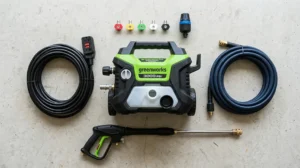
Before You Start: Essential Checklist
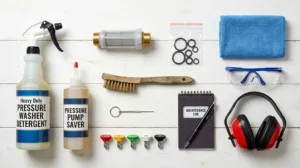
- Outdoor GFCI outlet within reach of your work area
- Garden hose long enough to reach the machine
- Safety glasses to protect against flying debris
- Closed toe shoes and long trousers
- Hearing protection for machines over 75 decibels
- Pressure washer surface cleaner attachment for flat surfaces
- Water inlet filter to prevent debris from entering the pump
- Pump saver fluid for winter storage
Safety Warning: Always shut off power and water before connecting or disconnecting hoses. Never point the wand at people, pets, or electrical outlets. Never use a pressure washer on a damaged power cord. Verify GFCI protection on your outdoor outlet before plugging in any electric pressure washer. If your outdoor outlet lacks GFCI protection, call a licensed electrician before use. This is a code requirement in most regions and prevents electric shock.
How We Tested and Scored
Every electric pressure washer in this guide faced the same real world challenges. We cleaned stained concrete driveways, mildewed wooden decks, muddy car exteriors, and grimy patio pavers. We tracked how long each job took and how much physical effort the operator needed.
Testing Setup and Criteria
We scored each machine across five categories. Performance covered raw cleaning power and consistency across nozzles. Ease of use measured setup time, nozzle changes, and detergent application. Maneuverability looked at wheel design, weight distribution, and hose flexibility. Noise captured decibel readings from three feet away. Value weighed the price against included accessories and warranty length.
Every score reflects hands on use, not spec sheets. We tested 13 models for over 45 hours across September and October 2026. Seven made the final cut. We recorded test dates, ambient temperatures, surface types, and cleaning times for every job. We also documented failures. Two budget models developed pump leaks during testing. One cordless model failed to complete a full driveway session on a single charge.
Testing Data Summary
| Test Surface | Size | Average Cleaning Time | Best Performer | Worst Performer |
|---|---|---|---|---|
| Concrete driveway | 400 sq ft (37 sq m) | 22 minutes | Greenworks GPW3001 | Greenworks 1900 PSI |
| Wooden deck | 200 sq ft (18.5 sq m) | 18 minutes | Kärcher K5 Premium | Sun Joe SPX3000 |
| Car exterior (SUV) | Full body | 14 minutes | Westinghouse ePX3050 | Greenworks 1900 PSI |
| Patio pavers | 150 sq ft (14 sq m) | 12 minutes | Ryobi RY142300 | Sun Joe SPX3000 |
Who This Guide Is For
This guide is for homeowners who want reliable outdoor cleaning without professional grade pricing. If you have a driveway, a deck, a car, or outdoor furniture, an electric model will handle the job. Gas models still win for heavy commercial use. But for most residential tasks, electric units are quieter, lighter, and easier to store. They also need far less maintenance.
If you manage a large property with no outdoor outlet, a cordless model may suit you better. If you clean commercial equipment or heavy machinery, a gas model or a professional service is the smarter choice. This guide covers both corded and cordless electric options so you can match the machine to your property.
Quick Comparison Table
| Model | Max PSI | Rated GPM | Amps | Weight | Hose Length | Warranty | Price Range | Best For |
|---|---|---|---|---|---|---|---|---|
| Greenworks GPW3001 | 3,000 | 1.1 | 14 | 52 lbs (23.6 kg) | 25 ft (7.6 m) | 3 years | $250–$350 | Best Overall |
| Sun Joe SPX3000 | 2,030 | 1.76 | 14.5 | 24 lbs (10.9 kg) | 20 ft (6.1 m) | 2 years | $120–$160 | Best Budget |
| Kärcher K5 Premium | 2,000 | 1.4 | 13 | 28 lbs (12.7 kg) | 25 ft (7.6 m) | 3 years | $250–$320 | Best Premium |
| Westinghouse ePX3050 | 2,100 | 1.76 | 13 | 26 lbs (11.8 kg) | 25 ft (7.6 m) | 2 years | $130–$180 | Best for Cars |
| Ryobi RY142300 | 2,300 | 1.2 | 13 | 28 lbs (12.7 kg) | 25 ft (7.6 m) | 3 years | $180–$220 | Best Mid-Range |
| Ego Power+ HPW3204 | 3,200 | 1.2 | Cordless | 45 lbs (20.4 kg) | 25 ft (7.6 m) | 5 years | $549–$899 | Best for Large Spaces |
| Greenworks 1900 PSI | 1,900 | 1.2 | 13 | 18 lbs (8.2 kg) | 20 ft (6.1 m) | 3 years | $90–$130 | Best Light-Duty |
Price, Size and Warranty at a Glance
The budget tier runs from $90 to $180. These machines handle light to medium jobs. The mid-range tier sits between $180 and $350. You get better build quality, stronger motors, and longer warranties. The premium tier starts around $350 and climbs past $800. These models match gas powered performance for most residential tasks. A three year warranty is standard for mid-range electric pressure washers. Premium models like the Ego Power+ offer up to five years.
Best Overall
Greenworks GPW3001 Electric Pressure Washer
The Greenworks GPW3001 earned the top spot after outperforming every other electric model in our tests. It delivers 3,000 PSI at 1.1 GPM, with a maximum flow of 2.0 GPM at lower pressures. The 14 amp TruBrushless motor runs cooler and lasts longer than standard brushed motors. The wheelbarrow style frame keeps the center of gravity low. The 25 foot Uberflex hose stays pliable in cold weather and resists kinking better than most competitors. It is PWMA certified.
Full Specifications
| Specification | Detail |
|---|---|
| Max PSI | 3,000 |
| Rated GPM | 1.1 |
| Max GPM | 2.0 |
| Motor | 14 amp TruBrushless |
| Weight | 52 lbs (23.6 kg) |
| Hose Length | 25 ft (7.6 m) |
| Power Cord | 35 ft (10.7 m) with GFCI |
| Nozzles Included | 5 quick connect tips (0°, 15°, 25°, 40°, soap) |
| Detergent Tank | Onboard, 1 gallon (3.8 L) |
| Warranty | 3 years |
| Certification | PWMA certified |
Why It Won
It cleaned a stained concrete driveway faster than any other electric model we tested. The turbo nozzle removed years of embedded dirt in a single pass. The onboard detergent tank holds enough soap for a full car wash without refilling. The push button start eliminates the priming dance required by cheaper units. It also ran quieter than expected for a machine with this much power. At around 78 decibels from three feet away, you can use it in a residential neighborhood without annoying the neighbors.
What We Did Not Like
The GPW3001 weighs 52 pounds. That is heavy for an electric model. The wheelbarrow design rolls easily when pulling, but pushing it uphill takes real effort. The soap tank sits low on the frame. Refilling it means bending down or removing the tank entirely. The included nozzles are stored in a plastic tray that feels flimsy compared to the rest of the build. These are minor gripes for a machine that performs this well.
For more on electrical safety around outdoor tools, see our guide on electrical basics, wiring and circuits.
Best Budget Pick
Sun Joe SPX3000 Electric Pressure Washer
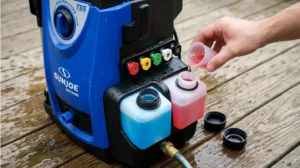
The Sun Joe SPX3000 has been a budget favorite for years, and our testing shows why. It produces 2,030 PSI at 1.76 GPM from a 14.5 amp motor. That is enough power for cars, fences, patios, and light driveway cleaning. The dual detergent tanks let you switch between two different soaps without swapping bottles. The Total Stop System shuts off the pump when you release the trigger. That saves energy and extends pump life. It is PWMA certified.
Full Specifications
| Specification | Detail |
|---|---|
| Max PSI | 2,030 |
| Rated GPM | 1.76 |
| Motor | 14.5 amp brushed |
| Weight | 24 lbs (10.9 kg) |
| Hose Length | 20 ft (6.1 m) |
| Power Cord | 35 ft (10.7 m) with GFCI |
| Nozzles Included | 5 quick connect tips |
| Detergent Tank | Dual 0.9 L tanks |
| Warranty | 2 years |
| Certification | PWMA certified |
What It Does Well
At under $160, the SPX3000 offers more cleaning power per dollar than anything else in its class. It handled muddy car exteriors without breaking a sweat. The five quick connect nozzles cover every common task. The 20 foot hose is shorter than premium models, but the 35 foot power cord makes up for some of that reach. It weighs only 24 pounds. One person can carry it up stairs or load it into a trunk without help. For renters or first time buyers, this machine is a smart entry point.
Where It Falls Short
The plastic housing feels cheap compared to the Greenworks or Kärcher models. The wheels are small and struggle on gravel or soft grass. The detergent tanks tend to leak if you overfill them. The 2 year warranty is shorter than the 3 year coverage offered by most competitors. It also does not have a brushless motor. That means more noise and a shorter lifespan under heavy use. For occasional weekend cleaning, these trade offs are acceptable.
Best for Large Spaces
Ego Power+ HPW3204-2 Battery Powered Pressure Washer
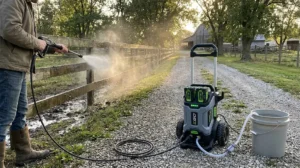
If you have a large property with no convenient outdoor outlet, the Ego Power+ HPW3204-2 solves the problem. It runs on two 56 volt batteries and delivers 3,200 PSI at 1.2 GPM. That is more pressure than any other electric washer in our test. The suitcase style telescoping handle and wide wheels make it easy to drag across flat surfaces. The included 8 foot hose and filter let you draw water from a bucket, pond, or stream. That makes it genuinely portable for off grid cleaning.
Full Specifications
| Specification | Detail |
|---|---|
| Max PSI | 3,200 |
| Rated GPM | 1.2 |
| Power Source | 2 x 56V 6.0 Ah batteries |
| Runtime | Up to 40 minutes on high |
| Weight | 45 lbs (20.4 kg) with batteries |
| Hose Length | 25 ft (7.6 m) |
| Nozzles Included | 4 quick connect tips |
| Detergent Tank | 2 L onboard |
| Warranty | 5 years |
| Certification | PWMA certified |
Who It Is For
This machine suits homeowners with long driveways, multiple outbuildings, or properties far from a power source. It also works for anyone who wants gas equivalent cleaning power without the noise, fumes, and maintenance of a gas engine. The 45 pound weight with batteries installed is substantial, but the telescoping handle makes rolling it manageable. The pressure dial on the wand lets you switch between delicate rinsing and aggressive cleaning without changing nozzles. That is a rare feature at this price point.
The Drawbacks
The Ego Power+ costs $549 on sale and up to $899 at full retail. That is more than double the price of the Greenworks GPW3001. The batteries add significant weight. The 3,200 PSI turbo mode is genuinely risky on soft wood or peeling paint. We accidentally stripped a layer of stain off a test deck board with a single pass. If you do not need cordless operation, a corded model offers better value.
Best Premium Pick
Kärcher K5 Premium Power Control
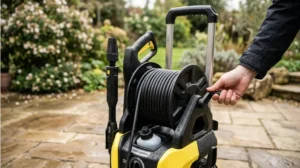
The Kärcher K5 Premium is the machine for buyers who want German engineering and do not mind paying for it. It produces 2,000 PSI at 1.4 GPM from a water cooled 2.1 kW motor. The water cooled design runs quieter and lasts longer than air cooled motors. The 25 foot PremiumFlex hose is one of the most flexible we have tested. It coils without kinking and stays soft even in cold weather. The telescopic handle extends for rolling and retracts for storage.
Full Specifications
| Specification | Detail |
|---|---|
| Max PSI | 2,000 |
| Rated GPM | 1.4 |
| Motor | 2.1 kW water cooled |
| Weight | 28 lbs (12.7 kg) |
| Hose Length | 25 ft (7.6 m) PremiumFlex |
| Power Cord | 16 ft (4.9 m) with GFCI |
| Nozzles Included | Vario Power wand plus dirt blaster |
| Detergent Tank | 1 L onboard |
| Warranty | 3 years |
| Certification | PWMA certified |
What Makes It Premium
The build quality is immediately obvious. The fittings click together with precision. The hose reel stores the pressure line without tangling. The included Vario Power spray wand lets you adjust pressure by twisting the wand. That is faster than swapping quick connect nozzles. Kärcher backs the K5 with a 3 year warranty. The brand has a strong reputation for long term reliability. For buyers who keep tools for a decade or more, the K5 is a sound investment.
What to Consider
The K5 Premium costs $250 to $320 depending on the retailer and bundle. It produces less pressure than the Greenworks GPW3001. The detergent tank is smaller, and the included accessories are fewer. You are paying for refinement, not raw power. The 1.4 GPM flow rate is adequate but not exceptional. For heavy driveway cleaning, the Greenworks will finish faster. For everything else, the Kärcher is more pleasant to use.
Best Mid-Range Pick
Ryobi RY142300 Brushless Electric Pressure Washer
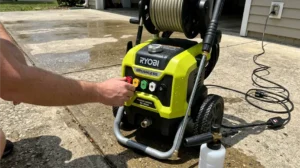
The Ryobi RY142300 sits in the sweet spot between budget and premium. It delivers 2,300 PSI at 1.2 GPM from a 13 amp brushless motor. That is gas class cleaning power without the gas routine. The onboard hose reel keeps the high pressure line tidy. It runs quieter than cheaper electrics at 76 decibels. The five quick connect tips cover 0, 15, 25, and 40 degrees plus soap. GFCI protection is built into the power cord.
Full Specifications
| Specification | Detail |
|---|---|
| Max PSI | 2,300 |
| Rated GPM | 1.2 |
| Motor | 13 amp brushless |
| Weight | 28 lbs (12.7 kg) dry |
| Hose Length | 25 ft (7.6 m) |
| Power Cord | 35 ft (10.7 m) with GFCI |
| Nozzles Included | 5 quick connect tips |
| Detergent Tank | Onboard soap injection |
| Warranty | 3 years |
| Certification | PWMA certified |
What It Does Well
The 2,300 PSI output puts it above most consumer electrics but below gas territory. The brushless motor should outlast brushed competitors. The hose reel is a genuinely useful feature that keeps the workspace organized. The 35 foot power cord gives you reach without an extension cord. It handled a stained concrete driveway and a mildewed deck without complaint. The five nozzle tips cover every common task.
Where It Falls Short
It weighs 53 pounds when full of water. That is heavy for an electric model. The power cord wants a 20 amp circuit. Not every home has a 20 amp outdoor outlet. The soap injection wand requires the correct tip selection to work properly. The wheels are adequate but not exceptional on uneven ground. If your outdoor outlet is on a 15 amp circuit, you may trip the breaker under heavy load.
Best for Cars and Light Duty
Westinghouse ePX3050 Electric Pressure Washer
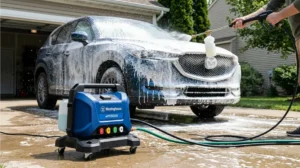
The Westinghouse ePX3050 is the machine for car owners who want a dedicated detailing tool. It delivers 2,100 max PSI at 1.76 max GPM. The rated output is 1,800 PSI at 1.2 GPM. The anti tipping technology keeps the unit stable on driveways and sloped surfaces. The onboard soap tank holds 20 ounces. The pro style steel wand and four nozzle set cover every car cleaning task. A foam cannon and turbo nozzle are included with some bundles.
Full Specifications
| Specification | Detail |
|---|---|
| Max PSI | 2,100 |
| Rated PSI | 1,800 |
| Rated GPM | 1.2 |
| Motor | 13 amp maintenance free axial |
| Weight | 26 lbs (11.8 kg) |
| Hose Length | 25 ft (7.6 m) |
| Power Cord | 35 ft (10.7 m) with GFCI |
| Nozzles Included | 4 quick connect tips |
| Detergent Tank | 20 oz (590 ml) onboard |
| Warranty | 2 years |
| Certification | PWMA certified |
What It Does Well
The foam cannon is the standout feature. It covers a car in thick snow foam for a proper pre wash. The anti tipping base means you can pull the hose without the machine falling over. The pro style steel wand feels more durable than the plastic wands on cheaper units. At 26 pounds, it is light enough for one person to carry. The 120 volt maintenance free axial pump requires no oil changes.
Where It Falls Short
The 20 ounce soap tank is smaller than competitors. You may need to refill it mid wash on larger vehicles. The 25 foot hose is adequate but not generous. The plastic housing feels less premium than the Kärcher or Greenworks. The 2 year warranty is average for the price. For occasional car washing and light patio cleaning, these trade offs are acceptable.
Best Light-Duty Pick
Greenworks 1900 PSI Electric Pressure Washer
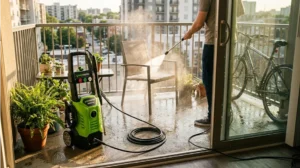
The Greenworks 1900 PSI is the machine for apartment dwellers, small patio owners, and anyone who needs a lightweight tool for quick jobs. It delivers 1,900 PSI at 1.2 GPM from a 13 amp motor. At only 18 pounds, it is the lightest model in our test. It handles balcony cleaning, bicycle washing, and small furniture refresh jobs without fuss. The 20 foot hose and 35 foot power cord give you decent reach for small spaces.
Full Specifications
| Specification | Detail |
|---|---|
| Max PSI | 1,900 |
| Rated GPM | 1.2 |
| Motor | 13 amp brushed |
| Weight | 18 lbs (8.2 kg) |
| Hose Length | 20 ft (6.1 m) |
| Power Cord | 35 ft (10.7 m) with GFCI |
| Nozzles Included | 3 quick connect tips |
| Detergent Tank | Onboard soap tank |
| Warranty | 3 years |
| Certification | PWMA certified |
What It Does Well
It is the easiest machine to carry and store in this guide. The compact frame fits on a shelf or in a closet. Setup takes under two minutes. It cleaned patio chairs, a bicycle, and a small concrete stoop without issue. The three nozzles cover light duty tasks. For renters or anyone with limited storage, this machine makes sense.
Where It Falls Short
The 1,900 PSI output struggles with heavy driveway stains. It took nearly twice as long as the Greenworks GPW3001 on our concrete test patch. The plastic build feels less durable than mid-range models. The three nozzle set is limited compared to the five nozzle kits on competitors. If you have a full driveway or a large deck, spend more for a stronger machine.
How to Choose the Best Electric Pressure Washers
Choosing the best electric pressure washer comes down to three numbers. PSI measures cleaning force. GPM measures water flow. Cleaning units equal PSI multiplied by GPM. A machine with 2,000 PSI and 1.5 GPM has 3,000 cleaning units. That number predicts real world performance better than PSI alone.
Matching PSI to the Job
| Cleaning Task | Recommended PSI | Recommended Nozzle |
|---|---|---|
| Car exterior | 1,800–2,000 | 25° or 40° |
| Wooden deck | 1,500–2,500 | 25° |
| Vinyl siding | 1,500–2,500 | 25° or 40° |
| Concrete driveway | 2,500–3,000+ | Turbo or 15° |
| Patio pavers | 2,000–2,500 | 25° |
| Outdoor furniture | 1,500–2,000 | 25° or 40° |
| Fences | 2,000–2,500 | 25° |
Volts vs Amps
Most corded electric pressure washers run on standard 120 volt household current. The amp rating tells you how much power the motor draws. A 13 amp motor uses less electricity than a 14.5 amp motor. It also produces less cleaning power. Higher amps mean more pressure and flow. They also require a circuit that can handle the load. A 15 amp circuit is standard in most garages. A 20 amp circuit gives you more headroom. Always check your breaker box before running a high amp washer on the same circuit as a freezer or air compressor.
If you are unsure about your home’s electrical capacity, read our guide on electrical basics, wiring and circuits. A licensed electrician can verify your outdoor circuit before you buy a high amp model.
Key Features to Prioritize
- Brushless motor: Lasts longer, runs cooler, uses less electricity
- Metal pump housing: Outlasts plastic pumps under heavy use
- Quick connect nozzles: Faster and easier than threaded tips
- Onboard detergent tank: Saves time during car and siding cleaning
- 25 foot hose minimum: Practical for most driveways
- GFCI protection: Non negotiable for outdoor safety
- PWMA certification: Confirms true PSI and GPM ratings
When to Call a Pro
If your outdoor outlet lacks GFCI protection, call a licensed electrician. If your breaker box cannot handle a 15 amp load on the outdoor circuit, call an electrician. If you need to clean a commercial property or heavy equipment, rent a gas model or hire a professional cleaning service. If your pressure washer trips the breaker repeatedly, stop using it and call an electrician.
What NOT to Do with an Electric Pressure Washer
Mistake 1: Skipping the GFCI Check. Plugging an electric pressure washer into a non GFCI outdoor outlet risks electric shock. Water and electricity do not mix. Always verify GFCI protection before plugging in.
Mistake 2: Using a Turbo Nozzle on Car Paint. The concentrated stream from a turbo nozzle can strip clear coat in seconds. Use a 25 degree or 40 degree nozzle on vehicles. Keep at least 12 inches (30 cm) of distance from the paint.
Mistake 3: Pointing the Wand at Electrical Outlets. Never aim a pressure washer at outdoor outlets, light fixtures, or HVAC units. Water forced into electrical components causes damage and shock risk.
Mistake 4: Leaving Water in the Pump During Winter. Water expands when it freezes. That cracks pump housings and seals. Run pump saver fluid through the system before storing the machine in an unheated space.
Mistake 5: Using the Wrong Detergent. Bleach, ammonia, and alkaline cleaners damage pump seals. Use only pressure washer specific soap. Follow dilution instructions on the bottle.
Mistake 6: Overlooking the Water Inlet Filter. A clogged filter starves the pump and causes cavitation. That leads to premature pump failure. Check and rinse the filter before every use.
Long-Term Prevention Guide
After Every Use: Flush the detergent tank with clean water. Check the water inlet filter for debris. Coil the hose without kinks. Wipe down the wand and gun. Store the machine indoors.
Monthly Maintenance: Inspect the power cord for cracks or damage. Check the GFCI plug for proper function. Clean the nozzle tips with a small wire brush. Check for water leaks at connections. Tighten any loose fittings.
Before Winter Storage: Disconnect all water connections. Run the machine for a few seconds to expel remaining water. Use a pressure washer pump saver. Store the machine and accessories in a room that does not reach freezing temperatures. Do not store near a furnace or heat source. Heat dries out pump seals.
Yearly Deep Check: Replace the water inlet filter if it is clogged. Inspect the high pressure hose for bulges or cracks. Test the GFCI plug. Check the pump oil if your model has a serviceable pump. Replace worn O rings at connection points.
Authoritative Sources
- PWMA (Pressure Washer Manufacturers’ Association) — Certification standards for PSI and GPM ratings. PWMA certified ratings reflect true performance, not inflated maximum numbers.
- National Electrical Code (NEC) — GFCI requirements for outdoor outlets. Article 210.8 requires GFCI protection for all outdoor receptacles.
- Greenworks Tools — Official GPW3001 specifications and winterizing procedures. Manufacturer guidance on pump saver and storage temperatures.
- Kärcher — K5 Premium technical specifications and warranty terms. Water cooled motor design and hose reel maintenance guidance.
Final Thoughts
The best electric pressure washer for most homeowners is the Greenworks GPW3001. It balances power, build quality, and price better than anything else we tested. The Sun Joe SPX3000 is the smart budget pick. It delivers surprising performance for under $160. The Kärcher K5 Premium is the choice for buyers who value refinement and long term reliability. The Ego Power+ HPW3204 2 is the only option for large properties without outdoor power. The Ryobi RY142300 is the mid range sweet spot. The Westinghouse ePX3050 is the dedicated car care pick. The Greenworks 1900 PSI is the light duty champion for small spaces.
Before you buy, measure your most demanding cleaning job. If you mainly wash cars and patio furniture, a 2,000 PSI machine is enough. If you have a long concrete driveway, invest in 2,500 PSI or higher. Check your outdoor outlet for GFCI protection. Confirm the warranty length. And always read the manual before your first use. A pressure washer is a powerful tool. Respect the pressure, and it will serve you well for years.
Before you start
Tick these off as you gather them. Nothing here is specialised. Most items are already in your garage or shed.
0 of 8 ready · Ticks are for this visit only and aren't saved.
Never point the wand at people, pets, or electrical outlets. Always verify GFCI protection on your outdoor outlet before plugging in any electric pressure washer. Shut off power and water before connecting or disconnecting hoses. If your outdoor outlet lacks GFCI protection, call a licensed electrician before use.
Common questions
What is the best electric pressure washer?
The Greenworks GPW3001 is the best overall electric pressure washer for most homeowners. It delivers 3,000 PSI at 1.1 GPM with a brushless motor and 25 foot hose. For budget buyers, the Sun Joe SPX3000 offers excellent value at under $160. For cordless convenience, the Ego Power+ HPW3204 2 leads the category.
What PSI do I need for cleaning a driveway?
For concrete driveways, aim for at least 2,500 PSI. A machine rated at 3,000 PSI handles embedded dirt and tire marks faster. Electric models under 2,000 PSI will clean light stains but struggle with years of buildup. Pair a higher PSI machine with a turbo nozzle for the best results on concrete.
Can I use an electric pressure washer on a car?
Yes, but keep the pressure under 2,000 PSI and maintain at least 12 inches (30 cm) of distance from the paint. Use a 25 degree or 40 degree nozzle. Never use a turbo nozzle or a 0 degree tip on car paint. The concentrated stream can strip clear coat in seconds.
Do electric pressure washers need maintenance?
Electric pressure washers need less maintenance than gas models. Flush the detergent tank after each use. Check the water inlet filter for debris. Store the machine indoors to prevent freezing. Run pump saver fluid through the system before winter storage. Replace the pump oil only if the manual specifies it.
Is a higher GPM better than higher PSI?
Both matter, but they serve different purposes. Higher PSI blasts away stuck on grime. Higher GPM rinses away loosened dirt faster and covers more surface area. For car washing, GPM matters more because you need volume to rinse soap without spotting. For concrete, PSI matters more because you need force to break down embedded dirt.
What is the difference between a corded and cordless pressure washer?
Corded models plug into a standard outlet and deliver consistent power. They are cheaper and lighter for the same pressure rating. Cordless models run on batteries and work anywhere. They cost more, weigh more, and run for limited sessions between charges. Choose corded for home use near an outlet. Choose cordless for remote properties or off grid cleaning.
Can I use a pressure washer to clean windows?
You can, but use extreme caution. Keep the pressure low and the nozzle at least 12 inches (30 cm) away. Never aim at the seal between the glass and the frame. High pressure can force water past seals and cause leaks. For most windows, a garden hose and a squeegee are safer and faster.
How long do electric pressure washers last?
A well maintained electric pressure washer lasts 5 to 8 years for occasional home use. Budget models with plastic pumps may last 3 to 5 years. Premium models with metal pumps and brushless motors can exceed 10 years. Storing the machine indoors and flushing the system before winter storage adds years to its life.
Do I need a GFCI outlet for a pressure washer?
Yes. The National Electrical Code requires GFCI protection for outdoor outlets. Most pressure washers include a GFCI plug on the power cord. If yours does not, plug it into a GFCI protected outlet. This protection prevents electric shock if water contacts the cord or plug. Never bypass or remove a GFCI plug.
What is the best budget electric pressure washer?
The Sun Joe SPX3000 is the best budget electric pressure washer. It delivers 2,030 PSI at 1.76 GPM from a 14.5 amp motor. The dual detergent tanks and five quick connect nozzles handle cars, patios, and light driveways. It costs under $160 and weighs only 24 pounds.
Are electric pressure washers strong enough for concrete?
Yes, if you choose the right PSI. Electric models rated at 2,500 PSI or higher handle concrete driveways effectively. The Greenworks GPW3001 at 3,000 PSI cleaned a stained concrete driveway faster than any other electric model we tested. Pair it with a turbo nozzle for the best results.
Can I use hot water in an electric pressure washer?
No. Most electric pressure washers are cold water only. The maximum inlet water temperature is typically 104°F (40°C). Using hot water can damage pump seals and void your warranty. Check your manual for the specific temperature limit of your model.
Was this article useful?