Simple furniture earns its place. Clean lines. Honest materials. Real function. Minimalist rooms keep 25 to 30 percent of visual space empty. This guide collects 8 ideas that age well. You’ll find room sizes, cost bands, and copy steps you can follow.
The goal isn’t an empty room. It’s a room where every object has a reason to be there. The space between objects counts as design too. Fewer pieces, chosen well, make a home calmer and easier to clean. They also cost less to furnish over time.
Before You Start
Tick these off as you gather them. Nothing here is specialised, and most of it takes under an hour.
- Measure each room and note door swings and walkways. Record metric and imperial figures.
- Photograph every room from the doorway. You’ll spot clutter you no longer see.
- List what each existing piece does. Remove anything with no job.
- Set a hard budget band now: under $150, under $600, or a full room refresh.
- Check weight limits on wall-mounted pieces. Plasterboard needs proper anchors.
- Choose 2 to 3 neutral shades for the palette. More than that looks busy.
- Keep a tape measure in your pocket when thrifting. Sizes surprise you in store.
How to Use This Gallery
Each idea carries a cost band and a room-size note. Pick your band first, then match ideas to your rooms. Bedroom ideas suit storage beds. Living room ideas suit modular seating best. Furnishing several rooms? Work from cheapest to priciest. That way your anchor pieces get the biggest share of the budget.
Budget Bands and What They Buy
The band tells you what quality you can afford. Lower bands buy second-hand and flat-pack. Higher bands buy solid wood and pieces made to last.
| Budget band | What it buys | Best for |
|---|---|---|
| Under $150 | Floating shelves, ottoman, thrifted side table | First minimalist steps |
| $150–$600 | Platform bed, storage ottoman, foldable desk | Bedrooms and home offices |
| $600–$2,000 | Sliding-door wardrobe, quality sectional | Full room anchors |
| $2,000+ | Solid wood heirloom pieces, custom storage | Long-term homes |
Simple design starts with subtraction. Run this declutter routine before you buy anything new.
- Remove everything you don’t use weekly. Box it for a month; donate what you don’t miss.
- Keep wide walking paths: at least 75 cm (30 inches) between furniture pieces. Tight gaps feel cramped.
- Aim for 25 to 30 percent empty visual space. Empty space is part of the design.
- Group what remains by function: rest, work, storage. Each zone gets one hero piece.
- Buy only what fills a real gap. Every piece must earn its place.
Minimalism isn’t about owning less furniture. It’s about owning the right furniture. Fit beats quantity every single time. A well-chosen piece in the right spot outlasts a room full of bargains.
Ideas for Small Spaces
Small rooms reward furniture that floats, folds, or hides storage. These two ideas free up floor space fast. Both suit rooms under 12 square metres (130 square feet). Both work in a room you already own, no full reset needed.
Small House Interior Design Basics
Idea 1: Floating shelves. Wall-mounted shelves show off a few chosen pieces without eating floor space. They suit small homes where every centimetre counts. Use proper wall anchors for the load (band: $30–$120). Keep the run short and the objects few. Three or four pieces read better than a crowded row.
Tiny house interiors run on the same rules. Every piece must fold, stack, or store something. Wall-mounted and transparent pieces keep sightlines clear. The room then feels bigger than its footprint.
Idea 2: Storage ottoman. An ottoman that opens for storage pulls triple duty. It’s seating, a footrest, and a coffee table. One lift of the lid hides the clutter. Choose clean lines and sturdy hinges (band: $60–$200). Pick a firm lid if you’ll use it as a table.
Simple Bed Design for Tight Rooms
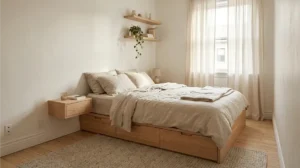
A simple bed design with a low profile makes small bedrooms feel taller. Platform beds skip the bulky headboard and frame. Under-bed drawers add storage without a dresser. That’s often the single biggest space save in a small bedroom. Keep the mattress fresh with a simple mattress cleaning routine.
See more bedroom ideas in our Furniture, Sofas & Beds hub. Storage beds and simple frames get full guides there.
Ideas That Add the Most Impact
These three ideas anchor a room with simple, lasting choices. They suit living rooms and bedrooms around 3 by 4 metres (10 by 13 feet). Each one fully earns its footprint. Each one is worth saving for instead of replacing cheaply later.
Simple Hall Design Anchors
Idea 3: Sliding-door wardrobe. Sliding doors need no swing space, unlike hinged doors. They give a streamlined look and suit simple hall design and bedrooms (band: $400–$1,500). Check the track quality before you buy. The runners decide how the doors feel after a year of daily use.
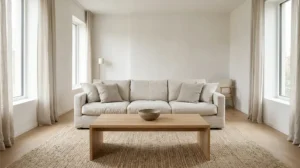
Idea 4: Low-profile sectional sofa. A sectional with textured linen upholstery in white or grey rearranges for any layout. Low height keeps sightlines open. Slim legs add lightness (band: $600–$2,000). Choose removable covers if the room gets heavy daily use.
Simple Wardrobe Design That Lasts
Idea 5: Platform bed with storage. A low platform bed with built-in drawers replaces a bed plus a dresser. It suits minimalist bedrooms and small flats. Solid wood frames age better than veneer (band: $300–$1,200). Open the drawers in store to test the runners first.
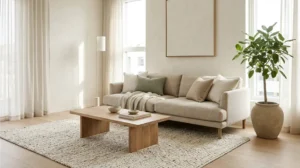
Simple furniture suits open-plan living too. One low sofa, one wooden coffee table, and one rug define a lounge zone. Leave 90 cm (3 feet) between zones for easy movement. Fewer pieces make open plans feel calmer.
For seating that pairs well, see our chair design guide. It covers simple, lasting chair shapes.
Budget-Friendly Versions of the Look
Simple design suits tight budgets perfectly. These three ideas cost little and look carefully considered. All three suit renters and first homes. None of them require permanent changes to the property.
Copy the Look Under $150
Idea 6: Thrifted solid wood side table. A solid wood side table with clean lines rivals boutique pieces. Find one second-hand and refinish it. Repaint in matte white or keep natural wood. The key is clean lines, not brand labels (cost: $20–$80).
Idea 7: Transparent acrylic side table. Acrylic and glass furniture creates visual continuity and openness. A clear side table almost disappears in a small room. It suits renters since it moves easily (cost: $40–$120).
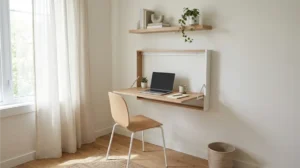
Idea 8: Foldable wall-mounted desk. A wall-mounted desk folds away when work ends. It suits work-from-home setups in small flats. Pair it with a stackable chair (cost: $50–$150). Fix it to a solid wall or use proper anchors. Check the hinge rating for the weight you’ll put on it.
Here’s the thrift-and-refresh routine for simple furniture:
- Shop second-hand marketplaces for solid wood with clean lines. Avoid wobbly joints and deep scratches.
- Measure twice: check it fits your space and your doorways. Tape the footprint at home first.
- Sand lightly and repaint in matte white or a natural wood finish. Two thin coats beat one thick coat.
- Replace dated handles with simple modern pulls. New hardware changes the whole look.
- Style with one or two objects only. Restraint is the whole point of simple design.
Rental-Friendly Options
All the budget ideas suit rentals. Freestanding pieces move with you. Use wall anchors only where the lease allows. Fill the holes on exit. Note the paint colour on any wall you touch, so the patch job stays invisible.
Buy anchor pieces first, then fill the gaps. A bed, a sofa, and storage come before side tables. Side pieces are easy to add later. This order stops impulse buys.
Colour, Material and Layout Notes
Colour and texture carry simple rooms. With fewer pieces, each one shows more. Choose materials that age gracefully. Choose finishes you can touch up rather than replace.
Texture Over Clutter
Minimalist rooms stay warm through texture, not more objects. Linen cushions, a wool or jute rug, and a wooden coffee table add depth. Matte ceramics and cotton curtains finish the look. Texture is the decoration. Pick the right floor covering with this wool rugs and carpet runners guide.
Stick to 2 to 3 neutral shades: warm white, soft beige, light grey. Natural wood tones count as neutrals. Pops of muted green or clay add life without noise.
Wood ages best of all common materials. Solid oak and walnut develop rich patinas over decades. Veneer chips and looks tired sooner. Choose solid wood where hands touch daily.
Common Layout Errors
The classic error is pushing all furniture against walls. It leaves a dead middle. Float key pieces to create flow.
Another error is buying bulky pieces for small rooms. Heavy carved designs dominate. Choose slim legs and low profiles instead.
The third error is ignoring scale. A tiny rug under a large sofa looks lost. Match furniture scale to room scale, then keep rugs fresh with these carpet stain removal tips.
Keep simple rooms calm with easy habits. Return every item to its home daily. Try one in, one out for new purchases. Dust open shelves weekly, since fewer objects means faster cleaning.
Key Takeaways
- Every piece must earn its place through function or genuine joy.
- Keep 25 to 30 percent of visual space empty.
- Choose low-profile furniture with slim legs and clean lines.
- Layer texture, not clutter, for warmth.
- Stick to 2 to 3 neutral shades per room.
- Thrifted solid wood, refinished simply, rivals boutique pieces.
- Float furniture off walls to create flow, not dead middles.
- Anchor each zone with one hero piece, not three.
Where to Buy Each Element
Start with homeware chains for floating shelves, ottomans, and foldable desks. They stock the simple pieces that start a minimalist room. Second-hand marketplaces are goldmines for solid wood with clean lines.
For anchor pieces like sectionals and wardrobes, compare published specs, not just photos. We checked dimensions and materials against the listed specs. Read the frame and fabric details. They decide lifespan.
Always measure before ordering. Simple rooms punish wrong-sized furniture hardest. Most good retailers list full dimensions online.
What NOT to Do With Simple Furniture Design
- Don’t fill every corner. Empty space is part of the design. Crowded corners ruin the calm.
- Don’t buy bulky, carved pieces for small rooms. They dominate and date fast. Choose slim and simple.
- Don’t mix more than 3 neutrals. Extra shades create visual noise. Restraint reads as luxury.
- Don’t skip wall anchors for tall shelving. A toppling bookcase is dangerous. Anchor everything tall.
- Don’t chase trends with anchor pieces. Trendy sofas date; simple ones don’t. Save trends for cushions.
Don't overload a small room with bulky, carved pieces. Don't block walkways with oversized sectionals. Don't buy flat-pack furniture without checking weight limits. Never skip wall anchors for tall bookcases and shelving.
Common questions
What is simple furniture design?
Simple furniture design favours clean lines, honest materials, and real function over decoration. Every piece must earn its place. It suits small homes, calm minds, and tight budgets, with low profiles, slim legs, and neutral palettes.
How do I make a small room look bigger with furniture?
Choose low-profile pieces with slim legs. Keep 25 to 30 percent of visual space empty. Light colours reflect natural light. Mirrors and transparent furniture add openness. Floating pieces free up precious floor space too.
What furniture suits a minimalist bedroom?
A low platform bed with storage drawers suits most modern homes. Add one floating nightstand and a sliding-door wardrobe. Layer texture with linen bedding and a soft wool rug. Not sure what to layer? This duvet vs comforter guide helps. Keep surfaces mostly clear for calm, easy mornings.
Is second-hand furniture good for minimalist design?
Yes, and it's often ideal. Solid wood pieces with clean lines refinish beautifully. A thrifted side table repainted in matte white rivals boutique pieces. Check joints and measure carefully. The key is clean lines, not brand labels.
What colours suit simple furniture design?
Warm white, soft beige, and light grey form the classic base. Natural wood tones count as neutrals. Mix 2 to 3 shades per room, no more. Muted green or clay accents add life without visual noise.
How do I keep a minimalist room from feeling cold?
Layer texture instead of adding objects. Linen cushions, a wool or jute rug, and wooden surfaces add warmth. Soft lighting helps too. Rounded shapes feel friendlier than sharp ones. A single plant brings life to empty corners, so pick an easy one with this flower care and growing guide.
What is the best simple bed design?
A low-profile platform bed with built-in storage drawers works well. It replaces a bed plus a dresser in one footprint. Solid wood frames age better than veneer. Keep the headboard simple or skip it entirely.
How much should I spend on simple furniture?
Spend most on anchor pieces you use daily: bed, sofa, wardrobe. Save on side tables and shelves, where thrifted finds shine. Buying less but better beats buying cheap twice. Set a hard band before you shop anywhere.
Was this article useful?