A toy storage box should end the daily toy avalanche. Most don’t.
They turn into deep pits. Small pieces vanish inside. Lids slam on small fingers. You dig for one plastic dinosaur and find three forgotten snacks.
This review skips the catalog photos. You’ll get real capacity numbers and lid safety standards. You’ll see load limits and material tests too.
Every figure below comes from published standards or manufacturer specs. None of it is guesswork.
You’ll also learn which boxes survive rough play. And which ones crack by spring.
By the end, you’ll know what to buy. You’ll match it to your child’s age and your room’s footprint.
Before You Start
Tick these off before you spend a penny. Half of them cost nothing.
- Tape measure (width, depth, height of the storage spot)
- Sorted toy piles: keep, donate, broken
- Your child’s age and reach height
- Picture labels or a label maker
- Zip pouches or small compartment boxes
- Wall anchors for any tall rack
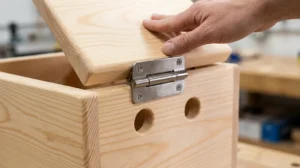
- Safety hinge kit if you plan a DIY wooden chest
Time, Cost and Difficulty
Setup takes one to three hours. Sorting eats most of that time.
The shopping part usually finishes in under an hour. Most of the work happens before you leave the house.
Budget $15 to $80 for a solid starter setup. Fabric cubes sit at the low end. Wooden chests and shelf units sit at the top.
Difficulty stays low for store-bought bins. No tools needed there.
DIY wooden chests need basic saw skills. They also need a proper safety hinge kit.
What a Toy Storage Box Really Is
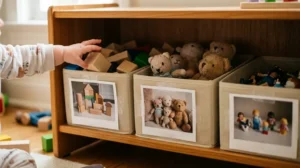
A toy storage box is a container that gives one toy category a fixed home. That’s the simple version.
The box itself is not the system. The system is one box, one category, one reachable spot.
That distinction matters more than most parents expect. A $150 chest with no labels becomes a mixed pile within a week. A $25 set of open bins with picture labels stays sorted for months.
Buy for access first. Looks come second.
Kids tidy into what they can reach. They also tidy into what they can recognise at a glance.
Colour plays a role here too. Neutral bins blend into the wall and calm a busy room. Our guide to room colour combinations shows how to pick tones that make storage feel intentional.
Now for the four numbers that actually decide whether a box works.
The Specs That Matter Most
Four specs decide whether a box works. Capacity in litres, internal dimensions, lid load rating, and base load rating.
Ignore the marketing copy. Look for these four numbers instead.
| Spec | What It Tells You | Target Range |
|---|---|---|
| Capacity (litres) | How much volume the box holds | 10–20L small, 20–40L medium, 40L+ large |
| Internal dimensions | Whether flat toys fit without jamming | At least 24 in (61 cm) long for puzzles |
| Lid load rating | Whether it doubles as a seat | 60–75 kg (130–165 lb) for bench use |
| Base load rating | How much weight the floor panel carries | 15–50 kg (33–110 lb) typical; wood higher |
Here’s a real example. A popular collapsible fabric chest measures 25 × 13 × 16 in (62.5 × 33 × 40 cm). It holds about 83 litres.
A larger version at 40 × 14 × 16 in reaches roughly 150 litres. Both weigh under 3 kg empty.
That weight matters a lot. A box a toddler can drag across the floor gets used. A box that needs an adult to move does not.
Why Cheap Toy Boxes Fail: The Root Cause
Most toy box failures come from one of three causes. Thin base panels sag under weight. Hinges lose tension and drop the lid. Fabric frames collapse when the load shifts sideways.
A sagging base is the quiet killer. The box looks fine when empty. Fill it with wooden blocks and the floor panel bows within weeks.
Once it bows, the box rocks. The lid stops aligning. You start forcing it shut, which wears the hinge faster.
Hinge failure is more serious. A lid that drops more than 0.25 in (6.35 mm) fails the US safety rule. Cheap friction hinges lose tension after a few hundred cycles.
Fabric collapse happens because soft sides can’t resist diagonal force. A child leaning on the rim folds the box inward. The fix is a rigid internal frame or a reinforced base board.
Humidity makes all three worse. Storing toys in a damp garage or bathroom speeds up the damage. Fabric absorbs moisture and grows mould. Wood warps. Adhesive labels peel right off.
Toy Storage Box Types Compared
Five types cover almost every home. Each wins in a different room and age band.
| Type | Best Age | Typical Capacity | Load Limit | Typical Cost |
|---|---|---|---|---|
| Lidded wooden chest | 3+ | 60–150L | 100 kg+ (220 lb) | $40–$200 |
| Open bins on shelf | 1–8 | 10–40L each | 10–20 kg per bin | $25–$70 per unit |
| Fabric cubes | 2+ | 30–85L | 15–50 kg | $15–$40 |
| Under-bed boxes | 4+ | 40–66 qt (38–62L) | 10–15 kg | $15–$50 |
| Wall racks | 5+ | Varies | Depends on anchors | $30–$80 |
Open bins win for under-fives. There’s no lid to fight, so cleanup takes one motion instead of three.
Lidded chests win for living rooms. Toys disappear before guests arrive, and the chest doubles as a seat.
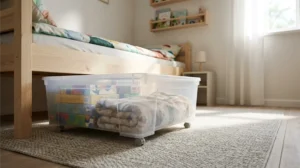
Under-bed boxes exploit dead space. A rolling 66-quart model costs about $20. It holds puzzles, board games, and art supplies.
Buy one with casters, not without. A box you have to drag scratches floors and gets ignored.
A bench chest in a shared room is furniture, not just storage. Our guide to simple furniture design ideas covers proportions that sit well against sofas and media units.
Capacity by Age: How Many Litres Do You Need?
Capacity should follow your child’s reach and strength. It should not follow the size of the toy pile.
Here’s the mapping that holds up in real homes.
- Under 3 years: three to four open bins of 10–20L at floor level. Nothing taller than knee height.
- Ages 3–6: four to six bins of 20–40L, plus one lidded chest of 60–100L for overflow.
- Ages 7–12: compartment boxes plus one 40L+ bin per collection (LEGO, figures, craft).
- Shared playroom: one 100–150L chest plus three 40L bins covers most families.
A single oversized box looks efficient in the shop. In practice it becomes a deep clutter pile. Small pieces disappear into the bottom and never come back.
Shallow and wide beats deep and narrow every time.
Here’s a useful test. Can your child touch the bottom of the box while it sits on the floor? If not, it’s too deep for daily toys.
Keep one more rule in mind. Five broad categories beat fifteen narrow ones. Kids guess right more often when the choices stay simple.
The Safety Specs Most Reviews Skip
Two numbers separate a safe chest from a hazard. Lid drop distance and ventilation area.
Neither appears on most product pages. You usually have to ask the seller directly.
Lid Support: The 0.25-Inch Rule
US rule 16 CFR 1513 covers hinged toy chests. It applies to chests above 1.1 cubic feet. It also applies to any internal dimension of 6 in (150 mm) or more.
The lid must not drop more than 0.25 in (6.35 mm) at any point in its arc. That’s a tight tolerance.
Manufacturers prove this over 7,000 open-and-close cycles. A cheap hinge that feels fine in the shop can fail that test by cycle 500.
Building your own? Calculate the lid’s inch-pound rating first. Multiply half the front-to-back lid distance in inches by the lid weight in pounds.
A 20 in deep lid weighing 10 lb needs a 100 inch-lb support. Buy two supports and split that rating across them.
One undersized hinge on a heavy lid is the most common DIY failure. It’s also the most dangerous.
Ventilation: The 2 Square Inch Minimum
Safe chests carry at least two unobstructed openings. Each opening needs 650 mm² (about 1 in²).
Total ventilation must reach 1,300 mm² (2 in²). The openings also need at least 150 mm (6 in) between them.
These holes exist for one reason. A child who climbs inside can still breathe.
Chests sold without them have been recalled for suffocation risk. That’s not a small detail.
Check the back panel and the base. Holes hidden underneath still count, as long as air moves freely.
Safety warning: never let children play inside a lidded chest. Choose boxes with slow-close hinges and rounded edges. Look for visible ventilation holes too. Anchor every tall rack to the wall with proper fixings.
Material Deep Dive: Wood vs Plastic vs Fabric
Material decides lifespan, cleaning method, and which room the box belongs in. Price tracks material more than design.
| Material | Best Room | Load Limit | Lifespan | Watch For |
|---|---|---|---|---|
| Solid wood / MDF | Living room, hallway | 100 kg+ (220 lb) | 10+ years | Warps in damp rooms; check CARB Phase 2 finish |
| Thick polypropylene | Playroom, garden toys | 40 kg (88 lb) | 3–5 years | Thin walls crack; shatterproof grades only |
| Fabric / canvas | Closet, rented flat | 15–50 kg | 1–3 years | Sags without a base board; absorbs moisture |
Wood wins for shared spaces. It wipes clean and holds its shape. It also resells well when the kids outgrow it.
Solid pine frames resist warping better than particleboard. Check the finish for CARB Phase 2 compliance if the box goes in a nursery.
Plastic wins for messy play. A thick-walled bin hoses clean in minutes. It also survives being dragged outside.
Look for shatterproof polypropylene, not brittle styrene. Thin plastic cracks within a year under rough use.
Fabric wins for tight budgets and rented homes. It folds flat and weighs almost nothing.
It also stains easily. Fabric needs a rigid base insert before it can hold heavy toys.
Check fabric certifications if the box sits in a nursery. Oeko-Tex Standard 100 means the textile passed chemical screening for skin contact. That small label carries real meaning.
Two Step-by-Step Processes
Use these in order. The first stops you buying the wrong box. The second stops the box becoming another junk pile.
Process 1: Choosing the Right Box
- Sort before you shop. Split toys into keep, donate, and broken. Be honest about the broken pile.
- Measure the keep pile. A laundry basket of toys is roughly 40–50L. Count baskets, then convert.
- Measure the floor space. Note width, depth, and height. Leave 2 in (5 cm) clearance for fingers and doors.
- Match capacity to age. Use the litre bands above. Under-threes get 10–20L bins, not 150L chests.
- Verify the safety specs. Ask for the lid support rating and the ventilation area. Ask which test standard it passed. Walk away if the seller can’t answer.
- Buy 20% less than you think. Tight storage forces regular purging. Spare capacity fills with toys nobody plays with.
Process 2: Setting Up a System Kids Use
- One category per box. Cars, dolls, blocks, art. Broad categories beat narrow ones.
- Label with pictures. A photo of the contents works better than a word for pre-readers.
- Place at reach height. Daily toys sit between knee and shoulder height for the youngest user.
- Add small containers inside. Zip pouches for LEGO sets, compartment trays for figures.
- Time a test cleanup. Over 10 minutes means too many categories. Cut it to five.
- Start toy rotation. Store half the collection and swap it monthly. Old toys feel new again.
Spills happen during setup and after. Juice, paint, and glitter glue all find the floor eventually. Learn how to remove stains from carpet before they set into the playroom.
Small-Space and Under-Bed Options
Small bedrooms need vertical and hidden storage. They don’t need more floor furniture.
Under-bed boxes reclaim the biggest dead zone in the room. A 66-quart rolling box fits under most bed frames.
It holds board games, puzzles, and out-of-season clothes. Buy casters. A box you have to drag scratches floors and gets ignored.
While you’re working under the bed, give the mattress some attention too. Our guide to how to clean a mattress covers the dust and allergens that build up above those boxes.
Wall shelves above desk height keep collections out of toddler reach. Over-door organisers catch soft toys and dolls. A single lidded bench chest doubles as seating in a tight living room.
Marking a defined play zone stops toys spreading through the house. Our guide to carpet runners and wool rugs shows how to define that zone without adding clutter.
Garden toys need their own plan. A waterproof outdoor bin near the patio saves dragging muddy buckets through the house. Our waterproof outdoor rug guide covers the surfaces those toys land on.
What NOT to Do with Toy Storage Boxes
Most storage mistakes repeat across households. Here are the ones that cost the most money and cause the most mess.
- Don’t buy deep bins. If a toddler can’t touch the bottom, small toys vanish. The bin becomes a dump.
- Don’t skip labels. Unlabelled bins mix categories within a week. They never recover.
- Don’t store damp toys in sealed boxes. Sand and bath toys need mesh bags until fully dry.
- Don’t put heavy boxes on high shelves. Kids climb to reach them, and kids fall.
- Don’t trust a lid without a rating. Ask for the inch-pound support figure. Skip the chest if nobody can provide it.
- Don’t choose glass-fronted cabinets for toddlers. One thrown block ends that experiment.
- Don’t ignore humidity. Fabric and wood warp or grow mould in damp garages and bathrooms.
- Don’t mix heavy and light toys. A heavy truck on top of plastic figures crushes them flat.
Long-Term Prevention: Keeping the System Working
A toy storage system needs maintenance, not just setup. Three habits keep it running for years.
Weekly: dust the box rims and wipe sticky fingerprints. A damp cloth handles most marks on plastic and sealed wood.
Monthly: rotate the stored half of the toy collection. Check hinges for loose screws and re-tighten them. Test that the lid still holds position at every angle.
Seasonally: declutter before birthdays and holidays. Use the one-in-one-out rule so capacity never creeps upward.
Inspect fabric bins for sagging bases every few months. A 3 mm PP board insert restores shape for a few dollars.
Replace thin plastic bins the moment a crack appears. Cracks spread under load, and a split base drops toys onto the floor.
Anchor tall racks once and check the fixings twice a year. Wall anchors loosen with vibration and climbing.
Keep heavy items low and light items high. That single rule prevents most tip-overs and crushed toys.
Kids’ rooms also collect bedding, cushions, and spare linens. If your storage planning spills into the rest of the room, our duvet vs comforter guide helps you choose bedding that folds down small.
Key Takeaways
- Capacity follows age, not toy count. 10–20L for toddlers, 20–40L for ages 3–6, 40L+ for collections.
- Lid drop must stay under 0.25 in (6.35 mm). That’s the US safety rule, tested over 7,000 cycles.
- Ventilation needs 2 in² (1,300 mm²) across two openings. No holes, no purchase.
- Calculate inch-pound lid rating first. Half the lid depth times the lid weight.
- Open bins beat lidded chests for under-fives. One motion to tidy beats three.
- Fabric needs a rigid base insert. Soft sides collapse without one.
- Rotate half the toys monthly. Fewer choices mean deeper play and faster cleanup.
Safety note: check all fixings and hinges after assembly. Repeat that check every few months. Keep small parts away from children under three. If a box arrives without ventilation holes or a rated lid support, return it rather than modifying it yourself.
toy chests with heavy lids and no safety hinge or ventilation holes, which trap small fingers. Don't use airtight boxes for damp or sandy toys, since trapped moisture grows mold. Skip boxes with sharp edges, splinters, or flaking paint for toddlers. Never store heavy items in high boxes kids must climb to reach.
Common questions
What size toy box do I need?
Match capacity to age first. Toddlers need 10–20L bins at floor level. Ages three to six need 20–40L bins plus one 60–100L chest. School-age collections suit 40L+ bins per category. Measure your floor space and leave 2 in (5 cm) clearance. Buy about 20% less capacity than you estimate, because tight storage forces regular decluttering.
Are toy chests safe for toddlers?
Only with the right hardware. Choose chests with slow-close hinges. The lid must not drop more than 0.25 in (6.35 mm) under its own weight. Confirm at least two ventilation openings totalling 2 in² (1,300 mm²). Skip heavy lids without supports entirely. For under-threes, open bins are safer because there is no lid at all.
How do I organize lots of small toys?
Use the small-inside-big principle. Keep LEGO sets in individual zip pouches. Store figure accessories in compartment trays. Sort craft supplies into divided caddies. Place those small containers inside one larger bin per category. Label every level with a picture. This stops the mixed-pile problem where no set stays complete for more than a day.
What is toy rotation and does it work?
Toy rotation means storing half the collection out of sight. Swap it every two to four weeks. It works well. Fewer choices produce deeper play and faster cleanup. Stored toys feel new on return, which cuts requests for new purchases. Keep the swap simple with two labelled boxes, one active and one stored. The toy rotation bin segment is growing at 8.5% annually, so plenty of families agree.
How do I store stuffed animals?
A large mesh laundry bag holds dozens while keeping them visible and grabbable. Bean-bag-style storage sacks work for bigger collections. Wall-mounted nets suit small groups. Rotate plush toys like any other category. Donate the flat, unloved ones when nobody is looking. Wash machine-safe plush toys every few months to control dust and dust mites.
What's the best toy storage for small bedrooms?
Use vertical and hidden space. Rolling under-bed boxes hold bulky items in the biggest dead zone. Wall shelves above desk height display collections out of toddler reach. Over-door organisers catch soft toys. One lidded bench chest doubles as seating. Avoid floor-hogging play tables when space is tight, and use a foldable mat instead.
Wood or plastic toy boxes: which is better?
Wood lasts longer and looks better in shared rooms. Solid pine frames resist warping and carry 100 kg or more. Plastic is lighter, cheaper, and hoses clean, but thin walls crack. Choose thick polypropylene for messy play. For a nursery, plastic with rounded edges is practical. For a living room, wood wins. Both need proper lid hardware.
How do I get my kids to use toy storage?
Make it easy and make it theirs. Place bins at child height with picture labels. Keep categories broad, because five bins beat fifteen. Tidy together for two minutes before dinner. Praise specific cleanups rather than general effort. Rotate toys so the collection stays interesting. Model the habit yourself, because kids copy what they see.
How often should I declutter toys?
Declutter seasonally, four times a year. Add a pass before birthdays and holidays when new toys arrive. Use the one-in-one-out rule after that. Involve children over five in choosing what leaves. Keep a donation box in a closet year-round so purging happens continuously instead of in one dreaded annual marathon.
Can I build a toy box myself?
Yes, and a simple chest is beginner-friendly. Use 2 cm (3/4 in) lumber and size it around 90 × 45 × 45 cm (36 × 18 × 18 in). Buy a proper safety hinge rated for the lid's inch-pound figure. Drill two ventilation openings totalling 2 in² (1,300 mm²). Sand all edges and use a child-safe finish. Budget $40–$75 for lumber and hardware.
Do toy boxes need ventilation holes?
Yes, if the chest has a lid and enough internal volume for a child to climb inside. US and UK guidance calls for at least two openings. Each opening needs 650 mm² (about 1 in²), spaced at least 150 mm (6 in) apart. These holes allow airflow if a child becomes trapped. Chests sold without them have been recalled.
How much weight can a toy box hold?
It depends on the material and the panel. Thick plastic bins typically carry 40 kg (88 lb). Fabric chests range from 15 kg to 50 kg depending on the internal frame. Solid wood chests often reach 100 kg (220 lb) or more. Lid load is separate: bench-style chests usually rate 60–75 kg on top.
Was this article useful?