A streaky mirror ruins the whole bathroom. You scrub for twenty minutes. Then morning light hits the glass and shows every smear. Sound familiar?
Here’s the good news. You can clean a mirror streak-free in about 10 minutes. The trick isn’t a pricey product. It comes down to the right cloth and the right wiping pattern.
This guide gives you two proven methods for a flawless shine. You’ll learn why streaks happen, which solution to mix, and which mistakes leave mirrors cloudy. You’ll also see how to handle toothpaste splatter, hairspray mist, and hard-water dots without scratching the glass.
Before You Start
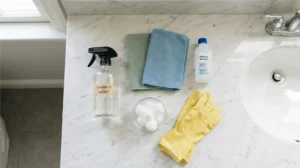
Tick these off as you gather them. Nothing here is specialised, and most of it lives in your cupboard already.
Tools and Materials Checklist
- Distilled white vinegar
- Distilled water
- Clean spray bottle
- 2 flat-weave microfiber cloths
- Rubbing alcohol
- Cotton balls
- Clear liquid dish soap (optional)
- Rubber gloves
Time, Cost and Difficulty
One mirror takes about 10 minutes. The vinegar solution costs pennies per bottle. This is beginner-level work. If you can spray a cloth and wipe in a straight line, you’ve got this.
Why Mirrors Streak
Streaks come from four culprits. Tap water leaves calcium and magnesium behind as it dries. Ever notice those white rings on a hot day? Those are mineral deposits.
Dust turns to mud when your cleaner hits it. That muddy film dries into visible smears. This is why the dry-dust step matters more than most people think.
Too much dish soap leaves a hazy residue. Circular wiping builds static, and that static pulls dust right back onto the glass.
Distilled water and flat-weave microfiber solve most of this. The rest is technique.
Bathroom humidity makes everything worse. Steam settles on cool glass and traps dust in tiny droplets. Those droplets dry into a film. Good ventilation is half the battle. Running the fan for ten minutes after a shower helps more than any spray bottle.
Mirror Cleaning Methods Compared
Pick a method based on how dirty the mirror is. This table lays out your options.
| Method | Best For | Time | Notes |
|---|---|---|---|
| Vinegar and water spray | Weekly cleaning | 10 minutes | Use distilled water |
| Vinegar, water and dish soap | Greasy bathroom mirrors | 12 minutes | Adds anti-fog effect |
| Rubbing alcohol spot clean | Toothpaste and hairspray spots | 5 minutes | Pre-treat before main clean |
| Commercial glass cleaner | Quick touch-ups | 5 minutes | Can leave residue if over-sprayed |
| Shaving cream wipe | Anti-fog finish | 5 minutes | Buff well to avoid haze |
How to Clean a Mirror: The Vinegar Method
This nine-step method gives a streak-free shine on any standard mirror. It works on bathroom, hallway, and wardrobe mirrors. It’s gentle enough to repeat every week without wearing down the glass.
Safety first: open a window and pull on rubber gloves before step one. Vinegar fumes are mild. Gloves still keep your hands dry and stop the solution from drying out your skin.
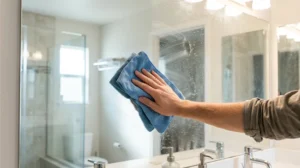
- Dry-dust first. Wipe the mirror with a clean, dry microfiber cloth. This lifts dust before liquid turns it to mud.
- Mix your solution. Combine 1 cup (240 ml) distilled white vinegar with 1 cup (240 ml) distilled water. Pour it into a spray bottle and shake gently.
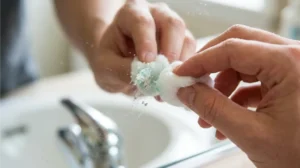
- Spot-treat stuck gunk. Dab toothpaste or hairspray spots with a cotton ball dipped in rubbing alcohol. Wipe until the spots dissolve.
- Mist the cloth, not the mirror. Give your microfiber cloth two or three light pumps. This keeps liquid out of the mirror’s edges.
- Wipe in a zigzag. Start at the top-left corner. Move across and down in an S-pattern. Skip the circles.
- Flip the cloth. Switch to a dry section once the first side feels damp. A wet cloth just pushes dirt around.
- Detail the corners. Fold the cloth to a point and run it along the frame edges. Corners collect the most grime.
- Buff dry. Go over the whole mirror with a second dry microfiber cloth. This removes any last haze.
- Check from angles. Step to each side and look across the glass. Buff any streaks the side view reveals.
Surface-damage warning: keep liquid away from unsealed mirror edges and the silver backing. Trapped moisture causes black edge spots that can’t be fixed.
Method 2: Tough Spots and Anti-Fog Finish
Bathroom mirrors face toothpaste, hairspray, and constant fog. This method handles the tough stuff. It also leaves a finish that shrugs off steam for a few days.
How to Clean a Mirror Without Vinegar
No vinegar handy? A tiny amount of dish soap and water does the trick. Rubbing alcohol handles the spots first.
Safety first: ventilate the bathroom and wear gloves before step one. Rubbing alcohol is flammable, so keep it away from heat and open flames.
- Pre-treat spots. Dab dried toothpaste and hairspray with rubbing alcohol on a cotton ball. Let it sit for one minute.
- Mix soap solution. Add 1/2 teaspoon (2.5 ml) clear dish soap to 2 cups (480 ml) warm water. Swirl gently and don’t whip up foam.
- Wipe with a damp cloth. Dip your microfiber cloth, wring it nearly dry, and wipe in that same zigzag pattern.
- Rinse and re-wipe. Rinse the cloth in clean water, wring it well, and wipe again. This lifts soap residue that causes haze.
- Buff dry. Finish with a dry microfiber cloth. Buff until the glass feels smooth under the cloth.
- Add anti-fog (optional). Wipe a thin layer of shaving cream over the dry mirror. Buff it off completely with a clean cloth.
Surface-damage warning: too much dish soap leaves a filmy haze that attracts dust. Measure that half teaspoon exactly, and rinse the cloth well.
Light Dust vs Toothpaste vs Hard-Water Spots
Light dust needs only a dry microfiber wipe. Skip the spray for a quick daily touch-up. A dry pass takes seconds and stops dust from bonding to the surface.
Toothpaste and hairspray need the rubbing alcohol pre-treat. These sticky spots smear if you hit them with vinegar alone. You’ll just spread a thin white film across the whole mirror.
Hard-water spots need longer dwell time. Let the vinegar solution sit on the glass for two minutes before wiping. For stubborn rings, press a soaked cloth against the spot instead of scrubbing.
Foggy mirrors after showers aren’t dirty, just wet. A quick squeegee pass clears them in seconds. Save the full routine for actual grim
Mirror-by-Mirror Rules
Standard bathroom mirrors handle both methods well. Keep spray off the bottom edge where moisture creeps behind the glass.
Framed mirrors need edge care. Spray the cloth, never the mirror, so liquid can’t seep under wooden or painted frames.
Antique mirrors with foxing or black spots need a gentle hand. Use minimal liquid and never scrub the backing. That silver layer is thinner than paper and won’t recover once it wears through.
Mirrored wardrobe doors are just big mirrors. Work in sections so the solution doesn’t dry before you buff.
Smart mirrors with built-in displays need extra care. Wipe around the screen area, never directly over it. Check the maker’s guide before using any liquid near electronics.
What NOT to Do with Mirrors
Don’t spray cleaner directly on the mirror. Liquid pools at the edges and seeps behind the glass. Mist the cloth instead.
Never use paper towels. They leave lint behind and can scratch cheap mirror coatings. Flat-weave microfiber is the right tool.
Skip the newspaper trick. Modern soy-based inks can transfer onto glass. That old advice comes from a different era of printing.
Avoid circular wiping. Circles redistribute dust and build static. The zigzag pattern lifts dirt away instead.
Don’t drench the mirror. More liquid means more streaks. Two or three pumps on the cloth is plenty.
Never use abrasive pads or powders. They scratch the glass surface permanently. If your tool feels gritty, switch it out.
Faster Alternatives and Shortcuts
A squeegee works wonders on large mirrors. One smooth pull from top to bottom beats ten wipes.
Commercial glass cleaner suits quick touch-ups. Spray sparingly on the cloth to avoid residue buildup.
For fog-free mornings, try the shaving cream trick. Apply it thin, buff it fully, and enjoy clear glass for a week.
Plain water and microfiber handle light dust just fine. Dampen the cloth, wipe in a zigzag, and buff dry. This chemical-free option suits homes with small children.
Keep Mirrors Clear Longer
Run the bathroom fan during and after showers. Less humidity means less fog and fewer water spots.
Squeegee the mirror after steamy showers. Ten seconds now saves a full cleaning later.
Dust mirrors weekly with a dry microfiber cloth. Dust-free glass needs less liquid and streaks less.
Keep the bathroom ventilated even in winter. Crack a window or run the fan for twenty minutes after hot showers.
Key Takeaways
- Mist the cloth, not the mirror. This protects edges and backing.
- Wipe in a zigzag, never in circles.
- Use distilled water to avoid mineral streaks.
- Pre-treat toothpaste with rubbing alcohol.
- Buff dry with a second cloth for a flawless finish.
When to Call a Professional
Huge wall mirrors are a two-person job. A pro has the reach and tools to clean them safely.
Antique mirrors with desilvering need a restoration specialist. Home cleaning can’t fix black edge spots.
If a mirror is glued to the wall and feels loose, call a handyman first. Cleaning a falling mirror is dangerous.
Oversized mirrors in gyms or dance studios need scheduled pro cleaning. The scale and height make DIY risky. A local cleaning service handles these all the time.
Antique mirrors with damaged silver backing, keep liquid away from unsealed mirror edges and bare wooden frames.
Common questions
Can you clean a mirror with vinegar?
Yes, and it's one of the cheapest cleaners you can mix at home. Combine 1 cup (240 ml) distilled white vinegar with 1 cup (240 ml) distilled water. Mist a microfiber cloth lightly and wipe in a zigzag. That gives you a truly streak-free shine.
Why does my mirror always look streaky after cleaning?
Streaks usually come from minerals in hard tap water drying on the glass. Dust turning to mud, plus leftover soap residue, causes most of the rest. Switch to distilled water, use less product, and always buff dry with a second clean cloth.
Should I spray cleaner on the mirror or the cloth?
Always spray the cloth, not the mirror. Direct spraying lets liquid pool along the edges and seep behind the glass. That damages the silver backing. Two or three light pumps on a flat-weave microfiber cloth gives you full control with no drips.
Can I use paper towels to clean a mirror?
You can in a pinch, but microfiber gives a far better finish. Paper towels leave lint behind and can slowly scratch cheap mirror coatings. A flat-weave microfiber cloth soaks up more liquid and leaves nothing behind. Make the switch.
How do I remove toothpaste from a mirror?
Dab the dried toothpaste spots with a cotton ball soaked in rubbing alcohol. Let it sit for one minute to dissolve the paste. Then wipe each spot away with your cloth. Clean the whole mirror afterward so no dull patch remains.
How do I stop my bathroom mirror from fogging?
Add 1 teaspoon (5 ml) clear dish soap to your vinegar mix for an anti-fog boost. The soap leaves an invisible film that stops steam from beading up. For a stronger effect, buff a thin layer of shaving cream over the dry mirror.
Can I use Windex or other glass cleaners on mirrors?
Yes, commercial glass cleaners work fine for quick touch-ups between deeper cleans. Spray sparingly onto the cloth rather than the glass. Over-spraying leaves a filmy residue that quickly attracts dust. The homemade vinegar mix still wins on cost and simplicity.
How often should I clean my mirrors?
Wipe bathroom mirrors weekly to stay ahead of toothpaste splatter, hairspray, and shower humidity. Hallway and bedroom mirrors need only a monthly wipe. Add a quick dry dusting between deep cleans and every mirror stays clearer for longer.
Is vinegar safe for tinted or coated mirrors?
Vinegar is safe for most standard tinted bathroom mirrors in homes. Skip it on specialty coated or one-way privacy glass. Strong cleaners can slowly harm that delicate coating. When in doubt, test a small hidden corner first.
Was this article useful?