Your favorite blazer says dry clean only. You wonder if that label tells the whole story.
The dry cleaning process uses liquid solvents instead of water. That swap protects delicate fibers from shrinkage and damage.
This guide walks you through each step and the solvents involved. You’ll also get safe at-home options for freshening clothes between visits.
You’ll learn what happens at the shop. You’ll also see what the care symbols mean. And you’ll know when to save your money.
Before You Start
Tick these off as you gather them. Nothing here is specialised. Most of it lives in your cupboard already.
- Care labels of the garments
- A well-lit spot for inspection
- Soft brush for surface dirt
- Notes on each stain (what and when)
- Garment bags for transport
- A trusted local dry cleaner
Time, Cost and Difficulty
A drop-off visit takes 10 minutes. Standard turnaround is a few days. Choosing what to dry clean gets easy once you know the symbols.
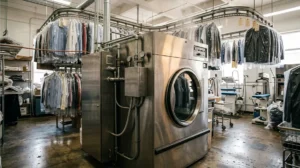
What Dry Cleaning Process Really Means for Your Home
The dry cleaning process cleans clothes with liquid solvents. It skips water entirely. Your garments get inspected, pre-treated, washed, spun, dried, and pressed.
The solvent dissolves oils and grease. It avoids the swelling and shrinkage that water causes in delicate fabrics.
Staff often reach for a stain remover for clothes before the main wash. That step lifts visible marks early.
Here’s a quick look at what happens behind the counter.
Quick Summary Box
| Step | What Happens | Typical Time |
|---|---|---|
| 1. Inspection and tagging | Stains noted, garments tagged | A few minutes |
| 2. Pre-treatment | Spotters treat visible stains | 5-10 minutes |
| 3. Solvent wash | Machine tumbles clothes in solvent | 8-15 min (perc); 25+ min (hydrocarbon) |
| 4. Rinse and extraction | Fresh solvent rinse, spin at 350-450 rpm | 10-15 minutes |
| 5. Drying and recovery | Warm air at 60-63°C; solvent condensed and reused | 15-30 minutes |
| 6. Deodorisation and finishing | Residual vapor removed; garments pressed | Varies |
Why “Dry” Cleaning Uses Liquid
The word “dry” confuses almost everyone. It means no water, not no liquid.
Water swells natural fibers like wool and silk. That swelling causes shrinkage, stiffness, and dye bleeding.
Dry cleaning solvents dissolve oily dirt without swelling fibers. Perc weighs about 70 percent more than water. That weight helps it power through grease.
Your wool suit comes back crisp from the shop. Toss it in the washer and you’ll own a child-sized jacket.
Greasy marks at home? Learn how to remove oil stains from clothes before they set.
The Core Options Compared
Not all dry cleaning uses the same solvent. Here is how the main options compare.
| Solvent | How It Cleans | Pros | Cons |
|---|---|---|---|
| Perchloroethylene (perc) | Strong grease dissolver | Best stain removal; fast wash | Regulated; environmental concerns |
| Hydrocarbon | Gentler petroleum-based solvent | Kinder to delicate trims | Slower; needs 25+ min wash |
| Wet cleaning | Computer-controlled water process | No harsh solvents | Not for all “dry clean only” items |
| At-home kits | Dryer-activated cloths | Cheap; freshens lightly worn items | Can’t remove real stains |
What Is Dry Cleaning
Dry cleaning is professional garment care without water. Shops use solvent machines that look like large front-load washers.
A small amount of dry-cleaning detergent joins the solvent. The mix usually runs 0.5 to 1.25 percent. It lifts water-soluble dirt the solvent alone would miss.
Modern closed-circuit machines recover about 99.99 percent of the solvent. Almost nothing escapes into the air.
How to Dry Clean at Home
True dry cleaning can’t happen at home. Perc is an industrial solvent that needs sealed machines.
At-home kits freshen lightly worn items in your dryer. They use a damp cloth with cleaning agents plus dryer heat.
A spot remover for clothes can handle small marks first. Kits still work best for odors and light soil.
Kits won’t rescue a stained or heavily soiled garment. Think of them as a quick refresh, not a full clean.
Costs, Timelines and Trade-Offs
Dry cleaning costs more than home laundering. Understanding the trade-offs helps you spend wisely.
Typical Budget Ranges
Prices vary by garment type, embellishments, and region. Suits and dresses cost more than shirts.
Stain pre-treatment and pressing add to the bill. Ask for the full price before you leave the shop.
Standard turnaround takes a few days. Same-day service costs extra at most shops.
If the label says dry clean only, that price is part of ownership. Factor it in before you buy.
Step-by-Step Decision Framework
Use these two processes. The first shows what happens at the shop. The second covers at-home kits.
Cleaning Symbols
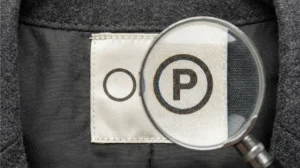
Learn the circle. A plain circle means dry clean. Letters inside tell the cleaner which solvent to use.
P means perc solvent. F means hydrocarbon solvent.
W means professional wet cleaning. A crossed-out circle means do not dry clean.
Dry Clean Meaning
The label reflects how the maker tested the garment. “Dry clean only” means water risks damage.
“Dry clean” without “only” gives you a choice. Gentle hand washing may work, but test carefully first.
When in doubt, follow the stricter instruction. A ruined garment costs more than a cleaning bill.
The Professional Process, Step by Step
Safety first: never buy or use perc at home. It is an industrial solvent that needs sealed machines and trained handlers.
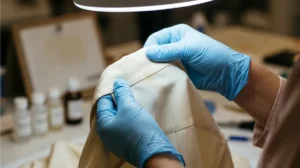
- Inspection and tagging. Staff check pockets, note stains, and tag each garment. Buttons and delicate trim may be removed or protected.
- Pre-treatment. Spotters apply targeted solutions to visible stains. Oil, wine, and protein marks each get different chemistry.
- Loading. Garments go into the machine, sorted by color and fabric. Delicates ride in mesh bags for protection.
- Solvent wash. The machine tumbles clothes in perc for 8-15 minutes. Hydrocarbon machines run 25 minutes or more.
- Rinse and extraction. Fresh distilled solvent rinses the load. Then the basket spins at 350-450 rpm. Most solvent drains back for filtering.
- Drying and recovery. Warm air at 60-63°C (140-145°F) tumbles the load. A chiller condenses the vapor so the solvent gets reused.
- Finishing. Garments are steamed, pressed, and inspected. Then they’re bagged for pickup.
Garment-damage warning: dry cleaning can fade unstable dyes. It can also damage glued sequins or beads. Point these out to your cleaner before drop-off.
For a wine spill, learn how to remove red wine from clothes before it sets.
The At-Home Kit Method, Step by Step
Safety first: work in a ventilated room. Keep the kit locked away from children and pets.
- Read the kit instructions. Kits suit lightly worn, odor-only garments. Check that your dryer has a medium-heat setting.
- Spot-treat stains first. Dab the included stain remover on marks. Kits can’t lift set stains, so keep expectations modest.
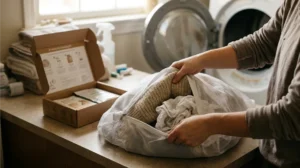
- Load the bag. Place a few garments plus the damp cleaning cloth in the dryer bag. Don’t overfill it.
- Run the dryer. Tumble on medium heat for the kit’s stated time. Most kits suggest 15-30 minutes.
- Hang immediately. Remove garments promptly and hang them. This releases wrinkles while the fabric is warm.
- Inspect honestly. If odors linger, air the garment outside. For real stains, take it to a professional.
Garment-damage warning: dryer heat can shrink wool. It can also set stains permanently. Use kits only on items the label allows.
What NOT to Do with Dry Cleaning
Don’t try to buy perc for home use. It is a regulated industrial solvent. It is not a household product.
Never put a “dry clean only” garment in your washing machine. Water damage shows up as shrinkage, puckering, or dye bleed.
Don’t wait months to treat stains. Old stains bond tighter and resist even professional solvents.
Avoid over-cleaning. Dry cleaning too often wears fabric. Air suits out and spot-clean between visits.
Don’t iron a stained garment before cleaning. Heat sets many stains permanently.
Treat sweat marks early. Here’s how to remove sweat stains from shirts at home.
Which Garments Need Dry Cleaning Most
Wool suits top the list. Water shrinks wool and ruins the canvas inside the jacket.
Silk blouses and dresses come next. Water spots and dye bleed hit silk fast.
Beaded, sequined, or glued embellishments need pros. Home washing rips them off or melts the glue.
Leather and suede need specialists, not standard dry cleaners. Ask for a leather expert specifically.
Rayon and viscose can also shrink badly in water. Check the label before you risk it.
Expert Tips and Pitfalls
How Is Dry Cleaning Done
Pros sort loads by solvent type and soil level. Mixing a greasy work uniform with a silk blouse invites trouble.
They match the spotting agent to the stain chemistry. Protein, tannin, oil, and dye stains each need different treatment.
They press with steam and shaped forms. That crisp lapel comes from equipment, not a home iron.
Ask your cleaner which solvent they use. That answer tells you how gentle the process will be.
Make Clothes Last Between Cleanings
Air garments after wearing. Hang suits in fresh air for a day before returning them to the closet.
Brush suits with a clothes brush. This lifts dust and revives the nap on wool.
Treat small spots at once with a damp cloth. Blot, don’t rub, and let the area dry fully.
Use breathable garment bags for storage. Plastic traps moisture and invites mildew.
Rotate your shoes and let them rest. The same idea keeps garments fresher for longer.
Key Takeaways
- Dry cleaning uses solvents, not water. That protects wool, silk, and rayon.
- Perc is the standard solvent. Hydrocarbon and wet cleaning are gentler options.
- Read the circle symbol. Letters P, F, and W guide the cleaner.
- At-home kits freshen only. They can’t remove real stains.
- Never use perc at home. It needs sealed industrial machines.
Never attempt perc solvent cleaning at home. Sturdy machine-washable cottons rarely need dry cleaning.
Common questions
What is dry cleaning?
Dry cleaning is a professional cleaning method. It uses liquid chemical solvents instead of water. Clothes tumble in solvents like perc. The solvent dissolves oils and grease. It avoids swelling and shrinking delicate fibers. The process suits wool suits, silk blouses, and rayon dresses.
Does dry cleaning use water?
Traditional dry cleaning uses no water in the main cycle. It relies on solvents such as perc or hydrocarbon. These solvents dissolve dirt, body oils, grease, and grime. Wet cleaning is a separate water-based method. Many modern cleaners offer it as a gentler choice.
Is perc safe?
Perc is effective but tightly regulated. The US EPA controls its use in shops. Many cleaners now offer greener solvents. Your cleaned clothes are safe to wear. Modern machines recover nearly all solvent during drying.
Can I dry clean at home?
Not truly. Real dry cleaning needs sealed industrial machines. It also needs trained operators. At-home dryer kits freshen lightly worn clothes. They cannot remove real stains or heavy soil. Use kits for odors between professional cleanings.
How long does dry cleaning take?
Standard turnaround is usually a few days. The machine cycle runs under an hour. Careful hand pressing and inspection add time. Same-day service is often available. Expect an extra charge for express work.
Why does dry cleaning smell?
A faint chemical odor can linger after cleaning. Tiny traces of solvent vapor cause it. Proper drying and deodorisation remove almost all of it. Air the garment near an open window if needed. The smell fades quickly.
What do the dry cleaning symbols mean?
A plain circle means professional dry cleaning. A P inside means perc solvent. An F means hydrocarbon solvent. A W means professional wet cleaning. A crossed-out circle means do not dry clean.
Can dry cleaning remove all stains?
No cleaner can promise that. Trained professionals still remove most stains. Success depends on the stain type and fabric. It also depends on how long the mark sat. Old, heat-set, or dye-based stains are hardest. Bring garments in early.
Is dry cleaning bad for the environment?
Traditional perc cleaning raised environmental concerns. Modern closed-circuit machines recover nearly all solvent. That sharply cuts emissions and waste. Many shops now offer hydrocarbon or wet cleaning. Ask your local cleaner what they use.
Does dry cleaning shrink clothes?
Proper dry cleaning should never shrink garments. No water touches the fabric at any stage. Shrinkage happens when water and heat combine. This process avoids that combination. Tell your cleaner about past shrinkage issues.
Was this article useful?