Before You Start
Tick these off as you gather them. Nothing here is specialised. The whole list takes ten minutes.
- Measure your mattress. Get length, width, and depth. Include any topper.
- Check your washing machine drum. Big comforters need room to tumble.
- Work out who sleeps hot and who sleeps cold. Fill choice depends on it.
- Read the care labels on your current bedding. They show what routine you tolerate.
- Set a hard budget band now. Under $80, under $250, or a full quality set.
- Photograph your bedroom in daylight. You’ll match covers faster.
- Note your country’s standard. Duvets rule the UK. Comforters are common in the US.

How to Use This Guide
Each section answers one buying question. Read the definitions first. Then work through the seven differences that matter. Meanwhile, the FAQ at the end handles the odd cases.
Budget Bands and What They Buy
The band tells you what quality you can afford. Lower bands buy synthetic fills. Higher bands buy down and better covers. These are 2026 retail ranges, not exact prices.
| Budget band | What it buys | Best for |
|---|---|---|
| Under $80 | Synthetic comforter or basic duvet set | Spare rooms, students, first flats |
| $80–$250 | Down-alternative duvet with cotton cover | Everyday bedrooms |
| $250–$600 | Down duvet, quality covers, hotel-grade comforter | Primary bedrooms |
| $600+ | High-fill-power down, luxury covers | Bedding enthusiasts |
Size Matters More Than Brand
Walk through this measuring routine before you buy. It’s the step that separates a styled bed from a skimpy one. However, the routine itself is simple.
- Measure the mattress width, length, and depth. Include any topper. Note all three figures.
- Comforters usually run larger than duvets. They hang over the bed sides.
- Duvets usually fit the mattress size. They sit on top, not over the edge.
- For thick mattresses, pick the top of the size range. Or size up.
- Match duvet cover and insert sizes exactly. A loose cover bunches and looks lumpy.
- Check the drum before buying a king-size comforter. Oversized pieces need big machines.
When in doubt, size up. Generous bedding always looks better than skimpy bedding.
At-a-Glance Size Reference
| Size | Duvet insert (typical) | Comforter (typical) | Best mattress depth |
|---|---|---|---|
| Twin / Single | 140 × 200 cm (55 × 79 in) | 168 × 218 cm (66 × 86 in) | Up to 25 cm / 10 in |
| Full / Double | 200 × 200 cm (79 × 79 in) | 203 × 218 cm (80 × 86 in) | Up to 30 cm / 12 in |
| Queen | 224 × 229 cm (88 × 90 in) | 218 × 244 cm (86 × 96 in) | Up to 35 cm / 14 in |
| King | 259 × 229 cm (102 × 90 in) | 274 × 244 cm (108 × 96 in) | Up to 40 cm / 16 in |
US and UK sizing differs. Always check centimetres and inches, not just the name.
The Core Difference in Plain Terms
Confusion comes from overlap. Some comforters work as duvet inserts. Some shops mix the terms. Still, these definitions cut through the noise.
What Is a Duvet?
Idea 1: A duvet is a two-piece system. It’s a plain filled insert inside a removable, washable cover. The insert is usually white. The cover comes in every colour and pattern. Think of a giant pillowcase for your bed.
The word duvet comes from the French word for down. That’s the duvet meaning at its root. Down and down-alternative inserts are the most popular fills today. This cover-based setup is standard in British bedrooms. That’s why duvets dominate UK shops.
If someone asks you to define duvet, keep it short. It’s a filled bag that lives inside a cover. It’s never used bare.
What Is a Comforter?
Idea 2: A comforter is a one-piece blanket. It’s a single plush blanket, sealed on all four sides. The fill can be down, feathers, or polyester. What you see is what you get. The pattern is built in. This style is more common in American bedding.
The comforter meaning is simple. Warmth and decoration in one object. Comforters lie flatter than duvets. A duvet inside a cover feels loftier and more enveloping. Warmth depends on the filling, not the label.
What Is a Duvet Insert?
A duvet insert is the filled inner layer of the duvet system. It provides the warmth. The cover provides the look. Inserts are sold by fill type, fill power, and tog rating.
Ever searched what is a duvet insert and found only confusing listings? Here’s the answer. It’s the duvet without the cover. Simple as that.
Many shoppers ask duvet insert vs comforter. What’s the gap? A duvet insert is made to be covered and rarely washed. A comforter is made to be seen and washed whole. That one design choice drives almost every practical difference below.
What Is a Duvet Cover?
A duvet cover is a removable fabric case for a duvet insert. It works like a giant pillowcase. It closes with buttons, zips, or ties. Covers come in endless colours and patterns. They wash like sheets, which keeps the insert cleaner for longer.
The duvet cover meaning is protective and decorative at once. It’s why a duvet system stays hygienic without constant deep cleaning.
Some quick clarifications. Duvet vs duvet cover: the insert is the filling, the cover is the shell. Duvet cover vs comforter: one is a shell, the other is a complete blanket. Duvet covers vs comforters: buy the cover if you own an insert, buy the comforter if you want one purchase.
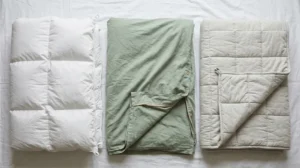
Duvet vs Comforter: Side-by-Side
| Feature | Duvet | Comforter |
|---|---|---|
| Pieces | Two: insert + removable cover | One: quilted blanket |
| Used bare? | No, always inside a cover | Yes, the outer layer is the product |
| Washing | Cover washes like a sheet; insert rarely | Whole item washes; often needs a big machine |
| Styling | Change the look with a new cover | Fixed pattern and colour |
| Warmth control | Swap tog rating or layer covers | One fixed warmth level |
| Upfront cost | Higher (insert + cover) | Lower (one purchase) |
| Long-term cost | Lower, covers are cheap to replace | Higher, replace the whole item |
| Typical market | UK, Europe, Australia | US, Canada |
| Best for | Hot sleepers, renters, allergy sufferers | Guest rooms, minimalists, tight budgets |
See more bedding basics in our how to clean a mattress guide.
Seven Differences That Matter Most
These seven points decide which suits your sleep, your laundry, and your wallet. Each one is a real buying factor, not a marketing line. Meanwhile, each difference is simple to check.
1. Construction
Idea 3: Construction. A duvet pairs a filled insert with a separate cover. A comforter combines filling and outer layer in one quilted piece. Good ones use baffle-box stitching for even fill.
Why does that matter? Baffle-box builds stop fill from sliding to the corners. Consequently, a cheap cotton comforter without stabilising stitching will sag inside a cover within a month.
2. Washing
Idea 4: Washing. A duvet wins on laundry day. The cover strips off and washes like a sheet. The insert needs washing rarely. A whole comforter may need a large machine or a launderette trip.
This one point convinces most renters and small-flat dwellers. When people ask about comforters or duvet, the machine size usually settles it.
3. Styling Flexibility
Idea 5: Styling flexibility. A duvet changes look with a new cover. Covers cost far less than new bedding. Seasonal swaps are easy. Light cover for summer, rich texture for winter.
A comforter is what it is. Lovely, but permanent. If you restyle often, the duvet system pays for itself in one season.
4. Cost Over Time
Idea 6: Cost over time. A duvet system costs more upfront. You buy insert plus cover. But covers are cheap to replace, so long-term costs stay low.
A comforter is cheaper on day one. It’s pricier by year three. Replacing it means replacing the whole object. Compare bedding comforters sets with duvet systems by counting what you’ll replace later.
5. Warmth Control
Idea 7: Warmth control. Duvets adjust by season. Swap the insert’s tog rating. Or layer covers. A comforter gives one fixed warmth level.
Hot sleepers gain more from the duvet system. That’s why down alternative comforter vs duvet comparisons usually favour the duvet.
6. Sizing
Idea 8: Sizing. Comforters usually run larger. They drape over the bed sides. Queen sizes: duvet 224 by 229 cm (88 by 90 inches). Comforter 218 by 244 cm (86 by 96 inches).
The comforter is wider. That looks generous on a low bed and messy on a tall one. The duvet is longer. That covers pillows and shoulders better. Match the shape to your bed.
7. Longevity
Idea 9: Which lasts longer? Both last years with care. Duvet inserts keep their loft when aired and stored in breathable bags.
Comforters wear where the quilting stresses. The failure point differs. Duvet inserts slowly lose loft. Comforters fray at quilting lines and bound edges.
Difference Summary
| # | Factor | Winner | Why it matters |
|---|---|---|---|
| 1 | Construction | Tie | Duvet is two pieces; comforter is one quilted piece |
| 2 | Washing | Duvet | Cover strips off and washes like a sheet |
| 3 | Styling | Duvet | New cover equals a new room, low cost |
| 4 | Upfront cost | Comforter | One purchase, no assembly |
| 5 | Warmth control | Duvet | Swap tog or layer; comforter is fixed |
| 6 | Sizing | Tie | Comforter wider, duvet longer |
| 7 | Longevity | Slight duvet edge | Inserts keep loft; comforters wear at quilting |
For soft natural bedding, see our how to get coffee out of sheets guide.
Two Easy Ways to Decide
Still torn? These two strategies settle it fast. Both work on any budget. However, most people only need one.
The Renter’s Rule
Pick a duvet if you restyle often. One insert plus two or three covers gives years of fresh looks. Covers wash easily in small machines. Perfect for renters and anyone who likes change. Cost: $80–$200 for a starter system.
Pick a comforter if you want simplicity. One purchase, one piece, no assembly. It suits guest rooms and anyone who hates fiddly bedding tasks. Just check the washing logistics first. Cost: $50–$150.
The Hotel-Look Routine
Hotels use the duvet system for one reason. Fresh covers, fast turnover. Copy it at home with the burrito roll method.
- Lay the duvet cover inside out on the bed. Smooth it flat. Keep the opening at the foot.
- Lay the insert on top, matching corners. Clip the corner loops to the cover’s ties if fitted.
- Roll insert and cover together from head to foot. Like a burrito. Keep it even.
- Reach inside the foot opening. Flip the roll right-side out. Unroll back toward the head.
- Shake the duvet out and smooth the corners. The whole job takes under five minutes.
Practice once and it becomes second nature. The burrito method beats the old shake-and-stuff approach.
Decision Flow: Which One Should You Buy?
| If you… | Buy this | Typical cost |
|---|---|---|
| Restyle often, rent, or have a small machine | Duvet system | $80–$200 |
| Want one purchase and no assembly | Comforter | $50–$150 |
| Sleep hot or share a bed with a hot sleeper | Duvet with swappable tog | $120–$300 |
| Furnish a guest room cheaply | Comforter | $50–$150 |
| Have allergies | Duvet with down-alternative insert | $100–$250 |
| Want a hotel look at home | White duvet plus cotton cover | $150–$400 |
Colour, Material and Layout Notes
Fill and fabric decide comfort more than the duvet-versus-comforter label. Get these right and either system sleeps well. In addition, colour pulls the room together.
Down vs Down-Alternative Fills
Down clusters trap warmth with little weight. Fill power measures loft. Down-alternative fibres mimic down and suit allergy sufferers. Wool fills regulate temperature naturally. Choose by warmth needs and ethics, not marketing.
Tog Ratings Explained
Tog ratings measure warmth in the UK system. A 4.5 tog suits summer. A 13.5 tog suits cold winters. All-season duvets pair two inserts that clip together.
Comforters rarely carry tog ratings. Compare fill weight instead.
| Tog rating | Season | Who it suits |
|---|---|---|
| 1–4.5 tog | Summer | Hot sleepers, warm climates, heated bedrooms |
| 7–10.5 tog | Spring / Autumn | Average sleepers, mild climates |
| 12–13.5 tog | Winter | Cold sleepers, unheated bedrooms |
| All-season (two inserts) | Year-round | Households that never agree on temperature |
Fabric Choices That Change Everything
- 100% cotton comforter or cover: breathable, washes well, feels cool. The safest all-rounder.
- Percale cotton: crisp, matte, hotel-like. Great for hot sleepers.
- Sateen cotton: smoother, slightly warmer, drapes heavily.
- Linen: temperature-regulating, textured, softens for years. See our spot remover for clothes guide for laundry care.
- Microfibre or polyester: cheapest, least breathable, best for guest rooms.
Colour and Layout Notes
Bedding is the biggest block of colour in most bedrooms. Treat the duvet cover as your main field. Use the comforter as a textural accent if you layer. Cushions are the punctuation.
A white or oatmeal base plus two or three seasonal covers gives you flexibility. No repainting needed.
For fresh colour pairings, see our how to remove stains from carpet guide and explore the full Interior Design & Room Decorating collection.
Common Buying Errors
- The oversized cover. A cover far bigger than the insert is the classic mistake. The duvet slides and bunches inside. Match sizes exactly, down to the inch.
- Ignoring washing logistics. A king comforter may not fit your machine. Check drum capacity before you buy, not after.
- Buying by looks alone. A pretty cover on a flat, cold insert disappoints nightly. Feel the fill and check the tog first.
- Assuming international sizes match. US and UK sizing differs. Check centimetres and inches, not just the name.
Layering Ideas for Either System
- Summer: low-tog duvet insert plus a cotton cover, folded at the foot.
- Winter: high-tog insert plus a flannel or linen cover, with a folded quilt or blanket.
- Hotel look: crisp white duvet, folded comforter at the foot, two square pillows behind two standard pillows.
- Guest room: medium-warmth comforter plus a spare blanket in a basket. No assembly knowledge required.

Related Terms: Bedspread, Quilt, Coverlet, Blanket
Most bedding confusion isn’t between duvet and comforter. It’s between all the words around them. Use this table as a glossary.
| Term | What it is | Used with a cover? | Typical weight | Best for |
|---|---|---|---|---|
| Duvet | Filled insert inside a removable cover | Yes, always | Medium to heavy | Year-round warmth, styling flexibility |
| Comforter | One-piece quilted blanket | No | Medium | Simple bedrooms, guest rooms |
| Duvet cover | Removable fabric case for an insert | It is the cover | Light | Protecting the insert, changing the look |
| Bedspread | Thin decorative cover that drapes to the floor | No | Light | Traditional styling, hiding under-bed storage |
| Quilt | Thinner decorative covering, often patchwork | No | Light to medium | Mild weather, layering, decoration |
| Coverlet | Lightweight woven cover, quilted or matelassé | No | Light | Summer, layering over a duvet, guest beds |
| Blanket | Single-layer woven or knit cover | No | Varies | Extra warmth, sofas, layering |
| Top sheet | Flat sheet between sleeper and bedding | N/A | Light | US routines; optional with a duvet |
Quick Answers to Common Term Questions
- What is a bedspread? A thin, often quilted cover that drapes low. It’s a top layer, not something you sleep under directly.
- What is a quilt? A thinner, decorative bed covering, often patchwork, with light filling.
- Bedspread vs duvet: the bedspread is a decorative top layer. The duvet is a warm covered system you sleep under.
- Bedspread vs quilt: the bedspread drapes to the floor. The quilt stops at the mattress edge and layers.
- Coverlet vs quilt: the coverlet is woven or matelassé and lighter. The quilt is stitched and warmer.
- Coverlet vs comforter: the coverlet is a lightweight decorative layer. The comforter is a full warmth layer.
- Coverlet vs duvet: the coverlet is a single light layer. The duvet is a filled insert plus cover.
- Quilt vs comforter: the quilt is thinner and decorative. The comforter is thicker and functional.
- Quilt vs duvet: the quilt is a light top layer. The duvet is a warm covered system.
- Quilt vs blanket: the quilt is stitched and filled. The blanket is a single woven layer.
- Blanket vs comforter: the blanket is a single layer. The comforter is a filled, quilted piece.
- Is a comforter a blanket? Not exactly. A comforter is a filled, quilted bed covering. A blanket is usually a single woven layer.
- What is a comforter vs bedspread? The comforter is a filled warmth layer you sleep under. The bedspread is a thin decorative layer that drapes to the floor.
- What are bedspreads? Decorative covers that drop to the floor, often quilted, used as the final styled layer.
- What is a duvet cover set? A cover plus matching pillowcases, sold as one pack.
- Common misspellings: “douvet,” “comferter,” and “du vet” all mean the same things. Duvet, comforter, and duvet.
Washing, Care and Storage
Keep bedding fresh with simple habits. Wash duvet covers every one to two weeks. Air the insert monthly in fresh air. Store spare bedding in breathable cotton bags, not plastic.
| Item | How often | Method | Watch out for |
|---|---|---|---|
| Duvet cover | Every 1–2 weeks | Machine wash warm, tumble low | Button and zip damage; close them first |
| Duvet insert | 1–2 times a year | Large machine or professional clean | Losing loft if washed too hot |
| Comforter | Every 1–2 months | Large drum, gentle cycle | Fill migration; drum damage if undersized |
| Down fills | 1–2 times a year | Professional or down-safe detergent | Never use fabric softener |
| Wool fills | 1–2 times a year | Cold, wool cycle, flat dry | Heat causes shrinkage and felting |
| Storage | Seasonally | Breathable cotton bags | Plastic traps moisture and breeds mildew |
What NOT to Do With Duvets and Comforters
- ❌ Don’t buy a cover without measuring the insert. Mismatched sizes bunch and slide. Measure twice, buy once.
- ❌ Don’t wash a comforter in an undersized machine. It won’t rinse clean and may damage the drum. Use a launderette for oversized pieces.
- ❌ Don’t skip the care label. Down, wool, and synthetics all wash differently. The label is the law.
- ❌ Don’t store bedding in plastic bags. Trapped moisture breeds mildew. Use breathable cotton bags.
- ❌ Don’t assume international sizes match. US and UK sizing differs. Check centimetres and inches.
- ❌ Don’t use fabric softener on down or down-alternative fills. It coats the fibres and flattens the loft.

Where to Buy Each Element
Start with homeware chains for synthetic comforters and basic duvet sets. They stock standard sizes that fit most beds. Online bedding specialists widen the choice for down fills and quality covers.
| What you need | Where to look | What to check on the label |
|---|---|---|
| Budget comforter | Homeware chains, big-box retailers | Fill weight, quilting density, machine capacity |
| Duvet insert | Bedding specialists, department stores | Fill power, tog rating, baffle-box construction |
| Duvet cover | Bedding specialists, independent textile brands | Thread count, closure type, corner ties |
| 100% cotton comforter | Natural-fibre specialists | Fibre content, wash temperature, shrinkage |
| Hotel-grade sets | Hospitality suppliers, premium retailers | Commercial wash durability, colour fastness |
For down duvets, check fill power and fill weight on the label. We compared published specs, not lab tests, when checking warmth claims. Higher fill power means more loft per gram, not just more filling.
A 700 fill-power duvet can be warmer than a heavier 550 fill-power one. Always check the returns policy. Bedding feels different at home than in store. Most good retailers allow a trial period. Unpack, sleep two nights, and decide before the window closes.
Key Takeaways
- A duvet is a two-piece system: insert plus removable cover.
- A comforter is a one-piece quilted blanket used without a cover.
- Duvets win on washing ease and styling flexibility.
- Comforters win on simplicity and lower upfront cost.
- Match cover and insert sizes exactly to avoid bunching.
- Check washing logistics before buying a large comforter.
- Warmth comes from fill and tog, not the product name.
- Measure your mattress and topper before you buy anything.
- Store bedding in breathable cotton bags, never plastic.
- US and UK sizing differ. Check centimetres and inches.
Before you start
Tick these off as you gather them — nothing here is specialised.
0 of 7 ready · Ticks are for this visit only and aren't saved.
Don't buy without measuring your mattress and topper first. Don't wash a comforter whole without checking the care label; some need large machines. Don't pair a duvet insert with a far bigger cover, and don't assume the labels mean the same thing internationally.
Common questions
What is the main difference between a duvet and a comforter?
A duvet is a two-piece system: a filled insert plus a removable cover. A comforter is a one-piece quilted blanket used without a cover. That removable cover is the key difference between a duvet and a comforter.
Can I use a comforter as a duvet insert?
Often, yes. Comforters with baffle-box construction and corner loops work well as duvet inserts. Cotton comforters without stabilizing stitching are less suitable. Always match sizes and check for corner loops before you try it.
What is a duvet cover?
A duvet cover is a removable fabric case for a duvet insert. It works like a giant pillowcase and closes with buttons, zips, or ties. It washes like a sheet, which keeps the insert cleaner for longer.
What goes in a duvet cover?
A duvet insert goes in a duvet cover. Nothing else. The insert provides warmth, while the cover provides the look and the washable surface. Never use a duvet cover bare as a blanket; it has no fill and will feel cold.
Which is warmer, a duvet or a comforter?
Warmth comes from the filling, not the type. A high-tog down duvet is warmer than a thin synthetic comforter. Duvets offer seasonal flexibility; comforters give one fixed warmth. Check fill power and tog ratings, not the product name.
Which is easier to wash, a duvet or a comforter?
A duvet is easier to wash. You strip the cover and wash it like a sheet; the insert rarely needs washing. A comforter washes whole and may need a large machine or a launderette trip. If your machine is under 8 kg, this factor usually decides it for you.
Do I need a top sheet with a duvet?
Not necessarily. The duvet cover acts like a top sheet in the UK system. Some sleepers still use one for extra freshness. In the US, comforters usually pair with a top sheet underneath.
What does tog mean?
Tog measures a duvet's thermal insulation in the UK system. Higher tog means more warmth. 4.5 tog suits summer; 13.5 tog suits cold winters. All-season duvets pair two inserts that clip together. Match tog to your climate and sleep temperature.
What is the difference between a duvet and a quilt?
A quilt is a thinner, decorative bed covering, often patchwork, with light filling. A duvet is a thick, plain insert used with a cover for warmth. Quilts suit mild weather and decoration; duvets suit real winter warmth. Some sleepers layer both.
Which should I buy for a guest room?
A comforter often wins for guest rooms. It's one piece, simple to make up, and needs no assembly knowledge. Choose a medium warmth that suits most sleepers and add a spare blanket for cold-sensitive guests. If the room doubles as an office, layer a coverlet over a light duvet.
Are duvets or comforters better for allergies?
Down-alternative fills in either type suit allergy sufferers best. Duvets add an edge: washable covers trap fewer allergens than a fixed comforter surface. Wash covers regularly and air the insert. Hypoallergenic labels help guide choice.
Is a comforter a blanket?
Not exactly. A comforter is a filled, quilted bed covering. A blanket is usually a single woven or knit layer. The comforter is warmer and more structured, while the blanket is thinner and more versatile for layering.
Can I use a duvet without a cover?
You can, but you shouldn't. Duvet inserts are usually white, not made to be seen, and hard to wash. Using one bare exposes the fabric to body oils and dust, which shortens its life considerably.
How do I stop my duvet sliding inside the cover?
Use corner ties and loops. Most quality covers have internal ties at all four corners; most quality inserts have loops. Tie them before you close the cover. Match sizes exactly too; a loose cover is the main cause of bunching.
Was this article useful?