Morning coffee in bed ended with a brown splash across your sheets. Don’t panic. Learning how to get coffee out of sheets is easier than you think, because coffee dissolves in water. Act fast and most spills vanish completely. Even dried marks usually lift with the right method. This guide covers fresh spills, dried stains, and every common sheet fabric. For a broader look at coffee stains on other fabrics, see our guide on how to remove coffee stains.
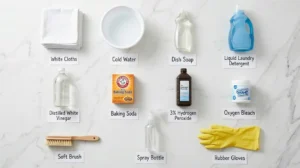
Before You Start: Supplies Checklist
Grab these before you start. Sheets are big, so you may need a basin or bathtub for soaking.
- Clean white cloths or paper towels
- Cold water
- Clear liquid dish soap
- Liquid laundry detergent (enzyme-based works best)
- Distilled white vinegar
- Baking soda
- 3% hydrogen peroxide
- Oxygen-based bleach (sodium percarbonate)
- A soft brush or old toothbrush
- A basin, bucket, or bathtub
- A spray bottle
- Rubber gloves
Why Does Coffee Stain Sheets So Fast?
Coffee contains tannins, the same plant compounds that stain red wine drinkers’ teeth. These pigments bond to fabric fibers as the liquid dries. Hot coffee sets faster than cold, because heat opens up fibers. Add milk or sugar and the stain gets stickier.
Here’s what most guides miss. Black coffee is mostly a tannin stain, and water handles it well. Coffee with milk or cream adds protein and fat. Those need soap or enzymes to break down fully. That’s why a plain water rinse sometimes leaves a faint yellow shadow behind.
The good news? Coffee is water-soluble. Unlike grease, it wants to dissolve. Your main enemy is time and heat. Treat it quickly with cold water and you win most of the battle.
How to Get Coffee Out of Sheets When the Spill Is Fresh
Blot the spill with a clean cloth, working from the outside in. Rinse cold water through the back of the fabric. Work in a few drops of dish soap. Let it sit for 5 to 10 minutes. Rinse cold and wash on a cold cycle. Air dry and check.
This handles most fresh spills in under 15 minutes. Follow the steps in order.
- Blot, don’t rub. Press a clean white cloth onto the spill. Lift straight up. Turn the cloth to a fresh section each time. Rubbing spreads the stain wider.
- Strip the bed fast. Pull the sheet off the bed so coffee can’t soak through to the mattress pad. Check the pad underneath for spots.
- Rinse from the back. Hold the stained area under cold running water. Let water flow through from the back of the fabric. This pushes coffee out the way it came in.
- Work in dish soap. Add a few drops of clear liquid dish soap to the stain. Gently rub the fabric together or use your fingertips. Work from the outside toward the center.
- Wait 5 to 10 minutes. Let the soap break down the coffee oils. Don’t let the fabric dry out.
- Rinse fully. Rinse with cold water until the water runs clear and no soap remains.
- Wash on cold. Machine wash the sheet on a cold cycle with your regular detergent. Add oxygen-based bleach for white sheets.
- Air dry and inspect. Skip the dryer for now. Check the sheet in daylight. See a shadow? Treat again before drying.
How Do You Remove a Dried Coffee Stain from Bedding?
Soak the stained area in cold water for 30 minutes. Then soak it in 1 cup (240 ml) white vinegar and 2 cups (480 ml) cold water. Wait 30 minutes. Work in liquid detergent and wait 15 minutes. Rinse cold, wash, and air dry.
Dried coffee needs more time, but it still comes out. Here’s the full process.
- Rehydrate the stain. Soak the marked area in a basin of cold water for 30 minutes. Dried pigment softens and loosens.
- Vinegar soak. Mix 1 cup (240 ml) of white vinegar with 2 cups (480 ml) of cold water. Submerge the stain for 30 minutes. Vinegar loosens tannin bonds.
- Apply detergent. Work 1 tablespoon (15 ml) of liquid laundry detergent into the stain with a soft brush. Enzyme-based detergent works best on milky coffee.
- Wait 15 minutes. Let the detergent break down the remaining color and oils.
- Peroxide for stubborn spots. On white or colorfast sheets, dab 3% hydrogen peroxide onto any remaining mark. Wait 10 minutes. Patch test colored sheets first. Wear gloves and keep it away from your eyes.
- Rinse with cold water. Flush the area fully. Check in good light.
- Wash and air dry. Launder per the care label. Air dry and inspect before the sheet goes near a dryer.
Safety note: Work in a ventilated room when using peroxide. Never mix vinegar and peroxide in the same step. Rinse the fabric well between treatments.
Which Method Should You Use for Coffee Stains?
Match the method to the stain’s age and your sheet fabric. Cold water and dish soap handle fresh spills fast. Vinegar soaks and detergent tackle dried marks. Peroxide finishes stubborn spots on whites. Oxygen bleach soaks rescue large or set-in areas.
| Method | Best For | Time Needed | Fabric Note |
|---|---|---|---|
| Cold rinse + dish soap | Fresh spills | 10 to 15 minutes | Safe for all fabrics |
| Vinegar soak | Dried stains, tannin marks | 30 minute soak | Light colors; rinse well |
| Baking soda paste | Light dried marks | 30 minutes | Safe for colors |
| Hydrogen peroxide dab | Stubborn spots on whites | 10 minutes | Whites or patch-tested colors |
| Oxygen bleach soak | Large areas, set-in stains | 1 to 6 hours | Check the care label first |
| Enzyme detergent | Coffee with milk or cream | 15 minute pre-treat | Safe for most fabrics |
Fresh black coffee on cotton? Cold water and dish soap usually does the job. A milky latte that dried overnight? Go for the vinegar soak plus enzyme detergent. A bedding stain guide from Downland agrees: quick cold rinsing matters most.
Match the Method to the Stain’s Severity
Mild: Spilled Minutes Ago
Blot and rinse with cold water right away. Work in a few drops of dish soap. Wash on cold. Most fresh spills disappear completely with this alone. Speed is everything here.
Moderate: Dried for Hours or Overnight
Rehydrate in cold water for 30 minutes first. Then use the vinegar soak and detergent method above. Coffee with milk needs the enzyme detergent step. Expect one or two rounds for full removal.
How to Get Coffee Out of Sheets After Washing and Drying (Severe)
Soak the sheet in oxygen-based bleach for one to six hours, following the package dose. Use the warmest water the care label allows. Follow with the peroxide dab on any remaining shadow. Repeat up to three times. Heat-set coffee stains lighten well, though deep ones may leave a faint trace.
Does Sheet Fabric Change the Method?
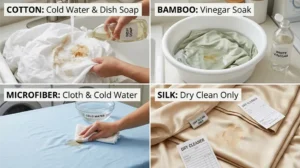
Yes. Cotton and percale handle every method in this guide. Bamboo sheets need gentler handling and cooler water. Microfiber resists stains but hates high heat. Silk and satin belong at the dry cleaner. Always check the care label first.
Cotton and Percale
The most forgiving bedding you can own. Use the full fresh or dried method above. Oxygen bleach keeps white cotton bright. Wash at the warmest setting the label allows for whites. For a full stain removal system, check our guide to stain remover for clothes.
Bamboo and Linen
These fibers weaken slightly when wet, so skip stiff brushing. Blot gently and keep water cool or lukewarm. The vinegar soak works well here. Air dry flat when possible.
Microfiber and Polyester
Synthetics resist absorption, which helps you. Blot fast and flush with cold water. Dish soap alone often does the trick. Avoid hot water and high dryer heat, which can damage the fibers.
Silk and Satin
Don’t home-treat these with peroxide, vinegar, or bleach. Blot gently with a dry cloth. Take the sheet to a dry cleaner and point out the coffee stain. Home treatments can ruin delicate fibers.
What NOT to Do with Coffee Stains on Sheets
These mistakes turn an easy stain into a permanent one. Avoid them all.
- Rinsing with hot water first. Heat sets coffee tannins into fibers. Always start cold.
- Rubbing the spill. Rubbing spreads the stain and drives it deeper. Blot and lift instead.
- Using the dryer too soon. Dryer heat can set a leftover stain for good. Air dry and inspect first.
- Reaching for chlorine bleach on colors. It strips dye and weakens fibers. Oxygen bleach is safer for whites, and skip bleach on colors.
- Scrubbing with a stiff brush. Hard scrubbing pills cotton and damages bamboo. A little elbow grease with a soft brush is plenty.
- Leaving soap in the fabric. Rinse fully after every treatment. Leftover soap attracts dirt and dulls sheets.
- Ignoring the mattress. Coffee can soak through to the mattress pad or mattress. Check underneath every time. If the stain reached the mattress, read our guide on how to clean a mattress.
How Do You Keep Coffee Off Your Sheets?
Keep the coffee in the cup, not on the bed. Use a travel mug with a lid for bedroom coffee. Sit up before that first sip, since most spills happen when you’re half asleep. A washable mattress protector catches what the sheets miss.
- Drink from lidded mugs in bed. Spill-proof beats stain remover every time.
- Keep a stain kit nearby: dish soap, vinegar, and clean cloths in the bedroom. Fast action saves sheets.
- Use a mattress protector. It stops coffee reaching the mattress itself. Wash it with the sheets.
- Wash sheets weekly. Fresh stains come out easier than week-old ones. A regular routine keeps bedding fresh.
- Check before drying. Inspect every load in daylight before it hits the dryer. This one habit prevents most set-in stains.
Key Takeaways
- Act fast. Blot at once and rinse with cold water.
- Stay cold. Hot water sets coffee stains. Cold water lifts them.
- Dish soap handles fresh spills. Vinegar and detergent handle dried ones.
- Milky coffee needs enzymes. Use enzyme-based detergent for lattes.
- Skip the dryer until the stain is fully gone.
- Check the mattress. Coffee soaks through more often than you’d think.
Before you start
Grab these before you start. Sheets are big, so you may need a basin or bathtub for soaking.
0 of 12 ready · Ticks are for this visit only and aren't saved.
Never use hot water, chlorine bleach, or a hot dryer on coffee stains. Heat sets the tannins permanently, and chlorine bleach can damage sheet fibers and strip color. Always start with cold water and oxygen-based bleach.
Common questions
Can you get coffee stains out of sheets?
Yes, almost always. Coffee is water-soluble, so it lifts easier than most stains. Blot the spill at once and rinse with cold water from the back of the fabric. Work in liquid dish soap, wait 5 to 10 minutes, then rinse and wash on cold. Dried stains need a vinegar soak first. Air dry and inspect before using the dryer.
Does coffee permanently stain white sheets?
Rarely, if you act quickly. Fresh coffee rinses out of white cotton with cold water and detergent. The risk rises when the stain dries or meets heat. A hot wash or dryer can set the tannin pigment permanently. Treat dried stains with a vinegar soak and oxygen bleach before washing. Always air dry and check in daylight first. Most white sheets recover fully.
How do you get dried coffee stains out of bedding?
Soak the stained area in cold water for 30 minutes to rehydrate the pigment. Then soak in one part white vinegar and two parts cold water for 30 minutes. Work in 1 tablespoon (15 ml) of liquid laundry detergent and wait 15 minutes. Rinse with cold water and wash per the care label. For stubborn shadows on whites, dab 3% hydrogen peroxide on the spot. Repeat if needed.
Does baking soda remove coffee stains from sheets?
Baking soda helps with light dried coffee marks. Mix 3 tablespoons (45 ml) of baking soda with 1 tablespoon (15 ml) of cold water. Stir into a paste. Spread it over the stain and let it sit for 30 minutes. The mild alkaline paste loosens the tannin color. Rinse with cold water and wash as usual. It is safe for colored sheets, but deep stains may need the vinegar method instead.
Does white vinegar get coffee out of sheets?
Yes, white vinegar is one of the best options for coffee. Its mild acidity breaks down tannin bonds that hold the brown color. Soak the stain in one part vinegar and two parts cold water for 30 minutes. Follow with liquid detergent and a cold wash. Use it on white and light-colored sheets. Rinse well, since leftover vinegar smell fades as the sheet dries.
Can I use hydrogen peroxide on colored sheets?
Only with a patch test first. The 3% household solution can lighten some dyes, especially on dark or bright fabrics. Dab a little on a hidden seam, wait 5 minutes, then rinse and check. If the color holds, you can use it on the stain. For colored sheets, the vinegar soak and baking soda paste are safer first choices. When in doubt, skip the peroxide.
Will hot water set a coffee stain?
Yes. Heat bonds coffee tannins to fabric fibers and makes the stain much harder to remove. Always start with cold water for rinsing and soaking. Use warm water only after pre-treating, and only if the care label allows it. Never put a stained sheet in the dryer before the mark is fully gone. Dryer heat sets stains faster than anything else.
How do you get coffee with milk out of sheets?
Treat it like a two-part stain: tannin plus protein. Blot and rinse with cold water first. Work in an enzyme-based liquid detergent, which breaks down milk proteins that plain soap misses. Let it sit for 15 minutes, then rinse cold. Follow with the vinegar soak if color remains. Wash on cold and air dry. The enzyme step makes the real difference here.
What if coffee soaked through to the mattress?
Strip the bed and check the mattress pad and mattress at once. Blot the mattress spot with a damp cloth, working from the outside in. Dab on a mix of 1 tablespoon (15 ml) dish soap and 2 cups (480 ml) cold water. Blot with a clean damp cloth until no soap remains. Air dry fully. A mattress protector prevents this next time.
Can you put coffee-stained sheets in the dryer?
Not until the stain is completely gone. Dryer heat sets coffee tannins permanently, turning a fixable mark into a lasting one. Always air dry after washing and inspect the sheet in daylight while damp. If any brown shadow remains, treat again and rewash. Use the dryer only once the fabric looks fully clean. This rule saves more sheets than any product.
Was this article useful?