Water pressure dropping in your shower? Nozzles clogged with white crust? A simple vinegar soak fixes most of that. This guide walks you through the safest, fastest way to strip away mineral buildup and get your water flow back to normal, using nothing but white vinegar and a bit of patience.
What You Will Need Before You Start
Gather these items first. It makes the whole job quicker and a lot less messy.
- Distilled white vinegar (5% acidity)
- A plastic bag, quart or gallon size
- Rubber band, zip tie, or twist tie
- An old toothbrush or soft bristle brush
- A toothpick, pin, or needle for clogged nozzles
- A bowl, bucket, or container if you plan to remove the shower head
- A clean microfibre cloth or soft towel
- Warm water for rinsing
- Optional: half a cup of baking soda for extra fizz
best natural cleaners for hard water stains and how to remove limescale from bathroom fixtures are worth a read too if scale is a running battle in your bathroom.
Why Does Vinegar Work So Well on Shower Heads?
Vinegar breaks down calcium carbonate and limescale. Its mild acetic acid eats away at buildup without harsh chemicals. Used the right way, it is safe for most finishes and rinses off clean.
Hard water leaves a chalky crust inside your nozzles. Over time, that crust chokes the spray and drags down your pressure. Vinegar gets into those deposits and loosens them so they lift away with barely any scrubbing.
Know Your Finish Before You Soak
Not every shower head handles vinegar the same way. Knowing what you have stops you from dulling or damaging the surface by accident.
- Chrome and stainless steel: The toughest option. These can handle soaks up to 8 hours.
- Plastic or acrylic heads: Fine with a standard soak. Skip hot vinegar though.
- Brushed nickel, oil rubbed bronze, brass, and gold: Sensitive finishes. Cap the soak at 30 minutes and dilute the vinegar 1 to 1 with water.
- Matte black coatings: Check the manufacturer’s guidance first. Some coatings react badly to acid.
How to Clean a Shower Head Without Removing It
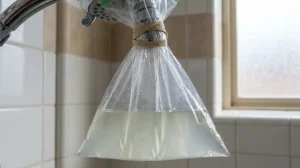
Quick answer: Fill a plastic bag with white vinegar, slip it over the shower head so the nozzles sit fully submerged, secure it with a rubber band, then leave it to soak for anywhere from 30 minutes to 4 hours depending on how bad the buildup is. Scrub and rinse once you are done.
Step by Step: The Bag Method
- Lay a towel underneath to catch any drips. Open a window or switch on the extractor fan.
- Fill a plastic bag with 1 to 2 cups of distilled white vinegar. Add half a cup of baking soda if you fancy some extra fizzing power.
- Slide the bag over the shower head. Make sure every spray hole sits under the liquid.
- Secure the bag tightly with a rubber band, zip tie, or twist tie. No leaks allowed.
- Leave it to soak based on the buildup and finish. Check the chart below.
- Take the bag off carefully and tip the leftover vinegar down the drain.
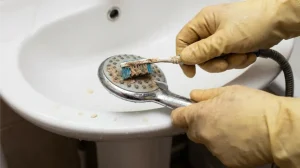
- Scrub the nozzles with an old toothbrush, working in small circles to lift off the softened scale.
- Clear stubborn holes gently with a toothpick or pin. Do not force them wider.
- Run hot water through for a minute or two to flush out any loose debris and vinegar.
- Wipe the outside down with a damp microfibre cloth, then dry with a soft towel to stop new water spots forming.
Soak Time Guide by Buildup and Finish
| Buildup Level | Recommended Soak Time | Safe Finishes | Notes |
|---|---|---|---|
| Light spotting | 30 minutes | All finishes | A safe starting point if you are unsure of your finish |
| Moderate scale | 1 to 2 hours | Chrome, stainless steel, plastic | Works for most homes |
| Heavy limescale | 4 to 8 hours, or overnight | Chrome and stainless steel only | Avoid on brass, gold, nickel, or matte finishes |
| Sensitive finishes | 30 minutes maximum | Brushed nickel, brass, gold, oil rubbed bronze | Dilute the vinegar 1 to 1 with water |
| Unknown finish | Start with 30 minutes | All finishes | Check progress, then repeat if needed |
How to Clean a Removable Shower Head With Vinegar
Some shower heads unscrew straight off the arm. That means you can dunk the whole thing and get at every nook.
- Turn off the water supply to the shower.
- Unscrew the shower head by hand. If it is stuck, wrap it in cloth and use adjustable pliers so you do not scratch the finish.
- Take it apart if you can. Remove the faceplate, flow restrictor, or internal screen, following the maker’s instructions.
- Submerge every part in a bowl of white vinegar.
- Soak for 1 to 4 hours depending on the buildup. Heavy scale might need overnight, but keep chrome and stainless steel to a maximum of 8 hours.
- Scrub each part with a toothbrush, paying close attention to internal screens and nozzles.
- Rinse thoroughly under warm running water.
- Reassemble and screw the head back on. Hand tighten first, then give it a quarter turn with pliers only if it needs it.
- Test the spray. Run hot water for a minute or two to clear out anything left behind.
This method reaches internal passages the bag trick simply cannot touch.
Do not Forget the Internal Filter
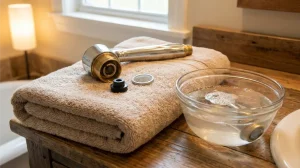
Plenty of modern shower heads have a small mesh filter or flow restrictor tucked inside. Scale builds up here too, and it can choke your pressure even when the nozzles look spotless.
- Find the filter inside the inlet, where the shower arm connects.
- Lift it out gently with tweezers or a small pick.
- Soak the filter in vinegar for 30 to 60 minutes.
- Rinse it under running water and give it a light brush.
- Pop it back in before you reattach the shower head.
This one step often brings back full flow when scrubbing the nozzles alone does not do it.
Full Strength or Diluted? Getting the Vinegar Right
You can use vinegar neat or watered down. It depends on your finish and how bad the scale is.
- Full strength (5% acetic acid): Best for chrome, stainless steel, and heavy scale.
- Diluted, 1 to 1 with water: Safer for brass, gold, and nickel, or for a light maintenance clean.
- Warm vinegar: Warming it slightly, not hot, can help it work faster. Test a small spot first.
Never mix vinegar with bleach or ammonia. That combination gives off dangerous fumes.
Still Clogged? Try This
Some shower heads carry years of hardened scale. If one soak does not sort it, here is what to try next.
- Repeat the soak. Heavy buildup sometimes needs two or three rounds.
- Make a paste from baking soda and a splash of vinegar. Apply it to the nozzles, leave for 10 minutes, then scrub.
- Stretch the soak time. Chrome heads can handle 8 hours or a full night.
- Check the filter. A blocked internal screen can look exactly like a clogged nozzle.
- Look for damage. Cracked nozzles or corroded parts need replacing, not cleaning.
Pressure still low after all that? The problem might sit in the shower valve or the pipework, and that is one for a plumber.
Safety and Finish Care Tips
- Ventilate the bathroom while you clean and afterwards. Vinegar fumes can sting your eyes and throat in a small space.
- Wear gloves if your skin is sensitive. Long contact with vinegar can dry it out.
- Keep soaks under 30 minutes on brass, gold, or nickel. Vinegar can dull these finishes over time.
- Rinse well after every soak. Leftover vinegar can attract fresh mineral deposits as the water dries.
- Check with the manufacturer before using vinegar on NSF or ANSI 61 certified drinking water fixtures. Some certifications rule out acid exposure.
- Keep vinegar away from natural stone. A single drip on marble, travertine, or limestone can etch the surface.

How Often Should You Clean Your Shower Head?
If you live with hard water, clean your shower head every 1 to 3 months. A monthly clean stops heavy buildup before it starts and keeps your pressure steady. Soft water areas can usually stretch to every 3 to 6 months.
Watch out for these warning signs that it is time for a clean:
- An uneven spray pattern
- Weaker water pressure
- White crust forming around the nozzles
- Discoloured water when you first turn it on
Staying on top of it keeps your fixture working well for years.
Stopping Buildup Before It Starts
A few small habits slow down new mineral deposits.
- Wipe the shower head dry with a cloth after each use. It stops standing water leaving minerals behind.
- Fit a water softener if your area has very hard water. It cuts the calcium and magnesium in your supply.
- Try a shower head filter. Some reduce both scale forming minerals and chlorine.
- Put a reminder in your calendar for a quick vinegar soak every month or two.
Vinegar Versus Shop Bought Descalers
Vinegar is a cheap, eco friendly alternative to commercial descalers. There is no synthetic fragrance, no harsh chemicals, and a bottle lasts through plenty of cleaning sessions. Shop bought lime removers often pack stronger acids and need much more careful handling. For everyday maintenance, vinegar does the job just as well with far less risk.
When Should You Call a Plumber?
Most shower heads respond well to a vinegar soak. Call a plumber if you notice any of the following:
- Low pressure that will not budge after several cleans
- Leaks around the shower arm or valve
- Corroded or cracked fixture parts
- Odd noises or sudden temperature changes
A plumber can check the internal valves, swap out worn parts, and make sure your water flows safely.
Key Takeaways
- White vinegar strips away mineral buildup safely on most shower heads.
- Soak times run from 30 minutes to 8 hours depending on buildup and finish.
- Use the bag method for fixed heads and full submersion for removable ones.
- Scrub the nozzles well and rinse thoroughly once you have finished soaking.
- Keep soaks short on brass, gold, and nickel finishes.
- Do not skip the internal filter, it plays a big part in water pressure.
- Wipe your shower head dry after each use to keep new scale at bay.
Follow these steps and you will get your shower head back to full strength, without a hitch. Always check your fixture’s care guidance before trying any cleaning method.
Before you start
Tick these off as you gather them, nothing here is specialised.
0 of 6 ready · Ticks are for this visit only and aren't saved.
Natural stone shower fittings, gold plated fixtures, or any finish still under manufacturer warranty that explicitly rules out acid based cleaners. If you are unsure of your finish, do a 30 minute test soak first rather than skipping this step.
Common questions
Can vinegar damage my shower head?
Vinegar is safe for chrome, stainless steel, and plastic when used as directed. On sensitive finishes like brass, gold, or nickel, keep soaks under 30 minutes and dilute the vinegar to avoid dulling the surface.
How long should I soak a shower head in vinegar?
It depends on the buildup and finish. Light spotting needs about 30 minutes, moderate scale needs 1 to 2 hours, and heavy limescale on chrome or stainless steel can take up to 8 hours.
Can I use apple cider vinegar instead of white vinegar?
White vinegar is the better choice. It has a consistent acidity and will not stain or leave a lingering smell the way apple cider vinegar can.
Why is my shower head still weak after cleaning?
Check the internal filter or flow restrictor, since scale often hides there even after the nozzles look clean. If pressure stays low, the issue could sit in the shower valve or the pipework itself.
Was this article useful?