A stain remover for clothes works best when you match the method to the stain. It’s that simple. This guide gives you a clear decision framework. You’ll learn how to handle mild, moderate, and severe stains. You’ll also get fabric safety rules and long-term prevention tips. Stains happen everywhere, even on carpets. Learn how to remove stains from carpet here.
Before You Start: Essential Tools Checklist
Gather these items before you treat any stain. Having them ready saves time and frustration.
- Liquid dish detergent (mild, colorless)
- Baking soda (sodium bicarbonate)
- White vinegar (5% acidity)
- Hydrogen peroxide (3% concentration)
- Rubbing alcohol (isopropyl, 70% or higher)
- Oxygen bleach (color-safe, sodium percarbonate based)
- Soft-bristle toothbrush or stain brush
- White microfiber cloths or paper towels
- Cool water (for fresh stains)
- Warm water (for oil-based stains)
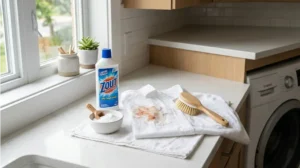
What Stain Remover for Clothes Really Means for Your Home
A stain remover for clothes isn’t one product. It’s a whole category of treatments. Each one targets a different type of stain. Stain removers fall into four chemical families. Solvents dissolve oil-based stains. Surfactants lift general dirt and food. Enzymes break down protein and starch stains. Oxidizers handle dye-based stains like wine and coffee. Knowing these families helps you pick the right treatment. No more guessing. You’ll treat stains like red wine with confidence. Here’s how to remove red wine from clothes the right way.
Quick Summary Box
- Solvent-based removers dissolve grease, oil, makeup, and ink.
- Enzyme-based removers break down blood, grass, dairy, and egg stains.
- Oxidizing removers (oxygen bleach) lift wine, coffee, tea, and fruit stains.
- Surfactant-based removers (dish soap, laundry detergent) handle everyday food and dirt stains.
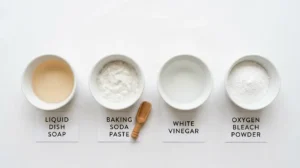
The Core Options Compared
Here’s a quick comparison of common stain removers. Costs vary by region, but these ranges hold up globally.
| Stain Remover Type | Typical Cost (per use) | Best For | Fabric Safety |
|---|---|---|---|
| Liquid dish detergent | $0.05–$0.10 | Grease, oil, food | Safe for most fabrics |
| Baking soda paste | $0.02–$0.05 | Oil, grease, odor | Safe for most fabrics |
| White vinegar | $0.03–$0.08 | Tannin stains, odor | Avoid on silk and wool |
| Hydrogen peroxide | $0.04–$0.10 | Blood, organic stains | Test on colored fabrics first |
| Oxygen bleach (powder) | $0.10–$0.25 | Wine, coffee, tea | Color-safe when labeled |
| Commercial spray remover | $0.15–$0.40 | Multi-stain, convenience | Check label for fabric limits |
| Enzyme-based remover | $0.20–$0.50 | Protein, dairy, grass | Safe for most washables |
Grease and oil stains are the most common problem. You can tackle them with simple household items. Learn how to remove oil stains from clothes in 9 steps.
How to Remove Iron Stain from Clothes
Iron stains come from rust or metal contact. They need an acidic treatment. Regular detergent won’t cut it. Make a paste with cream of tartar and lemon juice. Apply it to the stain. Let it sit for 15 minutes. Rinse with cool water. Wash as normal. For white cotton, try a hydrogen peroxide soak. Mix 1 part peroxide with 6 parts water. Soak for 30 minutes. Never use chlorine bleach on iron stains. It can set the rust for good.
Baking Soda Stain Remover
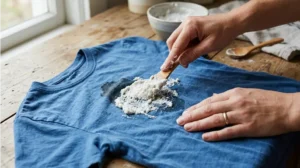
Baking soda is a mild abrasive and odor neutralizer. It’s cheap and works on many stains. Mix 3 parts baking soda with 1 part water. Stir until you get a paste. Apply it to the stain. Let it sit for 30 minutes to 2 hours. Scrub gently with a soft brush. Rinse and wash. Baking soda works best on oil, grease, and acidic stains. It’s safe for colored fabrics too. Vinegar is another great household helper. You can even clean a shower head with vinegar to see how versatile it is.
Costs, Timelines and Trade-Offs
Stain removal costs vary by method. Household ingredients like baking soda and vinegar cost under $0.10 per treatment. Commercial spray removers cost $0.15 to $0.40 per use. Enzyme-based specialty removers cost $0.20 to $0.50 per treatment. Oxygen bleach powder costs about $0.10 to $0.25 per wash load.
Timelines matter just as much as cost. Fresh stains treated within 5 minutes have a 90%+ removal rate. Stains treated after 24 hours may need overnight soaking. Set-in stains treated after one wash cycle often need two to three treatment cycles. The trade-off is clear. Faster action costs less and works better. Candle wax is a good example. Waiting makes it harder to remove. See how to remove candle wax from fabric for a step-by-step example.
Typical Budget Ranges
- Budget approach (under $10 total): Baking soda, white vinegar, liquid dish detergent, hydrogen peroxide.
- Mid-range approach ($15–$30): Oxygen bleach powder, one commercial spray remover, enzyme-based spot treatment.
- Premium approach ($40+): Specialty removers for ink, rust, and dye stains; professional dry cleaning for delicate fabrics.
Step-by-Step Decision Framework
Before you choose a method, ask three questions. What is the stain type? What is the fabric? How old is the stain? Your answers guide the treatment.
- Oil or grease stain → Solvent or surfactant method (dish soap, baking soda paste)
- Protein stain (blood, egg, dairy) → Enzyme method (cool water rinse, enzyme detergent)
- Tannin stain (wine, tea, coffee) → Oxidizing method (oxygen bleach)
- Dye or ink stain → Solvent method (rubbing alcohol, vinegar)
- Unknown stain → Start with cool water and dish detergent; escalate as needed
Fabric Stain Removers
Different fabrics need different care. Cotton and linen handle warm water, oxygen bleach, and gentle scrubbing. Polyester and synthetic blends are prone to oil stains. Dish detergent works well on them. Silk and wool are protein fibers. Never use enzyme detergents or chlorine bleach on them. Denim holds dye well but can bleed. Test in a hidden area first. Always check the care label before you start.
How to Remove Ballpen Stain
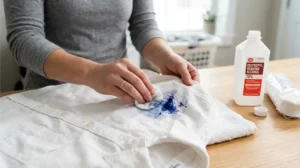
Ballpoint pen ink is oil-based. Rubbing alcohol is the best solvent for it. Place a clean white cloth under the stain. Apply alcohol to the stain with a cotton pad. Let it sit for 5 minutes. Blot gently with a clean cloth. Don’t rub, because rubbing spreads the ink. For colored fabrics, test alcohol on a hidden seam first. Repeat until the ink lifts. Then wash as normal. If you want a deeper walkthrough, this guide on ball pen stains covers more ground.
Method Variations by Severity
Not all stains are equal. A fresh spill needs a different approach than a set-in mark. Here are three levels of treatment.
Mild Stains (Fresh, Small, Light-Colored)
- Blot the stain with a clean cloth. Don’t rub.
- Rinse with cool water from the back of the fabric.
- Apply a small amount of liquid dish detergent.
- Wait 5 minutes.
- Wash as normal with cool water.
Moderate Stains (Set-In, Medium Size, Colored Fabric)
- Mix a paste of baking soda and water (3:1 ratio).
- Apply the paste to the stain.
- Let sit for 30 minutes.
- Scrub gently with a soft brush.
- Soak in cool water with oxygen bleach for 30 minutes.
- Wash on the warmest setting safe for the fabric.
Severe Stains (Old, Large, Washed-and-Dried)
- Soak the garment in a mixture of 1 scoop oxygen bleach + 1 gallon (3.8L) warm water for 1 hour.
- Apply an enzyme-based stain remover directly to the stain.
- Let sit for 30 minutes.
- Rub gently with a soft brush.
- Wash on a normal cycle with detergent and oxygen bleach.
- Check the stain before drying. If it remains, repeat steps 1–5.
- Air dry — heat sets stains permanently.
Severe stains sometimes need extra patience. The same principle applies to mattress stains, which can be just as stubborn. Here’s how to take stains off a mattress when regular methods fall short.
Surface and Material Specifics
The fabric dictates the method. Get this wrong and you risk damage.
- Cotton and linen: Use warm water and oxygen bleach. These fabrics tolerate gentle scrubbing.
- Polyester and nylon: Use cool water and dish detergent. Avoid hot water, which sets oil stains.
- Silk and wool: Use cool water only. Avoid enzyme detergents, chlorine bleach, and baking soda paste. Use a mild pH-neutral detergent.
- Denim: Test for colorfastness first. Use cool water and oxygen bleach. Avoid scrubbing, which can cause fading.
- Delicate blends: Spot-test any treatment on an inside seam. Use the gentlest method first.
Mattresses are a different challenge altogether. You can’t toss them in the washing machine. Learn how to clean a mattress properly with methods that respect the material.
Expert Tips and Pitfalls
Stain Cleaner
The best stain cleaner is the one you use immediately. Speed matters more than product choice. Keep a small stain remover pen or spray in your bag. Treat stains on the go. At home, set up a stain station near your laundry area. Stock it with baking soda, dish soap, and oxygen bleach. That way you’re always ready.
What NOT to Do
- Don’t use hot water on protein stains (blood, dairy, egg). Heat coagulates proteins and sets the stain.
- Don’t rub stains aggressively. Rubbing pushes the stain deeper into fibers.
- Don’t mix chlorine bleach with ammonia or vinegar. This creates harmful vapors. Work in a ventilated area.
- Don’t dry stained clothes in a dryer. Heat sets stains permanently.
- Don’t use chlorine bleach on silk, wool, or spandex. It damages protein fibers and causes yellowing.
- Don’t use enzyme detergents on silk and wool. Enzymes break down protein fibers.
Enzyme treatments are powerful, but they need time to work. The same goes for stubborn biological stains like urine. See how to get pee out of a mattress for an example of enzyme cleaning in action.
Long-Term Prevention Guide
Stopping stains before they set is easier than removing them later. A little routine goes a long way.
- Daily: Blot spills immediately with a clean cloth. Don’t rub.
- Weekly: Pre-treat visible stains before washing. Check pockets for pens and markers.
- Monthly: Deep-clean your washing machine with a cleaning cycle and oxygen bleach. This prevents residue transfer.
- Seasonally: Sort and inspect stored clothing for hidden stains. Treat before storing.
- Always: Follow the garment care label. Use the correct water temperature. Air dry when possible.
Good routines keep everything in shape, not just your clothes. Plants need consistent care too. This flower care and growing guide shows how routine maintenance pays off over time.
Key Takeaways
- Match the stain remover to the stain type, fabric, and severity.
- Treat stains immediately. Speed beats product choice.
- Never use hot water on protein stains or dry stained clothes in a dryer.
- Oxygen bleach is the safest oxidizing option for colored fabrics.
- Always check the care label and spot-test in a hidden area.
Before you start
Tick these off as you gather them — nothing here is specialised.
0 of 10 ready · Ticks are for this visit only and aren't saved.
Don't use chlorine bleach on silk, wool, or spandex. Don't use enzyme detergents on silk or wool. Always test any stain remover on a hidden area first.
Common questions
What is the best stain remover for clothes?
The best stain remover depends on the stain type. For grease and oil, liquid dish detergent or baking soda paste works best. For protein stains, an enzyme-based remover is ideal. For tannin stains like wine and coffee, oxygen bleach is the most effective. Always match the method to the stain.
How do you use stain remover on clothes?
Apply the stain remover directly to the stain. Let it sit for the time specified on the label (usually 5 to 15 minutes). Don't let it dry on the fabric. Wash the garment according to the care label. Check the stain before drying. Repeat if needed.
Can you use stain remover on colored clothes?
Yes, but choose a color-safe formula. Oxygen bleach is color-safe when labeled. Avoid chlorine bleach on colored fabrics. Always test the product on a hidden area first. Don't let stain remover sit on colored fabrics for more than 5 to 10 minutes unless the label says otherwise.
How do you remove old stains from clothes?
Soak the garment in oxygen bleach and warm water for 1 hour. Apply an enzyme-based stain remover. Let it sit for 30 minutes. Wash on a normal cycle. Check before drying. For very old stains, repeat the process two to three times.
Does baking soda remove stains from clothes?
Yes. Baking soda is a mild abrasive and odor neutralizer. It works best on oil, grease, and acidic stains. Mix 3 parts baking soda with 1 part water to form a paste. Apply to the stain, wait 30 minutes, scrub gently, and wash. It's safe for most colored fabrics.
How do you remove iron stains from clothes?
Use an acidic treatment. Apply a paste of cream of tartar and lemon juice. Let it sit for 15 minutes. Rinse with cool water and wash. For white cotton, soak in a hydrogen peroxide solution (1 part peroxide to 6 parts water) for 30 minutes. Never use chlorine bleach on iron stains.
How do you get ballpoint pen ink out of clothes?
Apply rubbing alcohol to the stain with a cotton pad. Place a clean white cloth under the stain to absorb the ink. Let it sit for 5 minutes. Blot gently. Don't rub. Repeat until the ink lifts. Then wash as normal. Test alcohol on a hidden area first for colored fabrics.
What removes grease stains from clothes?
Liquid dish detergent is the most effective household option. Apply it directly to the grease stain. Let it sit for 5 to 10 minutes. Wash with warm water. For set-in grease stains, make a baking soda paste and apply it before washing.
Is stain remover safe for all fabrics?
No. Chlorine bleach damages silk, wool, and spandex. Enzyme detergents break down protein fibers in silk and wool. Always check the garment care label. Test any stain remover on a hidden area before full application.
Should you wash clothes after using stain remover?
Yes. Always wash the garment after applying stain remover. This removes the loosened stain and any chemical residue. Don't let stain remover dry on the fabric. Follow the washing instructions on the care label.
Was this article useful?