how to remove red wine from clothes is one of the most searched stain-removal questions worldwide. Whether you are in the UK, USA, or Europe, a red wine spill can happen at any dinner party or celebration. The good news is that with the right method and fast action, most stains lift completely.
This guide covers the science behind red wine stains, the exact steps for fresh and dried spills, and fabric-specific protocols for cotton, wool, silk, and synthetics. You will also find a comprehensive FAQ and a mistakes section to avoid making the problem worse.
Before You Start: Quick Checklist
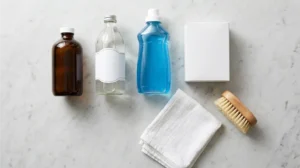
Gather these items before treating any red wine stain:
- Clean white cloths or paper towels (never coloured)
- Cold running water
- Liquid laundry detergent or washing-up liquid
- White vinegar
- Baking soda
- 3% hydrogen peroxide (for light-coloured fabrics only)
- Oxygen-based bleach (for dried stains)
- A basin or sink for soaking
- The garment’s care label (read it first)
Safety warnings: Never mix bleach with ammonia or vinegar. Work in a well-ventilated area. Test any treatment on a hidden seam first. Hydrogen peroxide can bleach coloured fabrics. Oxygen bleach should not be used on wool or silk.
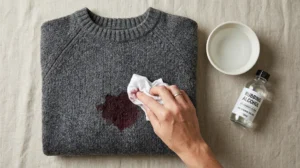
Why Red Wine Stains Are So Stubborn: The Science
Red wine contains two compounds that make it uniquely difficult to remove: anthocyanins and tannins. Anthocyanins are water-soluble pigments from grape skins that give red wine its colour. Tannins are polyphenols that act as natural fixatives, bonding pigments to fabric fibres.
When heat is applied, tannins undergo polymerisation. This creates long, insoluble molecular chains that trap the pigments permanently inside the fabric structure. This is why hot water and tumble drying are the worst things you can do to a red wine stain.
A red wine stain may also turn blue or grey after washing. This happens because anthocyanins change colour when exposed to the alkaline pH of laundry detergent. The stain is still there; it has simply changed hue. Oxygen bleach or a targeted stain remover will lift it.
Direct answer: Red wine stains are stubborn because tannins bond pigments to fabric fibres. Heat causes tannins to polymerise, making the stain permanent. Cold water and oxygen-based treatments break these bonds without setting the colour.
Method Variations by Stain Severity
Mild: Fresh Stain (Under 30 Minutes)
Fresh stains are the easiest to remove. The wine has not yet bonded with the fabric fibres.
Step-by-step process:
- Blot immediately. Press a clean white cloth or paper towel straight down onto the stain. Do not rub. Work from the outside edge inward to prevent spreading.
- Flush from behind. Turn the garment inside out. Hold the stained area under cold running water. This pushes the wine out through the same side it entered.
- Apply washing-up liquid. Squeeze a small amount of neat washing-up liquid onto the stain. Rub gently with your fingers or a soft brush.
- Rinse and repeat. Flush with cold water. Repeat the washing-up liquid step until the water runs clear.
- Wash as normal. Use the coolest cycle your care label allows. Check the stain before drying. If any colour remains, repeat the treatment.
Time required: 10 to 15 minutes. Difficulty: Easy.
Moderate: Semi-Dried Stain (30 Minutes to 24 Hours)
The wine has begun to oxidise and the tannins are bonding. More aggressive treatment is needed.
Step-by-step process:
- Rehydrate the stain. Dampen the area with cold water or a 50/50 white vinegar solution. Let it sit for 10 minutes. This reactivates the dried pigments.
- Apply a baking soda paste. Mix three parts baking soda with one part water. Spread the paste over the entire stain. Let it dry completely. This can take several hours.
- Brush off the paste. Use a soft brush to remove the dried baking soda. The powder will have absorbed much of the wine.
- Treat with hydrogen peroxide. For light-coloured fabrics only, mix one part 3% hydrogen peroxide with two parts water. Dab onto the stain. Let it sit for 20 minutes.
- Soak in oxygen bleach. Dissolve oxygen-based bleach in cool water according to the package directions. Submerge the garment for one to six hours.
- Wash and inspect. Launder as normal. Air dry and check before using the dryer.
Time required: 2 to 8 hours. Difficulty: Moderate.
If you are dealing with other stubborn stains like grease or cooking oil, the same principle of acting fast and using the right treatment applies. Our guide on how to remove oil stains from clothes covers grease-specific methods that complement this red wine protocol.
Severe: Dried or Set-In Stain (Over 24 Hours)
The tannins have polymerised and the stain is embedded in the fibres. Multiple treatments may be required.
Step-by-step process:
- Soak overnight in oxygen bleach. Mix oxygen bleach with cool water. Submerge the entire garment. Leave for 8 to 12 hours.
- Apply a dish soap and hydrogen peroxide mix. Combine equal parts dish soap and 3% hydrogen peroxide. Apply to the stain with a soft brush. Work it in gently.
- Let it sit for one hour. Do not let the mixture dry on the fabric. Cover with plastic wrap if needed.
- Rinse with cold water. Flush thoroughly.
- Repeat if necessary. Old stains may need two or three cycles.
- Consider a professional. If the stain persists after three attempts, take the garment to a dry cleaner.
Time required: 12 to 24 hours. Difficulty: Difficult.
Comparison Table: Methods by Fabric Type
| Fabric Type | Best Method | Avoid | Dry Cleaner Needed? |
|---|---|---|---|
| Cotton | Washing-up liquid + cold water; oxygen bleach soak | Hot water, dryer | No |
| Polyester/Nylon | Dish soap + hydrogen peroxide (light colours); cold wash | High heat | No |
| Wool | Wool-safe detergent + cold water; rubbing alcohol dab | Hydrogen peroxide, oxygen bleach, hot water | Recommended for set-in stains |
| Silk | Blot only; cornstarch; dilute white vinegar | Water, hydrogen peroxide, rubbing | Yes, for best results |
| Cashmere | Dry shampoo; cornstarch; professional clean | Water, heat, agitation | Yes |
| Leather/Suede | Blot only; professional clean | Any liquid treatment | Yes |
| Linen | Cold water flush; oxygen bleach soak | Hot water, chlorine bleach | No |
| Spandex/Elastane | Dish soap + cold water; avoid bleach | Chlorine bleach, heat | No |
Direct answer: Cotton and synthetics tolerate oxygen bleach and hydrogen peroxide. Wool and silk require dry cleaning or gentle alcohol-based treatments. Always check the care label before applying any liquid.
For a broader overview of stain-removal techniques that work across different fabrics and surfaces, see our full guide on how to remove stains from carpet. It covers everything from ink to grass stains using the same chemistry-first approach.
How to Remove Red Wine Stains from Wool and Silk
Wool and silk are protein-based fibres. They are sensitive to heat, alkaline detergents, and oxidising agents. Hydrogen peroxide and oxygen bleach will damage the fibres and strip colour.
For Wool
- Blot immediately. Press a clean cloth onto the stain. Do not rub.
- Apply a wool-safe detergent. Mix a small amount of Woolmark-approved detergent in tepid water. Dab gently.
- Try rubbing alcohol. Mix three parts surgical spirit or rubbing alcohol with one part cold water. Dab the stain. Blot excess liquid.
- Rinse well. Use tepid water. Never use hot water on wool.
- Dry flat. Air dry away from direct heat.
For Silk
- Blot only. Do not add water. Water can leave a ring that is harder to remove than the wine.
- Apply cornstarch or talc. Sprinkle generously over the stain. Leave for 10 to 15 minutes. Brush off gently.
- Dilute white vinegar. Mix one tablespoon of white vinegar with two tablespoons of cool water. Dab onto the stain with a clean cloth.
- Air dry and assess. If the stain persists, take the item to a dry cleaner.
Direct answer: Wool and silk should not be treated with hydrogen peroxide or oxygen bleach. Use rubbing alcohol for wool and diluted white vinegar for silk. For valuable or structured garments, go directly to a dry cleaner.
Long-Term Prevention Guide
Daily habits:
- Keep a stain pen or small bottle of washing-up liquid in your bag for immediate treatment.
- When at a restaurant, ask for soda water as soon as a spill happens.
- Blot immediately with a napkin. Never rub.
Weekly maintenance:
- Check garments before washing. Treat any faint stains you may have missed.
- Keep oxygen bleach on hand for soaking stained linens and tablecloths.
Monthly checks:
- Inspect table linens and napkins for set-in stains. Soak them in oxygen bleach as a preventive measure.
- Review your care labels to confirm which treatments are safe for your most-worn garments.
Event preparation:
- Before hosting a dinner party, place white cloths and a bottle of soda water near the table.
- Consider using dark-coloured tablecloths to minimise visible staining.
Preventing stains is not just about clothes. Household fabrics like carpets and mattresses also benefit from proactive care. If you have ever spilled wine on a rug during a party, our guide on how to remove stains from carpet walks you through the exact blotting and lifting technique. For deeper fabric care, our mattress cleaning guide on how to clean a mattress explains how to keep bedding fresh and stain-free.

Common Mistakes: What NOT to Do
Do not rub the stain. Rubbing pushes the wine deeper into the fibres and spreads it outward. It also abrades delicate fabrics like silk and wool.
Do not use hot water. Heat polymerises tannins, permanently bonding the stain to the fabric. Always start with cold water.
Do not put the garment in the dryer. The heat will set any remaining stain. Air dry until you are certain the stain is gone.
Do not rely on salt. Salt is a mordant used in textile dyeing. It fixes pigments rather than removing them. Use flour or talc instead if you need a powder to absorb liquid.
Do not use white wine. White wine dilutes red wine but adds its own pigments and odour. It does not remove the stain.
Do not mix cleaning products. Never combine bleach with ammonia or vinegar. This creates dangerous fumes. Work in a ventilated area.
Do not skip the patch test. Hydrogen peroxide and oxygen bleach can fade colours. Test on a hidden seam first.
Direct answer: The most damaging mistakes are rubbing the stain, applying heat, and using salt. These actions push the wine deeper or chemically fix the pigments. Always blot, use cold water, and test products first.
Some stains require completely different chemistry. Candle wax, for example, needs a heat-and-absorb method rather than a liquid treatment. Our guide on how to remove candle wax from fabric explains how to lift wax without damaging the surrounding fibres. Similarly, if you use vinegar for cleaning around the home, our tutorial on clean shower head with vinegar shows how the same household ingredient tackles mineral buildup in bathrooms.
Key Takeaways
- Act fast. Fresh stains are significantly easier to remove than dried ones.
- Blot, never rub. Rubbing pushes wine deeper into fabric fibres.
- Use cold water. Heat polymerises tannins and permanently sets the stain.
- Salt is a myth. It fixes pigments rather than removing them.
- Match the method to the fabric. Cotton and synthetics tolerate oxygen bleach. Wool and silk need gentle, alcohol-based treatments.
- Air dry before checking. Dryer heat will set any remaining stain.
- Test first. Hydrogen peroxide and oxygen bleach can fade colours.
- Work ventilated. Never mix bleach with ammonia or vinegar.
When to Call a Professional
Take the garment to a dry cleaner if:
- The fabric is wool, silk, cashmere, leather, or suede with a set-in stain
- The garment is structured, beaded, or has sentimental value
- You have attempted two or three treatments without success
- The care label says “dry clean only”
- The stain covers a large area or has been present for more than a week
Professional cleaners have access to solvents and equipment that are not available for home use. For valuable garments, the cost of dry cleaning is far lower than the cost of replacement.
Before you start
Tick these off as you gather them — nothing here is specialised.
0 of 9 ready · Ticks are for this visit only and aren't saved.
Do not use salt, white wine, hot water, chlorine bleach, or hydrogen peroxide on wool, silk, cashmere, leather, or suede. These can set the stain or damage the fabric.
Common questions
How do you get red wine out of clothes after it dries?
Rehydrate the stain with cold water or a 50/50 white vinegar solution. Apply a dish soap and hydrogen peroxide mix (equal parts) for light fabrics. Soak in oxygen bleach for 1 to 8 hours. Wash as normal and air dry before checking.
Does salt remove red wine stains?
No. Salt acts as a mordant in textile dyeing, fixing pigments to fibres. It may absorb some liquid but will make the stain harder to remove. Use flour, talc, or cornstarch instead.
Does baking soda remove red wine stains?
Baking soda works as a mild abrasive and absorbent. Make a paste of three parts baking soda and one part water. Apply to the stain and let it dry. The powder absorbs wine as it dries. It works best on fresh stains.
How do you remove red wine stains from white clothes?
White cotton and linen can tolerate chlorine bleach (diluted 1:4 with water) or oxygen bleach. Apply a pre-treatment of dish soap and hydrogen peroxide. Wash in the hottest water the care label allows. For white wool or silk, use oxygen bleach only if the label permits.
Can you use hydrogen peroxide on red wine stains?
Yes, for light-coloured and colourfast fabrics. Use 3% household hydrogen peroxide. Mix two parts water to one part peroxide for fresh stains. For dried stains, mix equal parts peroxide and dish soap. Always patch test first.
How long should you soak clothes in red wine stain remover?
For fresh stains, 30 to 60 minutes is sufficient. For dried or set-in stains, soak overnight (8 to 12 hours) in oxygen bleach. Multiple treatments may be needed for very old stains.
What removes red wine stains instantly?
No method removes red wine stains instantly. However, club soda or sparkling water poured immediately after a spill can lift a significant amount of pigment. Follow with washing-up liquid and cold water for the best results.
Does white wine remove red wine stains?
No. White wine dilutes the red wine but adds its own pigments and acidity. It can make the stain larger and leave an odour. Use club soda or cold water instead.
How do you remove red wine stains from delicate fabrics?
For wool, use rubbing alcohol diluted with water (3:1 ratio). For silk, apply cornstarch or talc, then dab with diluted white vinegar. Do not use water on silk. For cashmere, dry shampoo can absorb fresh stains. Take valuable items to a dry cleaner.
Can you use bleach on red wine stains?
Chlorine bleach can be used on white cotton and linen only. Dilute it 1:4 with water before applying. Never use chlorine bleach on wool, silk, spandex, or coloured fabrics. Oxygen bleach is safer for most colourfast fabrics.
Why do red wine stains turn blue?
Anthocyanins, the pigments in red wine, change colour based on pH. Laundry detergent is alkaline, which shifts the pigment from red to blue or grey. The stain is still present. Oxygen bleach or a targeted stain remover will lift the remaining colour.
What should you not do when treating red wine stains?
Do not rub, do not use hot water, do not put the garment in the dryer, do not use salt, do not use white wine, and do not mix cleaning products. Always blot, use cold water, and test treatments on a hidden area first.
Was this article useful?