Spilled something on the rug? Don’t panic. Learning how to clean a carpet saves you serious money. It also keeps your floors looking brand new. Accidents happen constantly in every busy home. You don’t have to live with ugly spots. We’ll show you exactly what to do. You’ll learn how to handle fresh spills quickly. We also cover old, stubborn marks. Let’s fix those floors right now.
Before You Start: Your Cleaning Toolkit
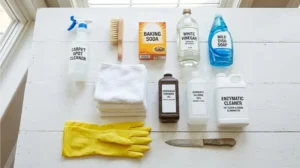
Gather these items before you tackle the mess. Having everything ready stops panic and speeds up the process.
- Clean white cloths: Paper towels work great too.
- Vacuum cleaner: Use one with a strong brush roll.
- Plastic spray bottle: Essential for applying liquids lightly.
- Distilled white vinegar: A great natural odor neutralizer.
- Baking soda: Absorbs grease and bad smells safely.
- Clear liquid dish soap: Make sure it is dye-free.
- 3% hydrogen peroxide: A safe, mild bleaching agent.
- Enzymatic cleaner: An absolute must for pet accidents.
- Soft scrubbing brush: Use this for gentle agitation only.
Why Do Carpets Trap Dirt and Odors?
Carpets act like giant household air filters. The dense yarns trap dust, dirt, and dead skin cells. Liquid spills sink deep into the hidden backing. Moisture and organic matter breed bacteria and bad smells quickly. You need to understand how carpets are built first.
Yarn attaches directly to a stiff backing material. A thick, spongy foam pad sits right underneath. When you spill a drink, gravity pulls it downward immediately. The liquid passes through the visible fibers very fast. It settles deep into the invisible foam padding.
Once moisture reaches the padding, it stays trapped. The thick foam doesn’t get enough airflow to dry. This dark, damp environment grows mildew very rapidly. Heavy foot traffic causes severe physical damage too. Sand and hard dirt particles sink to the base.
Every footstep grinds these sharp particles against the yarn. This friction physically cuts and frays the soft material. Regular deep cleaning stops this permanent physical wear and tear.
Cleaning Methods by Mess Severity
You must match your cleaning approach to the mess. Fresh spills just need simple dish soap and blotting. General dirt requires a basic baking soda treatment. Set-in stains demand targeted chemical extraction. Never grab harsh chemicals first.
Start with the gentlest natural solutions available. Only increase your cleaning power if the spot remains visible.
How to Clean a Carpet (Mild Fresh Spills)
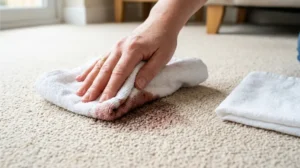
Grab a dry white cloth right away. Press it firmly over the fresh spill. Stand on it to add heavy body weight. Swap the wet cloth for a dry one quickly. Keep pressing until no more liquid transfers to the cloth.
Mix cold water with two drops of clear dish soap. Spray the soapy water lightly over the spot. Blot the soapy area with a fresh white cloth. Spray plain cold water to rinse the soap away. Blot it completely dry with a towel.
Speed is your absolute best tool here. Fast action stops liquids from sinking deeply. Quick timing is also key when you learn how to remove coffee stains from white fabrics.
Fixing Moderate Dirt and Odors
High-traffic areas often look gray and sad. They might smell a bit stale and musty too. You don’t always need a heavy shampooing machine. Dry baking soda absorbs trapped moisture very easily. It neutralizes sour, acidic odors perfectly.
Sprinkle a heavy layer across the entire floor. Use a soft brush to agitate the powder gently. This sweeps the baking soda deep between the twisted yarns. Keep pets and children out of the room. Leave it alone for at least two hours.
Vacuum the area slowly to extract all the fine powder.
Tackling Severe Pet Stains and Organic Messes
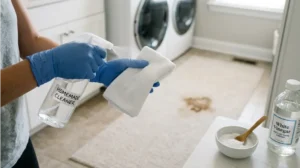
Severe organic stains need specialized enzymatic cleaners. Pet urine, vomit, and blood are organic proteins. Standard soap cannot break these complex proteins down at all. White vinegar masks the smell, but the sticky proteins remain.
Enzyme cleaners contain live, beneficial bacteria. These bacteria literally eat the odor-causing uric acid crystals. Soak the affected area heavily with your enzyme spray. Cover it with a damp towel for twelve hours. The enzymes need moisture to survive and work properly.
Never use hot water on protein stains. High heat cooks the protein into the yarn forever. Always use cold water for any organic messes. Handling pet accidents on the floor is just like learning how to get pee out of a mattress safely.
Surface and Material Specifics
You must identify your carpet material first. Applying the wrong cleaner ruins expensive flooring instantly. Always check the manufacturer tag under the rug.
Cleaning Synthetic Yarns (Nylon and Polyester)
Most modern homes use synthetic flooring materials. Synthetic carpets repel moisture naturally and resist staining well. Nylon bounces back beautifully after heavy foot traffic. Polyester resists liquid absorption almost completely.
You can safely use dish soap and white vinegar here. Standard shampooing machines work great on these durable fibers. Always rinse well to stop sticky soap residue buildup. You can use 3% hydrogen peroxide on synthetic fibers safely.
It acts as a safe, color-fast bleaching agent. Always do a quick spot test first, though. Apply your cleaner to a hidden corner in a closet. Wait a full day to check for any color loss.
Cleaning Natural Rugs (Wool and Jute)
Wool and jute fibers absorb water very rapidly. They shrink very easily when they get wet. You must use extreme caution and minimal moisture. Never use hot water or highly alkaline cleaners. Heavy shampooing machines will ruin natural fibers entirely.
Wool is simply hair from a sheep. It behaves exactly like human hair. Harsh chemicals will burn and destroy the natural proteins. You must use pH-neutral cleaning solutions explicitly made for wool.
Jute and sisal are natural plant fibers. They turn brown and shrink violently when wet. Only use dry extraction powders for jute materials. Never steam clean a natural plant fiber rug.
Stain Removal Comparison Guide
| Stain Type | Best Cleaning Solution | Water Temp | Key Technique |
|---|---|---|---|
| Coffee / Tea | Dish Soap + Vinegar | Cold Water | Blot immediately, do not rub |
| Red Wine | Hydrogen Peroxide | Cold Water | Apply peroxide, dab gently |
| Pet Urine | Enzymatic Cleaner | Cold Water | Keep area damp for 12 hours |
| Mud / Dirt | Dry Vacuum Only | None | Let dry completely before vacuuming |
| Grease / Oil | Baking Soda + Soap | Warm Water | Absorb oil first with dry powder |
Common Mistakes: What NOT to Do
The absolute biggest mistake is rubbing a wet stain. Rubbing untwists the delicate yarn immediately. It also spreads the dirty liquid outward. You must press straight down with steady, firm pressure.
Never scrub your floors back and forth aggressively. This harsh action frays the yarn permanently. The damaged spot will look fuzzy and dull forever.
The Danger of Over-Wetting
Don’t pour liquids straight from a cup or bucket. You have zero control over the moisture volume. Always use a spray bottle to apply cleaners. If moisture reaches the bottom foam pad, it stays.
A wet pad takes several days to dry completely. Harmful mildew grows rapidly during this damp time. The room will develop a sour, musty smell quickly. Controlling moisture is a big deal for thick padding. You see this exact same risk when learning how to clean a mattress properly.
Leaving Soap Residue Behind
You must rinse the area after using soap. Leftover soap dries into a sticky, invisible film. This sticky film acts like a giant dirt magnet. The spot looks perfectly clean today.
But it will turn dark brown next week. Spray the area with plain water to prevent this. Blot the plain water up with a clean towel. This extracts the leftover soap completely. Rinsing matters just as much as applying a good stain remover for clothes.
Long-Term Prevention Guide
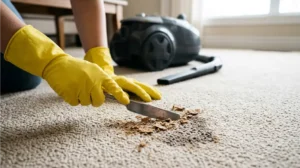
Prevention saves you from exhausting manual labor later. Stopping dirt at the door is your best defense. Place bristled doormats at every exterior home entrance. The outside mat scrapes off heavy, wet mud.
The inside mat absorbs wet footprints perfectly. Implement a strict no-shoes policy indoors for everyone. Vacuum high-traffic areas at least twice a week. Don’t wait until the floor looks visibly dirty.
A strong vacuum removes invisible, sharp sand. Consider applying a commercial fabric protector spray annually. These sprays coat yarns with a liquid-repelling shield. Spilled liquids form a tight bead on top.
This gives you extra time to grab a towel.
Common Questions Answered
How can I clean my carpet myself?
You can clean it using simple household items easily. Vacuum the area thoroughly first. Treat spots with clear dish soap and cold water. Sprinkle baking soda to remove general odors. Wait two hours, then vacuum it up.
What is the best home remedy for carpets?
The best overall remedy uses white vinegar and dish soap. Mix one cup of water and one tablespoon of vinegar. Add two drops of clear dish soap. This cuts through greasy dirt and neutralizes odors safely.
How do you deep clean without a machine?
You can deep clean manually using a specialized brush. Spray a foaming carpet cleaner across the floor. Use a long-handled bristle brush to scrub the foam. Let it dry completely, then vacuum thoroughly.
Does baking soda actually clean carpets?
Baking soda doesn’t remove sticky liquids or heavy mud. But it cleans by absorbing greasy residues easily. It neutralizes sour, acidic odor molecules too. It is a fantastic dry maintenance tool for freshness.
How do you remove old, set-in stains?
Set-in stains need rehydration before successful extraction. Spray the mark with warm water and white vinegar. Let it sit for ten minutes to soften. Blot firmly with a white cloth until the color lifts.
Can I use dish soap on my carpet?
Yes, clear liquid dish soap works incredibly well. It breaks down heavy greases and oils safely. You only need one or two drops per cup of water. Using too much creates a sticky residue problem. It handles grease exactly like how to remove oil stains from clothes.
How do you mix vinegar and baking soda?
Never mix them together in a closed bottle. They will just neutralize each other uselessly. Apply a vinegar and water solution to clean the spot first. Blot it dry. Later, sprinkle dry baking soda to remove odors.
What is the best way to wash very dirty floors?
A very dirty floor requires hot water extraction. You can rent a professional shampooing machine locally. These machines inject hot, soapy water deep down. They vacuum it back out immediately with immense suction.
How long does drying take after a wash?
Air drying usually takes between six and twelve hours. You can speed this process up significantly. Open the room windows to lower the indoor humidity. Place heavy box fans pointing directly across the damp floor.
How do you get pet pee out of rug fibers?
You must use a biological enzymatic cleaner. Spray the cleaner heavily over the wet spot. Place a damp towel over it to stop evaporation. Leave it for twelve hours so enzymes consume the uric acid.
Key Takeaways
- Blot immediately: Never rub a wet spill. Press straight down firmly.
- Use cold water: Hot water cooks protein stains permanently into the yarn.
- Rinse the soap: Leftover soap residue attracts new dirt very quickly.
- Control moisture: Never soak the floor. Always use a spray bottle.
- Buy enzymes: Pet accidents require enzymatic cleaners to eliminate odors completely.
- Check the fiber: Wool and plant fibers require delicate, low-moisture care.
- Stop dirt early: Use bristled doormats and enforce a strict no-shoes rule.
Before you start
Tick these off as you gather them — nothing here is specialised.
0 of 11 ready · Ticks are for this visit only and aren't saved.
Common questions
What is the best homemade solution for carpet stains?
Mix 1 cup warm water, 1 tablespoon mild dish soap, and 1 tablespoon white vinegar. This solution handles most food and drink spills. For tougher stains, add 1 tablespoon of hydrogen peroxide. Always test on a hidden area first.
Can I use bleach to remove stains from my carpet?
No. Bleach removes carpet dye and causes permanent damage. It has no cleaning power on carpet fibers. Use baking soda, vinegar, or hydrogen peroxide instead. These alternatives are safer and more effective.
How do I remove old stains from my carpet?
Old stains need more time and patience. Apply a baking soda paste and let it sit for 30 minutes. For protein stains, use an enzymatic cleaner and allow 10 minutes of contact time. Repeat the process until the stain lifts.
How do you get stains out of carpet without a machine?
You can remove most stains by hand. Blot with a clean cloth, apply a cleaning solution, and blot again. Rinse with cold water and dry thoroughly. A wet/dry vacuum helps but is not required for simple stains.
What household item removes carpet stains?
Baking soda is the most versatile household item. It absorbs odors, lifts stains, and acts as a gentle abrasive. White vinegar and dish soap are also effective. These three items cover most stain situations.
Does vinegar remove stains from carpet?
Yes. White vinegar breaks down food stains and neutralizes odors. Mix equal parts vinegar and water for a general cleaner. For tougher stains, use undiluted vinegar on a cloth and blot the area.
How do you remove set-in stains from carpet?
Set-in stains need extended contact time. Apply a baking soda and hydrogen peroxide paste. Cover the area with plastic wrap and let it sit for 30 minutes. Blot, rinse, and repeat as needed. For organic stains, use an enzymatic cleaner.
How long does carpet take to dry after cleaning?
Most carpets dry in 6 to 12 hours. Humidity and airflow affect drying time. Use fans and open windows to speed up the process. Avoid walking on the carpet until it is completely dry. Damp carpet can grow mildew and cause odors.
Was this article useful?