Learning how to remove ball pen stains from clothes saves your favorite garments from the bin. Ballpoint pen ink is oil-based, which makes it stubborn. But you can lift it with common household items. This guide walks you through every method, from mild to severe. You’ll also learn which fabrics need special care. If you’re dealing with other stubborn marks too, our guide on how to remove red wine from clothes follows a similar approach. And you’ll discover how to prevent ink stains from setting in the first place.
Before You Start: Tools and Preparation
Gather these supplies before you touch the stain. Having everything ready prevents panic and messy mistakes. Many of these items overlap with what you’d need to remove oil stains from clothes, so they’re worth keeping on hand.
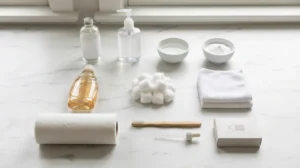
Tools and Materials Checklist
- Rubbing alcohol (70% or 91% isopropyl)
- Hand sanitizer (alcohol-based, 60%+ alcohol)
- White vinegar
- Baking soda
- Liquid dish soap (mild)
- Cotton balls or clean white cloths
- Paper towels
- Old toothbrush (soft bristles)
- Eyedropper (optional but helpful)
- Pre-wash stain remover
Time, Cost and Difficulty
- Time: 15–45 minutes (longer for set-in stains)
- Cost: Under $5 (using items you likely already own)
- Difficulty: Easy to moderate
Safety Checks
- Ventilation: Work in a well-ventilated area. Rubbing alcohol fumes are strong.
- Flammable warning: Keep rubbing alcohol away from open flames, sparks, and hot surfaces.
- Skin protection: Wear gloves if you have sensitive skin. Alcohol dries out your hands.
- Spot test: Always test your chosen method on a hidden area first. This prevents color damage or fabric damage.
- Never mix bleach and ammonia. This combination creates dangerous fumes. Use them separately.
The Root Cause: Why Ballpoint Pen Ink Is So Stubborn
Ballpoint pen ink is not like water-based gel ink. It is a thick, oil-based paste. Manufacturers mix dyes and pigments with oily resins and solvents. This formula lets the ink flow smoothly from the pen tip. It also makes the ink cling tightly to fabric fibers. Water alone cannot break this bond. You need a solvent that dissolves oil. That is why rubbing alcohol works so well. It breaks down the oily resin and releases the dye. Once the dye is loose, you can blot it away.
Fabric type changes everything. Cotton and linen are absorbent. They soak up ink quickly. Polyester and nylon are less absorbent. Ink sits closer to the surface on synthetics. Silk and wool are protein-based. They can be damaged by alcohol. Always check the care label before you start. For a deeper look at how different fibers react to stains, our guide on how to remove stains from carpet breaks down fiber-specific behavior in detail.
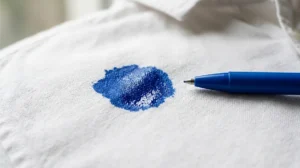
Method Variations by Severity
Not all ink stains are equal. A fresh mark needs a gentle approach. A set-in stain needs more muscle. Match your method to the severity for the best results.
Mild Stains (Fresh, Small Marks)
Best method: Hand sanitizer or rubbing alcohol
Fresh ink has not bonded deeply yet. A quick treatment lifts it easily. The same gentle, patient approach works well when you remove candle wax from fabric.
- Blot the stain with a dry paper towel. Do not rub. Rubbing spreads the ink.
- Apply a small amount of hand sanitizer or rubbing alcohol to a cotton ball.
- Dab the stain gently from the outside edges toward the center. This stops the ink from spreading.
- Replace the cotton ball as soon as it picks up ink. Use a clean one each time.
- Rinse with cold water. Then wash as usual.
Time: 5–10 minutes
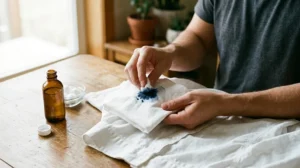
Moderate Stains (Dry or Larger Marks)
Best method: Rubbing alcohol soak or vinegar and baking soda paste
These stains have started to set. They need more dwell time. The soak-and-blot rhythm is similar to how you’d take stains off a mattress without over-wetting the surface.
- Place a clean white cloth under the stained area. This catches the ink as it lifts.
- Pour rubbing alcohol into a small dish. Immerse the stained area and soak for 15 minutes.
- Blot with a clean cloth. Work from the edges inward.
- Repeat until no more ink transfers to the cloth.
- Rinse with cold water. Apply a pre-wash stain remover. Wash normally.
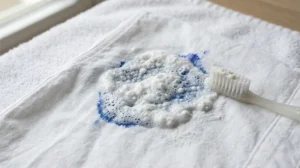
Alternative paste method: Mix 2 tablespoons of baking soda with 1 tablespoon of white vinegar. Add a few drops of water to make a paste. Apply to the stain. Let it sit for 10 minutes. Gently scrub with a soft toothbrush. Rinse with cold water.
Time: 20–30 minutes
Severe Stains (Set-In, Old, or Washed-and-Dried)
Best method: Ammonia soak or commercial ink remover
Heat sets ink permanently into fabric fibers. The dryer is the point of no return. But you can still try these methods.
- Mix 1 tablespoon of ammonia with 1 cup (240ml) of warm water.
- Soak the stained area for 30 minutes. For very old stains, soak overnight.
- Rub the stain gently with your fingers every 15 minutes.
- Rinse thoroughly with cold water.
- Apply a commercial ink remover or pre-wash stain remover.
- Wash on the hottest setting safe for the fabric. Use a color-safe bleach.
- Air dry. Do not use the dryer until the stain is completely gone.
Important: Ammonia has strong fumes. Work near an open window or use a fan.
Time: 30 minutes to overnight
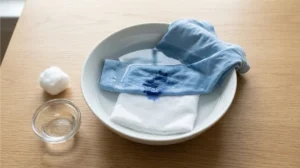
Surface and Material Specifics
The fabric type changes your approach. Using the wrong method can damage the garment. Just as you’d treat a shower head with vinegar differently from a delicate fixture, each fabric has its own limits.
| Fabric Type | Best Method | What to Avoid |
|---|---|---|
| Cotton & Cotton Blends | Rubbing alcohol, hand sanitizer, liquid detergent | Hot water (sets the stain) |
| Polyester & Synthetics | 70% rubbing alcohol (not 91%) | High-concentration alcohol (can fade color) |
| Linen | Rubbing alcohol, cold water rinse | Machine drying (air dry only) |
| Denim | Rubbing alcohol, generous application | Harsh scrubbing (damages the weave) |
| Silk & Wool | Professional dry cleaning only | Rubbing alcohol (damages protein fibers) |
| Leather | Professional leather cleaner | Water, alcohol (causes cracking) |
Treating Glass and Hard Surfaces
Ballpoint ink also marks glass, mirrors, and countertops. For glass, apply rubbing alcohol directly. Wipe with a microfiber cloth. For natural stone like marble or granite, avoid alcohol. It can etch the surface. Use a specialty stone cleaner instead.
Long-Term Prevention Guide
Stopping ink stains before they happen is easier than removing them. Follow these simple routines. A consistent maintenance schedule is just as important as knowing how to clean a mattress regularly to keep it fresh.
Daily Habits
- Cap your pens when you are not using them.
- Store pens in a dedicated pocket or case. Do not let them float loose in bags.
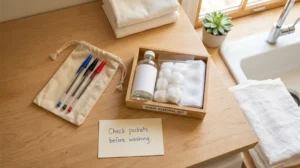
- Check pockets before doing laundry. A single pen can ruin an entire load.
Weekly Checks
- Inspect work bags and backpacks for leaking pens.
- Check pen caps for cracks or looseness.
- Replace worn pens before they leak.
Monthly Maintenance
- Clean out pen storage areas. Wipe down drawers and pockets.
- Test pens on scrap paper. Discard any that leak or smear.
- Keep a small stain removal kit in your laundry room. Include rubbing alcohol, cotton balls, and a white cloth.
What NOT to Do: Common Mistakes That Ruin Results
Many people make these mistakes and make the stain worse. Avoid them at all costs.
Rubbing the Stain
Rubbing pushes ink deeper into the fabric fibers. It also spreads the stain. Always blot gently. Work from the outside edges toward the center.
Using Hot Water
Heat sets ink permanently. Never use hot water on an ink stain. Never put the garment in the dryer until the stain is completely gone. Cold water is your friend.
Using Hairspray
Old hairspray formulas contained high levels of alcohol. They worked on ink stains. Modern hairsprays are different. They contain polymers and resins. These ingredients coat the ink and make it harder to remove. You end up with two problems: an ink stain and a sticky residue. Skip hairspray entirely. Go straight to rubbing alcohol.
Using the Wrong Method on Delicate Fabrics
Silk and wool are protein-based. Rubbing alcohol can damage them. It can cause discoloration or weaken the fibers. Always check the care label. When in doubt, take the garment to a professional dry cleaner.
Mixing Bleach and Ammonia
This combination creates chloramine gas. The fumes are dangerous. Always use these products separately. Work in a well-ventilated area.
Key Takeaways
- Act fast. Fresh ink stains are much easier to remove than set-in stains.
- Use rubbing alcohol for ballpoint pen ink. It breaks down the oil-based resin.
- Never use hot water or the dryer until the stain is completely gone.
- Blot, do not rub. Rubbing pushes ink deeper and spreads the stain.
- Spot test first. Always test on a hidden area before treating the visible stain.
- Check the fabric. Silk and wool need professional cleaning, not DIY methods.
- Skip hairspray. Modern formulas make ink stains worse.
- Ventilate. Work in a well-ventilated area when using alcohol or ammonia.
With these methods, you can rescue almost any garment from ball pen stains. Start with the gentlest approach. Escalate only if needed. And always air dry until you are sure the stain is gone. Your clothes will thank you.
Before you start
Tick these off as you gather them. Nothing here is specialised and most of it is already in your kitchen or bathroom.
0 of 12 ready · Ticks are for this visit only and aren't saved.
Skip rubbing alcohol on silk, wool, acetate, and leather. It strips the natural oils from protein fibres and can leave a dull patch behind. Skip ammonia on freshly dyed garments, dark denim, and indigo cotton because it can fade the finish. Skip acetone on plastics, painted buttons, and screen printed logos. Never mix bleach with ammonia in the same bowl. The two together release fumes that irritate your airways. Use one product at a time and rinse fully between attempts.
Common questions
What dissolves ballpoint pen ink?
Rubbing alcohol (isopropyl alcohol) is the most effective solvent for ballpoint pen ink. The alcohol breaks down the oil-based resin in the ink. This releases the dye from fabric fibers. Use 70% or 91% concentration for best results. Hand sanitizer with at least 60% alcohol also works in a pinch.
How do you get ballpoint pen ink out of clothes?
Place a clean white cloth under the stain. Apply rubbing alcohol to a cotton ball. Dab the stain gently from the edges inward. Replace the cotton ball as it picks up ink. Rinse with cold water. Apply a pre-wash stain remover. Wash as usual. Air dry until you confirm the stain is gone.
Does vinegar remove ballpoint pen ink?
White vinegar can help with mild ballpoint ink stains. Mix 2 parts white vinegar with 3 parts cornstarch to make a paste. Apply it to the stain and let it sit for 10 minutes. Gently scrub with a soft toothbrush. Rinse with cold water. Vinegar works better on fresh stains than old ones.
Will baking soda remove ink stains?
Baking soda alone will not dissolve oil-based ballpoint ink. But it works well as a gentle abrasive when mixed with vinegar or water. Make a paste and apply it to the stain. Let it sit for a few minutes. Gently rub and rinse. Repeat if needed before washing.
Does hand sanitizer remove pen ink?
Yes, alcohol-based hand sanitizer can remove fresh pen ink stains. The alcohol content dissolves the oily ink. Apply a generous amount directly to the stain. Let it sit for a few minutes. Gently scrub with an old toothbrush. Wash as usual. This method works best on fresh stains.
Can you get ink out of clothes after washing?
Yes, you can often remove ink after washing, as long as you have not used the dryer. Heat from the dryer sets the stain permanently. If the garment is still wet, treat it with rubbing alcohol immediately. If it has been dried, try an ammonia soak or a commercial ink remover. Success is not guaranteed for dried stains. For a similar approach to tough set-in marks, see how to get pee out of a mattress.
What is the best homemade ink remover?
A mixture of rubbing alcohol and a few drops of liquid dish soap is the best homemade ink remover. The alcohol dissolves the oil-based ink. The dish soap helps lift the residue from the fabric. Apply the mixture to the stain. Blot gently with a clean cloth. Rinse and wash as usual.
Does hot water set ink stains?
Yes, hot water sets ink stains. Heat causes the ink to bond more tightly with fabric fibers. This makes removal much harder. Always use cold water when treating ink stains. Never put an ink-stained garment in the dryer until the stain is completely gone.
How do you remove old ink stains from clothes?
For old ink stains, soak the area in a mixture of 1 tablespoon of ammonia and 1 cup (240ml) of warm water. Let it soak for 30 minutes to overnight. Rub gently every 15 minutes. Rinse with cold water. Apply a commercial ink remover. Wash on the hottest setting safe for the fabric.
Does nail polish remover remove ink stains?
Acetone-based nail polish remover can remove fresh ink stains. Apply a few drops to a clean cloth. Blot the stain gently. Do not rub. Rinse with cool water. Then wash as usual. Acetone is a strong solvent. Do not use it on silk, wool, or acetate fabrics. It can melt or damage these materials.
Can you use hairspray to remove ink stains?
Modern hairspray is not effective for ink stains. Old formulas contained high alcohol levels. Today's hairsprays contain polymers and resins. These ingredients coat the ink and make removal harder. Use rubbing alcohol instead. It is cheaper, more effective, and leaves no sticky residue.
Does milk remove ink from clothes?
Milk is an old-fashioned remedy for fresh ballpoint ink stains on cotton and linen. Submerge the stained area in milk. Let it soak for several hours or overnight. The milk fats can help lift the ink. Then wash as usual. This method is less effective on synthetic fabrics and set-in stains.
Was this article useful?
4 comments
Leave a comment
Corrections and model-specific notes are especially welcome.
Comment submitted
Thanks — it'll appear once a moderator has had a look, usually within a working day.
My son left a pen in his trouser pocket and it went through a full wash cycle. I honestly thought the trousers were finished. I used the rubbing alcohol soak from step three and almost all of it came out. One small shadow stayed near the seam. Should I try the ammonia soak next or take it to a cleaner?
ReplyI tried the hairspray trick years ago on a white shirt and it made everything worse. The mark went grey and sticky and I could not shift it afterwards. Good to see a guide that actually tells people to skip it. The alcohol method worked in under ten minutes on a fresh mark.
ReplyDoes this work the same way on school uniform polyester? My daughter has three shirts with blue ink marks and I do not want to ruin the fabric by using the wrong strength.
ReplyA warning for anyone reading this. I used ammonia in a small bathroom with the door closed and had to step outside for air. Open a window before you start and keep a fan running. The stain came out but I would not repeat that mistake.
Reply