Curry night left a bright yellow mark on your shirt. Don’t despair. Learning how to remove turmeric stains from clothes is different from other stains, because turmeric breaks the normal rules. Water alone won’t touch it. But chemistry and sunlight will. This guide covers fresh spills, dried marks, and the sunlight trick that finishes the job.
Before You Start: Supplies Checklist
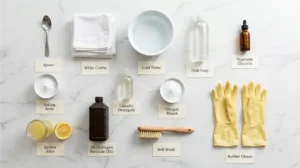
Grab these before you touch the stain. Turmeric acts fast, so speed matters.
- A spoon or butter knife for scraping
- Clean white cloths or paper towels
- Cold water and a basin
- Clear liquid dish soap
- Vegetable glycerin (optional but very helpful)
- Baking soda
- Liquid laundry detergent (enzyme-based works best)
- Oxygen-based bleach (sodium percarbonate)
- Lemon juice (for white cotton)
- 3% hydrogen peroxide (whites only)
- A soft brush or old toothbrush
- Rubber gloves
Why Are Turmeric Stains So Hard to Remove?
Turmeric’s color comes from curcumin, a fat-soluble pigment that bonds to fabric like a commercial dye. Water can’t dissolve it, because curcumin dissolves in oils, not water. That’s why rinsing alone fails. The pigment also sinks into fibers within minutes.
Here’s what most guides get wrong. Curcumin is photosensitive, which means UV light breaks it down into colorless compounds. Sunlight is your strongest weapon, even on old stains. Few guides mention this. They also miss that heat fuses curcumin to fibers almost permanently.
Why does water fail here? Because you’re fighting an oil-based dye with the wrong tool. Dish soap cuts the oil carrier first. Then an alkaline treatment like baking soda lifts the color. Sunlight finishes it. That order matters.
How to Remove Turmeric Stains from Clothes When the Spill Is Fresh
Scrape off solids with a spoon, lifting without smearing. Blot the liquid with a clean cloth. Work dish soap into the stain to cut the oil. Rinse with cold water from the back. Apply a baking soda paste for 30 minutes. Rinse cold, wash on cold, and sun-dry.
Follow these steps in order. Each one builds on the last.
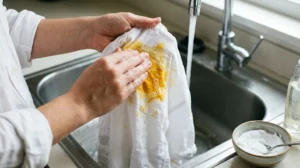
- Scrape, don’t smear. Lift curry solids with the back of a spoon or a butter knife. Work from the outside inward. Pressing down spreads the oil deeper.
- Blot the liquid. Press a clean white cloth onto the stain. Lift straight up. Turn the cloth to a fresh section each time. Never rub.
- Apply glycerin (optional). Dab vegetable glycerin onto the stain and wait 15 to 20 minutes. Glycerin dissolves curcumin well and loosens its grip.
- Work in dish soap. Squeeze clear liquid dish soap onto the stain. Gently work it in with your fingertips. This cuts the oil carrying the pigment.
- Rinse from the back. Hold the fabric under cold running water, back side up. Let the water push the stain out the way it came in.
- Apply baking soda paste. Mix 2 tablespoons (30 ml) of baking soda with 1 tablespoon (15 ml) of cold water. Spread it over the stain and wait 30 minutes.
- Rinse, wash, sun-dry. Rinse with cold water. Wash on a cold cycle. Then lay the damp garment in direct sunlight for 2 to 4 hours. UV light breaks down the remaining curcumin.
How Do You Remove Dried or Old Turmeric Stains?
Soak the stain in cold water with a spoonful of glycerin for 30 minutes. Spread on a paste of baking soda, dish soap, and a little water. Wait 30 minutes, then rinse cold. Soak whites in oxygen bleach for 1 to 4 hours. Finish by drying in direct sunlight.
Dried turmeric needs more time, but sunlight often saves even old stains. Here’s the process.
- Rehydrate with glycerin. Mix 1 tablespoon (15 ml) of vegetable glycerin into 2 cups (480 ml) of cold water. Soak the stained area for 30 minutes.
- Mix the paste. Mix 2 tablespoons (30 ml) baking soda, 1 tablespoon (15 ml) dish soap, and 1 teaspoon (5 ml) water.
- Apply and wait. Spread the paste over the full stain. Let it sit for 30 minutes. Work it lightly with a soft brush halfway through.
- Rinse with cold water. Flush the area fully. Check the color in good light.
- Oxygen bleach soak for whites. Dissolve oxygen-based bleach per the package directions. Soak white garments for 1 to 4 hours. Wear gloves and work in a ventilated room.
- Wash on cold. Launder per the care label. Use enzyme-based detergent for curry with oil.
- Sun-dry to finish. Skip the dryer. Lay the damp garment in direct sunlight for 2 to 6 hours. This step often clears the last yellow shadow.
Safety note: Patch test peroxide and oxygen bleach on colored fabrics first. Keep treatments away from your eyes. Never mix vinegar and peroxide in the same step.
Which Method Should You Use for Turmeric Stains?
Match the method to the stain’s age and your fabric. Dish soap cuts the oil carrier in fresh spills. Baking soda paste lifts color from most fabrics. Oxygen bleach soaks rescue whites. Glycerin loosens old, dried pigment. Sunlight finishes every method and often does the trick alone on faint marks. For a full stain removal system, see our guide to stain remover for clothes.
| Method | Best For | Time Needed | Fabric Note |
|---|---|---|---|
| Dish soap + cold rinse | Fresh spills | 10 to 15 minutes | Safe for all fabrics |
| Glycerin pre-treat | Fresh and dried stains | 15 to 30 minutes | Safe for colors |
| Baking soda paste | Most fabrics, mild stains | 30 minutes | Safe for colors |
| Oxygen bleach soak | Whites, set-in stains | 1 to 4 hours | Check the care label first |
| Lemon juice + sunlight | White cotton | 1 to 2 hours in sun | Whites only |
| Direct sunlight | Faint remaining shadows | 2 to 6 hours | Whites and colorfast fabrics |
Fresh curry splash on a cotton kurta? Dish soap and a baking soda paste handle it. Old haldi stain on a white shirt? Glycerin, oxygen bleach, then sunlight. Better Living’s tested curry methods confirm the same sequence: cut the oil, lift the color, finish with sun.
Match the Method to the Stain’s Severity
Mild: Spilled Minutes Ago
Scrape, blot, and work in dish soap right away. Rinse cold from the back. A baking soda paste for 30 minutes usually clears it. Sun-dry to finish. Fast action wins here.
Moderate: Dried for Hours or Overnight
Rehydrate with the glycerin soak first. Then apply the baking soda and dish soap paste. Let it sit 30 minutes and rinse. For whites, add the oxygen bleach soak. Sunlight finishes the job.
How to Remove Turmeric Stains from Clothes After Heat Drying (Severe)
Run the full dried-stain process above. Repeat the paste and soak cycle two or three times. Give sunlight the longest slot, up to 6 hours. Heat-set turmeric may only fade to a faint shadow. Set your expectations, but don’t skip the sun. It surprises people.
Does Fabric Change the Treatment?
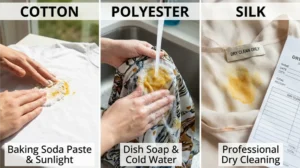
Yes. Cotton handles every method in this guide, including oxygen bleach and long sun exposure. Synthetics respond well to dish soap and enzyme detergent. Silk, wool, and dry-clean-only garments need a professional cleaner. Always check the care label first.
Cotton and Linen
The most forgiving fabrics for turmeric. Use the full fresh or dried method above. Oxygen bleach soaks work great on white cotton. Sunlight is safe for long sessions. Want a full stain system? See our guide to stain remover for clothes.
Polyester and Other Synthetics
Synthetics absorb less oil, which helps you. Blot fast and work in dish soap. Enzyme detergent in a warm wash handles the rest. Keep sun sessions shorter on bright colors, since UV can fade some dyes over time.
Silk, Wool, and Dry-Clean-Only
Don’t home-treat these with bleach, peroxide, or lemon juice. Blot gently with a dry cloth. Take the garment to a dry cleaner quickly and point out the turmeric stain. Home treatments can ruin these fibers.
What NOT to Do with Turmeric Stains
Turmeric punishes wrong moves harder than most stains. These mistakes can make it permanent.
- Using hot water. Heat fuses curcumin to fibers almost irreversibly. Cold water only, at every stage.
- Treating with white vinegar. Vinegar’s low pH keeps curcumin in its brightest yellow form. Skip it as a treatment here. Hot water sets protein stains like blood the same way. For other common kitchen stains, see our guide on how to remove coffee stains.
- Rubbing the stain. Rubbing grinds the pigment deeper and spreads the oil. Blot and lift, always.
- Putting it in the dryer. Dryer heat polymerizes the pigment and locks it in. Air dry and sun-dry only until the stain is gone.
- Using chlorine bleach on colors. It strips dye and damages fibers. Oxygen bleach is the safer pick for whites.
- Skipping the sunlight. Sun is the only step that breaks curcumin down fully. Don’t stop at “almost gone.”
- Waiting until tomorrow. Curcumin bonds fast. Even a quick scrape and cold rinse now saves hours later.
How Do You Prevent Turmeric Stains?
Cooking with turmeric will always carry some risk. Wear an apron when cooking curries, and tie back loose sleeves. Keep a damp cloth nearby while you cook for instant blotting. Serve curry carefully, away from light-colored clothes. Quick action beats every product.
- Wear an apron. A dark apron catches splashes before they reach your clothes.
- Roll up sleeves. Loose sleeves dip into pots. Secure them before you stir.
- Keep cloths handy. A damp white cloth near the stove means instant blotting.
- Change before eating. Curry drips happen at the table too. An old shirt for dinner saves the good ones.
- Act within minutes. Scrape and cold-rinse at once. You can do the full treatment later.
- Keep a stain kit ready. Dish soap, baking soda, and glycerin handle most kitchen stains. For underarm marks, see our guide on removing deodorant stains from clothes.
Key Takeaways
- Curcumin is oil-based. Dish soap first, water alone won’t work.
- Stay cold. Hot water and dryer heat set turmeric almost permanently.
- Skip vinegar as a treatment. It keeps the yellow bright.
- Sunlight is the finisher. UV breaks curcumin down, even on old stains.
- Match the method to the fabric. Send silk and wool to a professional.
- Act fast. Scrape, blot, and rinse within minutes when you can.

Before you start
Grab these before you touch the stain. Turmeric acts fast, so speed matters.
0 of 12 ready · Ticks are for this visit only and aren't saved.
Never use hot water or chlorine bleach on turmeric stains. Hot water fuses curcumin to fabric fibers almost permanently, and chlorine bleach can strip dye from colored garments. Always use cold water and oxygen-based bleach for whites. Also skip white vinegar as a treatment, since its low pH keeps the yellow bright.
Common questions
How do you get turmeric stains out of clothes?
Scrape off solids and blot the liquid without rubbing. Work clear dish soap into the stain to cut the oil. Rinse with cold water from the back of the fabric. Apply a baking soda paste for 30 minutes, then rinse and wash on cold. Finish by drying the damp garment in direct sunlight for 2 to 4 hours. Sunlight breaks down the remaining curcumin.
Does sunlight really remove turmeric stains?
Yes, and it is the most effective step for turmeric. Curcumin is photosensitive, so UV light breaks it down into colorless compounds. Lay the damp, treated garment in direct sunlight for 2 to 6 hours. This works even on old stains that survived washing. It is free, safe for whites, and often clears the last yellow shadow. Don't skip it.
How do you remove dried turmeric stains from clothes?
Soak the stain in cold water with 1 tablespoon (15 ml) of glycerin for 30 minutes. Apply a paste of baking soda, dish soap, and a little water. Wait 30 minutes and rinse cold. For whites, soak in oxygen-based bleach for 1 to 4 hours. Wash on cold. Then dry in direct sunlight for up to 6 hours. Repeat the cycle if a shadow remains.
Does baking soda remove turmeric stains?
Baking soda helps lift turmeric color from most fabrics. Mix 2 tablespoons (30 ml) of baking soda with 1 tablespoon (15 ml) of cold water into a paste. Spread it over the stain and wait 30 minutes. The mild alkaline paste loosens the curcumin bonds. Rinse with cold water and wash. It is safe for colored clothes. Deep stains may also need the sunlight step.
Can white vinegar remove turmeric stains?
Surprisingly, no. Vinegar is a poor choice for turmeric. Its low pH keeps curcumin in its brightest yellow form, which makes removal harder. Many guides recommend it, but the chemistry works against you here. Use dish soap and baking soda instead, and finish with sunlight. Save the vinegar for stains where it helps, like coffee or sweat.
Will hot water set a turmeric stain?
Yes, almost permanently. Heat fuses curcumin to fabric fibers and polymerizes the pigment. Once heat-set, the stain resists nearly every treatment. Always use cold water for rinsing, soaking, and washing turmeric stains. Never put a stained garment in the dryer before the mark is fully gone. Sunlight is the only heat-free way to finish the job.
How do you remove curry stains from white clothes?
Follow the fresh-stain process, then add stronger steps for whites. After the dish soap and baking soda paste, soak the garment in oxygen-based bleach for 1 to 4 hours. Wash on the warmest setting the care label allows. Then dry in direct sunlight for several hours. The bleach plus UV combination clears even deep yellow marks on white cotton.
Does turmeric stain permanently?
It can, but usually only after heat exposure. A hot wash or dryer fuses curcumin to fibers in a way that resists treatment. Without heat, even old turmeric stains often fade with glycerin, baking soda, and sunlight. The key is never applying heat before the stain is gone. Treat early, stay cold, and let the sun finish.
How do you remove haldi stains from colored clothes?
Use color-safe methods only. Scrape, blot, and work in dish soap, then rinse cold. Apply a baking soda paste for 30 minutes. Try glycerin for dried marks. Skip oxygen bleach and peroxide unless you patch test a hidden seam first. Keep sun sessions shorter on bright colors to avoid fading. Never use hot water or the dryer before the stain clears.
What removes turmeric stains from clothes fastest?
Speed matters more than product choice. Scrape off solids at once and blot the liquid. Work dish soap into the stain within minutes and rinse with cold water. This early action removes most of the oil carrier before curcumin bonds deeply. Follow with a baking soda paste and sun-drying. A stain treated in five minutes takes far less work than one left overnight.
Was this article useful?