Learning how to clean a microwave saves you valuable time. Kitchen appliances collect daily grease quickly. Messy food splatters happen fast. You need a reliable cleaning method. We will teach you the best techniques today. These steps work for any countertop or built-in model. You will discover methods using simple natural ingredients. Let us make your appliance sparkle again. Have you noticed that weird burning smell yet?
Before You Start: Cleaning Checklist
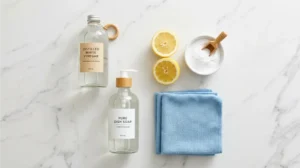
- Microwave-safe bowl: A heavy glass measuring cup works perfectly.
- Distilled white vinegar: Best for cutting through greasy films.
- Fresh lemons: Provides natural citric acid and fresh scents.
- Baking soda: A gentle, safe abrasive powder.
- Mild liquid dish soap: Breaks down sticky dairy proteins.
- Soft microfiber cloths: Prevents scratching the plastic interior.
- Clean tap water: Essential for making hot steam.
Why Does Your Appliance Smell?
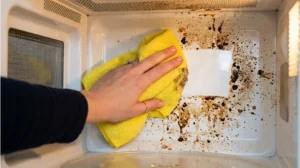
Your appliance smells bad because food splatters dry out. Repeated heating bakes these grease particles onto the walls. This stuck-on food residue breeds foul odors. It also attracts stubborn, hard stains. Microwaves heat food using invisible electromagnetic waves. These waves agitate water molecules inside your food. This rapid agitation creates intense internal steam. Sometimes, this steam builds up way too fast. The food literally explodes inside the container. This sends tiny bits of food flying everywhere.
The hot grease and sauce stick to the plastic. You leave them there and close the door. The next time you cook, the grease heats again. It slowly turns into a rock-hard carbon shell. This hard carbon ruins the appliance interior. It also creates bad smells that ruin fresh meals. Grease buildup behaves similarly on other household metals. You see this exact chemistry when learning how to remove rust from cast iron safely.
Types of Food Splatters
Different foods create completely different types of messy splatters. Dairy produces sticky, thick protein films. Sugary sauces create hard crystallized candy spots. Fatty meats spray an invisible grease mist. This mist coats the entire interior cavity evenly.
Dairy products like cheese boil over very rapidly. You must use dish soap to break down dairy. Sugary foods like syrups turn into hard spots. Sugar crystallizes when heated repeatedly. You cannot scrub crystallized sugar easily. You must use heavy steam to melt it. Fatty meats create a microscopic grease mist. White vinegar is your ultimate weapon against invisible grease.
Method Variations by Mess Severity
You must choose your method based on mess severity. Mild messes require simple liquid dish soap. Moderate stains need steam from boiling water and lemon. Severe grime demands a strong vinegar and baking soda treatment. You do not need harsh chemicals for this chore. Natural pantry ingredients work perfectly.
These items break down grease without leaving unsafe residues. They are cheap and incredibly effective. Using natural acids is a very smart cleaning trick. It works just like when you clean shower head with vinegar to clear minerals.
How to Clean a Microwave (Mild Messes)
To handle mild messes, use warm soapy water. Dampen a soft sponge with mild liquid dish soap. Wipe the interior walls, ceiling, and base gently. Dry the interior completely with a clean microfiber cloth. Daily wiping prevents hard stains from forming. You should perform this basic wipe after every meal. It only takes about thirty seconds.
- Unplug the appliance for complete safety first.
- Mix one teaspoon of liquid dish soap with water.
- Dip a soft sponge into the soapy mixture.
- Wring out excess water to prevent electrical damage.
- Wipe the interior walls in a circular motion.
- Rinse the sponge with plain water and wipe again.
- Dry the entire interior with a clean towel.
How to Steam Clean a Microwave (Moderate Stains)
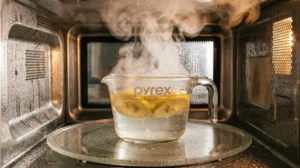
Steam cleaning works best for moderate, dried-on stains. Fill a microwave-safe bowl with one cup of water. Add several fresh lemon slices to the bowl. Heat the bowl on high for three to five minutes. Steam softens hardened food particles very quickly. It acts like a hot sauna for your dirty appliance.
The lemon juice adds natural citric acid. This natural acid cuts through light grease effortlessly. Leave the appliance door closed after the timer stops. Wait five full minutes for the steam to work. The trapped steam loosens the heavy grime. Carefully open the door. Remove the hot bowl using protective oven mitts. Wipe the softened mess away with a damp cloth. Quick action helps lift fresh spots fast. This is the exact same logic used for how to remove coffee stains from white fabrics.
The Vinegar and Baking Soda Method (Severe Grime)
Severe grease requires white vinegar and baking soda. Heat water and vinegar to create acidic steam. Then, scrub the stubborn stains with a baking soda paste. Old, baked-on food resists normal steam treatments. You must introduce stronger natural solvents.
- Pour one cup of water into a safe glass bowl.
- Add two tablespoons of distilled white vinegar.
- Heat the mixture on high for five minutes.
- Let the steam sit inside for five additional minutes.
- Remove the hot bowl with thick protective gloves.
- Mix three tablespoons of baking soda with water.
- Apply this thick paste to stubborn, crusty spots.
- Gently rub the paste with a soft sponge.
- Wipe the interior completely clean with a damp cloth.
Surface and Material Specifics
Different appliance parts require highly specific cleaning techniques. You can wash the microwave turntable in a dishwasher. However, stainless steel exteriors require gentle wiping. You must never soak electrical control panels. Treating every part the same causes permanent damage.
Plastic requires different care than heavy metal parts. Understanding surface types helps you remove grease safely. You learn this rule fast when researching how to remove oil stains from clothes.
Cleaning the Glass Turntable
The glass turntable collects spilled liquids and hard crumbs. Remove it carefully and let it cool completely. Wash it by hand using warm, soapy water. You can also safely place it in your dishwasher. Never wash a hot glass turntable with cold water.
The sudden temperature shift will shatter the glass instantly. Allow it to reach room temperature first. Wash the plastic roller ring in warm soapy water. Dry both parts completely before reinstalling them.
Cleaning Plastic vs. Stainless Steel Interiors
Plastic interiors stain easily from tomato-based sauces. You can use a hydrogen peroxide wipe for red stains. To clean stainless steel microwave interiors, wipe carefully. Stainless steel resists staining but shows water spots easily. You must buff them dry immediately.
Plastic walls absorb strong odors very quickly. You must clean them gently to avoid scratches. Scratches trap microscopic food particles permanently. Stainless steel requires wiping straight along the metal grain. This prevents unsightly swirling marks on the shiny finish.
Cleaning the Exterior and Control Panel
Clean the exterior using a damp cloth and soap. For stainless steel, wipe horizontally along the metal grain. Use a completely dry microfiber cloth on the panel. This keeps the touch control panel safe from shorts. The control panel houses highly sensitive electronics.
Keep liquid water far away from these buttons. Spray your cleaning solution onto a cloth first. Never spray liquid directly onto the machine face. If your appliance has a control lock option, use it. This prevents accidental activation while you wipe buttons.
Cleaning the Underside Grease Filter
Over-the-range models feature a grease filter underneath. You must slide this metal filter out monthly. Soak it in hot soapy water for ten minutes. Gently scrub it with a cleaning brush. Rinse it and dry it completely.
Many people completely forget this hidden component. The grease filter catches smoke from your stovetop below. When it clogs, your kitchen ventilation suffers greatly. A clean filter improves air quality immediately. It also reduces household fire risks significantly.
Important Components to Protect
You must protect the delicate waveguide cover. You must also protect the rubber door seals. Never scrub the cardboard waveguide cover aggressively. Wipe the rubber door seals gently to prevent cracking. The waveguide cover looks like a small piece of cardboard. It sits on the interior side wall.
It protects the sensitive magnetron from food splatters. Never soak it with liquid water. If it breaks, the appliance will spark. You can wipe it very gently with a damp cloth. If it becomes ruined, buy a replacement part immediately.
The rubber door seals trap tiny crumbs. These seals keep the electromagnetic waves safely inside. A dirty seal compromises appliance safety entirely. You must inspect the rubber gaskets every week. Wipe the rubber seals using a damp microfiber cloth.
Do not use acidic vinegar on the rubber gaskets. Acid degrades soft rubber over time. Use plain warm water and mild dish soap. Dry the seals thoroughly to prevent cracking.
Long-Term Prevention Guide
Prevent messes by using a vented microwave splatter cover. You should wipe up fresh spills immediately. Leave the door open for three minutes after cooking. Prevention saves you from heavy scrubbing later. Small daily habits make a massive difference. Your appliance will look brand new for years.
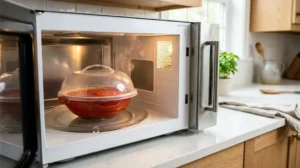
Always cover your dishes before hitting start. You can buy cheap plastic splatter screens. A simple paper towel works perfectly too. Covering food traps moisture and prevents messy explosions. Lower your heating power for thick foods. Soups and sauces pop violently on high heat.
Reduce the power to fifty percent. Heat your meal for a longer time instead. Air out the interior daily to release condensation. Dry interiors resist mold and foul odors naturally. Keeping things fresh daily stops hard work later. It acts like keeping a stain remover for clothes near your laundry basket.
The Daily Maintenance Routine
Adopt a daily routine to avoid deep cleaning. Keep a spray bottle of diluted dish soap nearby. Spray a cloth lightly and wipe the walls. Do this simple task every single evening. Leave the door open for five minutes to dry.
This routine requires less than one minute total. Keep a stack of clean cloths next to the appliance. Inspect the interior daily for fresh splatters. This simple habit guarantees a pristine kitchen environment.
Cleaning Methods Comparison Guide
| Method Type | Primary Ingredient | Best For | Time Required |
|---|---|---|---|
| Daily Wipe | Mild Dish Soap | Fresh, wet splatters | 2 minutes |
| Steam Clean | Lemon & Water | Dried food, light odors | 10 minutes |
| Heavy Scrub | White Vinegar | Baked-on grease layer | 15 minutes |
| Paste Polish | Baking Soda | Crusty spots, bad smells | 20 minutes |
Common Mistakes: What NOT to Do
Never use abrasive scouring pads on the interior walls. These heavy pads scratch the protective coating quickly. They expose the bare metal underneath. Do not use strong industrial chemicals or bleach. These chemicals leave bad residues that contaminate your food.
Scratched interior walls look terrible. They also harbor bacteria and grease deep inside grooves. Always use soft sponges or microfiber cloths. Avoid using too much liquid water. Dripping water can seep into the interior vents.
This moisture ruins the internal electrical components completely. Always wring out your sponge thoroughly before wiping. Do not ignore weird burning smells. A burning smell indicates trapped carbon or failing electronics. Clean the appliance immediately.
Key Takeaways
- Use steam power: Steam softens hardened food splatters quickly.
- Try natural acids: Lemon juice and white vinegar provide excellent degreasing power.
- Scrub safely: Baking soda works perfectly as a gentle abrasive for crusty spots.
- Cool the glass: Always let your glass turntable cool before washing it.
- Protect the finish: Never use abrasive metal pads or harsh industrial chemicals.
- Check the filter: Clean the hidden grease filter under your appliance every month.
- Cover your food: Use a splatter cover daily to prevent future messes completely.
Essential Microwave Cleaning Toolkit
Before you start scrubbing those stubborn, baked-on food splatters, gather these natural household supplies. Having everything ready on your kitchen counter ensures a fast, safe, and entirely chemical-free cleaning process.
0 of 6 ready · Ticks are for this visit only and aren't saved.
Abrasive scouring pads (like steel wool), harsh industrial chemicals, or bleach. These will permanently scratch the interior plastic, trap bacteria, and leave behind unsafe chemical residues that can contaminate your food. Additionally, never use excessive water or soaking methods on the delicate cardboard waveguide cover or the digital control panel.
Common questions
How to clean a microwave with vinegar?
You can clean inside of microwave easily using vinegar. Mix one cup of water with two tablespoons of vinegar. Heat it on high for five full minutes. Let the steam sit for five minutes. Carefully remove the bowl and wipe the interior clean.
How to clean a microwave with lemon?
Lemons provide natural cleaning power and a fresh scent. Fill a safe bowl with one cup of water. Squeeze the juice of half a lemon into the water. Drop the rinds in too. Heat for five minutes, wait, and wipe clean.
How to clean a microwave with baking soda?
Baking soda eliminates tough grease and foul odors perfectly. Create a thick paste using baking soda and water. Apply the paste directly to hardened food splatters. Let it sit for five minutes. Gently scrub the spots and wipe clean.
How to steam clean microwave interiors?
Steam cleaning is the absolute safest natural method. Place a bowl containing tap water inside. Heat it on high until the water boils vigorously. Leave the door closed for five minutes. The trapped steam softens dried food for easy wiping.
How do you deodorize a microwave?
You can easily deodorize a microwave using baking soda. Place an open box of baking soda inside the cold appliance. Leave it there overnight to absorb lingering odors. Remove the baking soda in the morning before operating.
What to use to clean the inside of a microwave?
You should use mild, food-safe ingredients inside. Dish soap, white vinegar, fresh lemons, and baking soda work best. Always use soft microfiber cloths or non-scratch sponges. Never use bleach, ammonia, or abrasive metal pads.
Can I put water inside of the microwave?
Yes, you can heat water inside safely. You must use a microwave-safe glass or ceramic container. Never heat distilled water alone. It can super-heat and explode. Always place a wooden stir stick in the water.
How to eliminate microwave odor permanently?
To eliminate microwave odor, clean all food splatters first. Boil a bowl of vinegar and water to neutralize smells. Wipe the walls completely dry. Leave the door open overnight to let fresh air circulate.
How to clean a microwave vent?
To clean a microwave vent, remove the metal grease filter. Slide the filter out from under the appliance. Submerge it in a sink filled with hot soapy water. Let it soak, gently scrub it, and dry it completely.
What is the best way to clean a microwave oven?
The absolute best way involves steam cleaning. Boiling a mixture of water and lemon juice softens food effortlessly. It requires zero harsh chemicals and little physical scrubbing. Finish by wiping the mess away completely with a cloth.
Was this article useful?