Are you staring at a rusty cast iron skillet? You certainly are not alone. Kitchens everywhere hide rusty pans in dark cabinets. Rust happens incredibly fast on bare metal. But you can easily fix it today. This complete guide walks you through the exact steps. We will restore your favorite pan back to life.
You do not need harsh chemicals for this job. Everyday household pantry items do the trick perfectly. We will show you very safe, proven cleaning methods. You will learn exactly how to remove rust from cast iron safely. Get ready to bring that old pan back to the stove.
Your Complete Tool Checklist
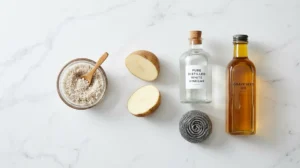
Gather these basic supplies before you begin scrubbing. Having everything ready saves you a lot of time. You likely have most of these sitting in your kitchen right now.
- Coarse kosher salt: Perfect for safe, natural scrubbing.
- One large raw potato: Provides mild natural acidity.
- Distilled white vinegar: Breaks down heavy mineral buildup.
- Baking soda: A gentle abrasive for tough spots.
- Steel wool pad: For stripping severe rust completely.
- Mild dish soap for cast iron: Safe for daily washing.
- Cooking oil: Use canola or grapeseed oil for baking.
Why Does Cast Iron Rust So Fast?
Raw iron reacts quickly with water and oxygen in the air. This rapid chemical reaction creates iron oxide. We know this ugly orange layer simply as rust. Leaving moisture on your pan causes this damage almost instantly. A weak oil layer also exposes the bare metal underneath.
Understanding this basic science helps you protect your cast iron cookware. Cast iron acts exactly like a hard metal sponge. It is an incredibly porous material. When water sits on the surface, it sinks deep inside. Repairing rusted metal takes patience. It requires similar care to figuring out how to remove a stripped screw from an old board.
The iron reacts with that moisture almost instantly. We call this sudden reaction flash rusting. It happens in just a few short minutes. You must keep the metal perfectly dry to stop it.
That beautiful black layer on a good pan is called seasoning. This layer is simply baked-on cooking oil. It acts as a hard physical shield. It stops water from reaching the raw iron underneath. When that shield wears thin, rust takes over quickly.
How to Remove Rust Based on Severity
You must match your cleaning method to the rust level. Mild surface rust just needs some coarse salt. Moderate rust requires a deep vinegar soak. Severe damage demands heavy steel wool scrubbing.
Treating your pan correctly saves you time and effort. Do not use strong treatments for minor orange spots. Always start with the gentlest method first.
Mild Rust: The Salt and Potato Method
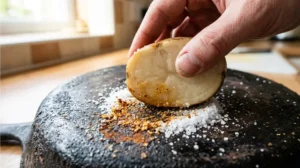
If you want to know how to clean cast iron with salt, try this. Use coarse salt and half a potato for mild rust. The potato provides natural moisture and mild oxalic acid. The salt acts as a safe, natural abrasive.
Together, they lift the light rust very easily. You will not need any strong chemical solutions. This old trick works wonders for light, fresh spots. It is completely natural and very cheap to do. Lifting light spots early is smart. It is just like knowing how to remove stains from carpet before they set permanently.
Steps for Mild Rust:
- Cut a large raw potato perfectly in half.
- Pour one full cup of coarse salt into the pan.
- Place the flat potato side directly onto the salt.
- Scrub the rusted spots firmly in tight circles.
- Rinse the pan thoroughly with warm running water.
- Dry the skillet immediately over low stove heat.
Moderate Rust: The Vinegar Soak Method
Moderate rust needs a stronger chemical reaction. A diluted white vinegar soak dissolves stubborn iron oxide buildup. You must watch this process very closely, however. Leaving it too long damages the healthy metal underneath.
Vinegar is an amazing natural tool for tough rust. It breaks down mineral buildup beautifully. This is exactly why you clean a shower head with vinegar. But cast iron requires very careful timing. If you leave it soaking too long, the acid pits the iron.
Steps for Moderate Rust:
- Mix equal parts white distilled vinegar and warm water.
- Submerge the rusty cast iron skillet completely in the liquid.
- Check the skillet closely every thirty minutes.
- Remove the pan after three hours maximum.
- Scrub away the loosened rust with a stiff brush.
- Wash the pan using mild dish soap and water.
- Dry the cookware completely on a warm stovetop immediately.
Severe Rust: Steel Wool and Baking Soda
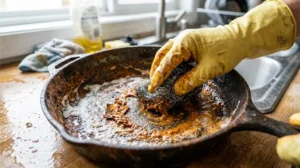
Severe rust requires physical scrubbing to fix. You have to strip the pan down to bare metal completely. Use steel wool and baking soda for thick crusts. This method removes the old, flaky seasoning entirely.
Sometimes an old cast iron pan looks completely ruined. Thick, orange crusts cover the entire metal surface. Do not throw it in the trash just yet! You simply need some heavy-duty scrubbing power. Breaking down thick, crusty layers takes work. It is as tough as figuring out how to remove oil stains from clothes after a messy spill.
Make a thick paste using baking soda and a little water. Apply it heavily over the absolute worst spots. Let the thick paste sit for ten minutes.
Grab a fresh steel wool pad and scrub vigorously. You will see raw, silver iron start to appear. This fresh, shiny metal is exactly what you want.
Handling Different Iron Surfaces
Bare cast iron needs completely different care than enameled pans. You can scrub bare iron very aggressively. Enameled cast iron cookware features a delicate glass coating instead.
Never use steel wool on any enameled surface. Many people confuse enameled iron with bare iron skillets. Enameled pots usually feature bright exterior paint colors. The inside is typically smooth white or black glass.
If your beautiful enameled pot gets a rusty rim, be gentle. Use baking soda and a soft kitchen sponge. Never use harsh metal scraping tools on enamel. Different materials always need different cleaning tools. You learn this quickly when figuring out how to take stains off a mattress safely.
Metal tools scratch the delicate glass finish permanently. Once the glass chips inside, the pan is ruined. For a bare iron skillet, you can scrub hard. The raw metal is tough, thick, and solid.
Restoring Antique or Thrift Store Finds
Finding a great cast iron skillet at a thrift store feels amazing. You might stumble upon an old Field cast iron pan. These vintage cast iron pots and pans are incredibly valuable. But they almost always come covered in heavy rust.
You can bring these abandoned treasures back to life. You just need to know how to clean a rusty cast iron skillet properly. First, use the steel wool method to strip it completely bare. You want to remove decades of old, bad seasoning.
Once the pan looks silver, wash it thoroughly. You must learn how to reseason a cast iron skillet from scratch. We will cover that process in the next section. Restoring old items is incredibly rewarding work. It takes patience, much like trying to figure out how to remove red wine from clothes after a party.
Everyday Cleaning Routine for Cast Iron
How do you clean a cast iron skillet daily? People spread a lot of myths about this topic. The biggest myth is that you cannot use soap. You absolutely can use mild dish soap for cast iron.
Modern dish soap does not contain harsh lye anymore. Lye is what stripped old seasoning in the past. Today, a few drops of soap will safely clean your pan. Knowing how to wash cast iron skillet properly prevents future rust.
Wash the pan right after cooking your meal. Use warm water, mild soap, and a soft brush. Do not use metal scouring pads for daily washes. Gentle daily cleaning preserves your hard work. You want a reliable routine, similar to keeping a good stain remover for clothes handy.
How to Season Cast Iron After Cleaning
Seasoning creates a natural non-stick surface for cooking. It completely blocks moisture from reaching the raw metal. You must coat the bare iron with a high smoke point oil. Heating the oil causes it to polymerize.
This process bonds the fat directly to the iron. If you wonder how to properly season a cast iron skillet, timing matters. You must season the pan immediately after removing the rust. Do not wait at all. Bare iron rusts again quickly in the open air.
Apply a very thin layer of cooking oil. Wipe it inside, outside, and on the long handle. Then, use a clean paper towel to wipe it all off. The cast iron pan should look almost completely dry. A thin, even coat prevents ugly sticky spots later. You want a clean finish, just like learning how to remove coffee stains from white fabric.
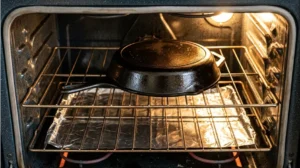
Place the oiled pan upside down in your oven. Put a sheet of aluminum foil on the bottom rack. This foil catches any rare, messy oil drips. Bake the pan at 400°F (205°C) for one full hour.
Let it cool completely inside the closed oven. Your pan now has a hard, black, protective shell.
The Best Oils for Seasoning Cast Iron
Choosing the best oil to season cast iron is very important. You need a high smoke point oil for seasoning cast iron properly. If the smoke point is too low, the oil just burns away. It leaves a flaky, bitter residue on your food.
Grapeseed oil is widely considered the absolute best choice. It polymerizes beautifully and creates a very hard, durable surface. Canola oil is a fantastic, budget-friendly alternative for everyday use. Heat changes the chemical structure of these oils entirely. Melting points and heat matter a lot. It is the same science behind knowing how to remove candle wax from fabric safely.
Avoid using extra virgin olive oil or standard butter. Their smoke points are far too low for oven seasoning. They will simply smoke out your kitchen and leave a sticky mess. Stick to clear, neutral oils for the best results.
Keeping Rust Away Long-Term
Preventing rust requires strict moisture control every single day. Regular maintenance keeps your cast iron frying pan perfectly safe. You must never let a cast iron skillet air dry naturally. Always heat the pan on the stove after washing it.
Place the wet pan directly onto the stove burner. Turn the heat to medium-low setting. Watch the water evaporate completely from the black surface. This step guarantees no hidden moisture remains behind. Regular maintenance keeps things fresh and clean. You apply the same logic when you clean a mattress every few months.
While the pan is still slightly warm, add oil. Put just three tiny drops of canola oil inside. Rub it everywhere with a fresh, clean paper towel. This regular daily upkeep keeps your pan perfectly non-stick forever.

Common Mistakes to Avoid
The absolute biggest mistake is using the modern dishwasher. Dishwashers use strong, gritty detergents and prolonged water exposure. This strips the baked-on seasoning and causes immediate, severe rusting.
Never soak your pan in plain sink water either. Avoid dramatic temperature changes entirely. Never put a screaming hot pan into cold sink water. The sudden thermal shock cracks the brittle iron completely. Repairing water damage is always frustrating. It is as annoying as figuring out how to get pee out of a mattress.
Always use warm or hot water for your daily cleaning. Do not use heavy metal scrapers during daily washes. They gouge your beautiful seasoning layer very badly. Stick to wooden spoons, silicone spatulas, or soft chainmail scrubbers.
If you have a glass top stove, be very careful. Never drag a heavy cast iron skillet pots across the glass. Lift the heavy pan straight up to move it. Dragging it will scratch the delicate glass surface permanently.
Don’t panic over a tiny, fresh rust spot. You don’t need to strip the whole pan bare. Just scrub that one little spot with coarse salt. Oil it lightly, heat it up, and keep cooking.
Key Takeaways
- Never let your cast iron cookware air dry naturally.
- Use the simple salt and potato trick for light surface rust.
- Soak stubborn rust in a 50/50 white vinegar and water mix.
- Dry your skillet completely using low stovetop heat every time.
- Always reseason your pan immediately after stripping off any rust.
- Choose high smoke point oils like grapeseed or standard canola.
- Keep your cast iron pans out of the dishwasher forever.
Cast Iron Restoration Toolkit
Before you start scrubbing away that ugly orange rust, gather these essential household supplies. Having everything ready on your kitchen counter saves time and prevents flash rusting during the cleaning process.
0 of 6 ready · Ticks are for this visit only and aren't saved.
Enameled cast iron cookware (like Le Creuset or Staub pots) or stainless steel pans. Steel wool and heavy abrasives will permanently scratch and ruin the delicate glass enamel finish. Only use these harsh stripping methods on bare, uncoated cast iron.
Common questions
Does vinegar remove rust from cast iron?
Yes, white vinegar removes rust highly effectively. The mild natural acidity dissolves iron oxide buildup safely. Mix equal parts vinegar and warm water. Soak the dirty pan for up to three hours. Check it frequently to prevent pitting the metal.
How do you clean heavy rust off a skillet?
You must use heavy physical abrasion for severe rust. Scrub the surface vigorously with a fresh steel wool pad. Wash it thoroughly with warm, soapy water next. Dry it immediately on a hot stove. Then, completely reseason the bare pan.
Can you save a rusted cast iron skillet?
Yes, you can almost always save it. Cast iron is incredibly solid, thick, and highly durable. Unless the pan has a deep physical crack, surface rust is entirely cosmetic. A good heavy scrubbing restores it completely.
Is it safe to cook on rusted cast iron?
No, you should not cook on a rusty pan. Small amounts aren't dangerous, but they taste terrible. Rust adds a strong, unpleasant metallic flavor to your food. It also causes your ingredients to stick badly to the metal.
Why did my cast iron rust after washing?
Your pan rusted because you let it air dry. Leaving water on bare iron causes flash rusting instantly. You must always dry your pan using a soft cloth towel. Then, heat it on the stove to remove all hidden moisture.
Will hot water remove rust from cast iron?
Hot water alone won't remove existing rust. You need an abrasive tool or an acidic cleaning solution. However, always use hot water for daily cleaning. Cold water cracks a hot iron pan very easily.
How often should I season my skillet?
Do a full oven seasoning two to three times yearly. For your daily upkeep, wipe a tiny oil drop inside after washing. This keeps the protective layer strong, perfectly smooth, and highly non-stick.
What is the best oil for seasoning cast iron?
Grapeseed oil and canola oil are the best choices. They offer very high smoke points. This allows the oil to polymerize into plastic without burning. Avoid olive oil because it smokes at a very low temperature.
How do you cure cast iron skillet?
Curing is just another word for seasoning. You cure a cast iron skillet by coating it in oil. Then, you bake it upside down at 400°F (205°C) for one hour. This bakes the oil into a hard, protective shield.
How to prepare a cast iron pot for the first time?
Wash a brand new bare cast iron pot with soap and water. Dry it completely on a warm stove. Apply a very thin layer of grapeseed oil everywhere. Bake it upside down in the oven for one hour to season it.
Can I put a cast iron pan in the dishwasher?
No, never put bare cast iron in the dishwasher. The prolonged water and strong gritty detergents strip the seasoning completely. A dishwasher ruins your pan and causes severe, immediate rusting across the surface.
How to clean a black iron skillet daily?
Wash your black iron skillet with warm water and mild dish soap. Use a soft bristle brush to remove food bits. Rinse it well, dry it with a towel, and heat it on the stove. Wipe a tiny drop of oil inside before storing it.
What is a lucky iron fish for cooking?
A lucky iron fish is a small cast iron tool. You boil it in soups or water to add dietary iron to your food. It helps prevent anemia naturally. You must clean and season an iron fish exactly like a cast iron skillet to prevent rust.
Was this article useful?