A waterproof outdoor rug sounds like the perfect patio fix. Lay it down, watch rain bead up, done. The reality is messier. Most rugs sold as waterproof are only water-resistant. They shed light rain and dry fast. A true waterproof seal traps water on top. That creates puddles and slip hazards. We compared published specs across materials, sizes, and prices. Here is what we found.
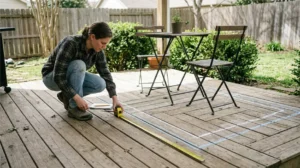
Before You Start
Tick these off as you gather them. Nothing here is specialised.
- Steel tape measure for the patio, deck, or balcony
- Chalk or painter’s tape to mark the rug footprint
- Photos of the furniture layout from two angles
- Drainage check: does water pool where the rug will sit?
- Your priority: rain shedding, fade resistance, or softness
- Material shortlist: polypropylene, polyester, or recycled plastic
- Budget, including a breathable outdoor rug pad
Key Takeaways
- Water-resistant beats waterproof for most patios. Fast drying prevents mold.
- Polypropylene (olefin) is the top fiber. It resists moisture, fading, and stains.
- Size up outdoors: leave 12 inches (30 cm) of rug beyond furniture on all sides.
- Flatweave, low pile dries fastest and won’t trap grit.
- Budget $50 to $170 for most 5′ × 7′ to 9′ × 12′ outdoor rugs.
- Lift and air-dry after heavy rain. Roll up and store for winter.
Quick Picks: Best Options by Need
Start with your biggest problem. Rain? Sun? Kids and pets? Each pick below targets one need. You won’t overpay for features you never use. Every option uses synthetic fibers rated for outdoor exposure.
Best Overall
A 100% polypropylene flatweave rug wins for most homes. It sheds rain and resists fading. UV-treated yarns hold color longer. Hose it clean in minutes. Pick 5′ × 7′ (152 × 213 cm) for a bistro set. Go 8′ × 10′ (244 × 305 cm) for a full seating group. Expect to pay $50 to $170.
Best Value
A recycled-plastic reversible rug wins on value. It suits patios with light rain only. These mats cost less than woven synthetics. They dry almost instantly. Flip them for a fresh look. They feel firm underfoot. Dining zones suit them better than lounging spots. Most 5′ × 8′ (152 × 244 cm) options sit under $60.
| Need | Best pick | Water handling | Typical price |
|---|---|---|---|
| Heavy rain | Polypropylene flatweave | Sheds and drains fast | $50–$170 |
| Blazing sun | UV-treated olefin | Resists fading, dries fast | $60–$200 |
| Kids and pets | Low-pile polyester | Stain-resistant, hose-clean | $40–$120 |
| Tight budget | Recycled plastic mat | Near-instant drying | $15–$60 |
| Poolside | Open-weave polypropylene | Drains splash water | $70–$180 |
Sizing and Measuring Guide
Outdoor rugs read smaller in open air. When in doubt, size up. An undersized rug makes a patio look unfinished. A generous one anchors the furniture and defines the zone. Measure your furniture footprint first. Then add clearance.
8×12 Rug
An 8 × 12 ft rug suits a 12 × 14 ft (3.7 × 4.3 m) patio. It fits a loveseat, two chairs, and a coffee table. All front legs stay on the rug. Leave 12 inches (30 cm) beyond the furniture on each side.
How to Measure for a Waterproof Outdoor Rug
Follow these steps once. You’ll buy the right size the first time.
- Arrange the chairs and table where you want them. Measure the full width and length. Include pulled-out chairs.
- Add 12 inches (30 cm) to each side. That keeps chairs on the rug when you slide them back.
- Lay painter’s tape on the deck in the planned size. Walk around it for a day. Check door swings, grill clearance, and stairs.
- Hose the area and watch where water runs. Move the footprint off any spot that pools.
- Standard sizes run 5′ × 7′, 8′ × 10′, and 9′ × 12′. Pick the closest size that covers your taped area.
Still torn between two sizes? Choose the larger one if chairs would sit half off. Choose the smaller one if a bigger rug crowds stairs or doors.
Materials and Quality Markers
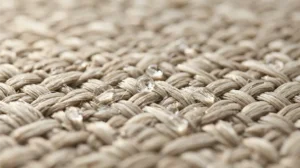
Fiber choice decides how your rug handles rain, sun, and foot traffic. Synthetics rule outdoors. They don’t absorb water the way cotton or jute do. Check the label for the exact fiber name. Don’t trust an “outdoor safe” claim alone. Blended rugs with cotton or jute backing trap moisture. They grow musty smells even when the top feels dry. Think of a breathable weave like a sieve, not a tarp. Water passes through and escapes.
10×12 Outdoor Rug
A 10 × 12 ft (305 × 366 cm) rug needs a tough fiber. It covers a big, high-traffic zone. Polypropylene leads here. It resists moisture, mold, and fading better than natural fibers. Look for solution-dyed or UV-treated on the label. That means the color runs through the yarn.
3×8 Runner Rug
A 3 × 8 ft (91 × 244 cm) runner fits narrow decks and balcony walkways. It also works beside a grill. Pick a flatweave under 0.25 inches (6 mm) thick. Doors clear it and grit doesn’t settle in. Polypropylene and polyester both work. Skip jute blends outdoors. Natural fibers hold dampness.
| Material | Water handling | Fade resistance | Feel |
|---|---|---|---|
| Polypropylene (olefin) | Does not absorb water | High with UV treatment | Firm, slightly coarse |
| Polyester | Dries quickly | Good | Softer than polypropylene |
| Solution-dyed acrylic | Dries quickly | Excellent | Soft, premium feel |
| Recycled plastic (PET) | Dries almost instantly | Good | Firm, mat-like |
| Jute or cotton blend | Absorbs and holds water | Low | Soft but risky outdoors |
Tight, even weaving resists snags from chair legs. Bound or serged edges stop fraying. A label naming the fiber percentage beats a vague blend claim. Look for 100% polypropylene on the tag. Consumer Reports notes that no rug is fully weatherproof. UV-treated yarns still resist fading far better.
Solution-Dyed vs. Piece-Dyed
Solution-dyed fibers get color before the yarn is extruded. The hue runs all the way through. Piece-dyed rugs get color after weaving. The surface can wear away to a paler core. Outdoors, UV exposure is relentless. Solution-dyed polypropylene or acrylic holds color two to three times longer. It costs more upfront. It pays back in seasons of use.
Pet-Friendly Outdoor Rugs
Dogs and cats are hard on outdoor rugs. Claws snag looped weaves. Accidents soak into backing. Muddy paws grind dirt into fibers. The right rug and a fast cleanup routine make the difference.
What to Look For
- Flatweave or tight low pile — no loops for claws to catch.
- 100% polypropylene — urine wipes off without soaking in.
- Solution-dyed color — resists fading from frequent hosing.
- No cotton or jute backing — those hold odor and breed mildew.
- Reversible design — flip it when one side gets soiled.
Cleaning Up Pet Accidents
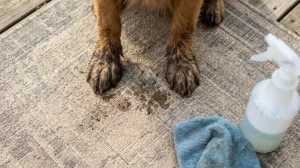
Act within minutes. Blot liquid with paper towels. Flush the spot with cool water and an enzyme cleaner. Saturate, let it dwell, then extract. Dry the rug elevated. Our guide to getting pee out of a mattress uses the same logic. For a scraped paw, treat blood stains with cold water only. Never use heat. Blot from the outside in.
For general messes, keep a spray bottle of diluted dish soap nearby. A quick hose-down after each incident prevents set-in stains. It also stops odors from developing in the backing. If the rug smells musty after drying, flip it. Inspect the underside for mildew.
Style and Colour Matching
Your rug sets the palette for the whole patio. Darker colors hide dirt and leaf stains. Light colors show every mark but make small decks feel bigger. Stripes read classic and coastal. Bold geometrics suit modern setups. Florals lean French country. Match the rug’s undertone to your cushions, not your siding. Our room colour combinations guide covers the same undertone rules.
12×12 Outdoor Rug
A 12 × 12 ft (366 × 366 cm) rug defines a full outdoor room. It suits a 14 × 14 ft (4.3 × 4.3 m) patio. Pick a pattern with a repeat large enough to read from across the yard. Small, busy prints turn to visual noise at 12 feet. Bordered designs frame the seating group and hide edge wear.
Does the rug need to match the house? Not exactly. Pull one color from the cushions and one from the planters. The rug will look intentional. If your furniture is neutral, let the rug carry the pattern. If the furniture is bold, keep the rug quiet.
Price Guide and Where to Buy
Prices track size and fiber more than brand. Small accent rugs start around $15. Large performance rugs reach $400. Most mid-size rugs land between $50 and $170. Solution-dyed acrylic costs more than polypropylene at every size.
8 × 8 Rug
An 8 × 8 ft (244 × 244 cm) square rug fits a 10 × 10 ft patio. That is about 3 × 3 m. It leaves room for a compact seating set. It also fits a round dining table up to 48 inches (122 cm) wide. Square rugs cost a little more than rectangles. Fewer factories weave them. Budget $70 to $150 for polypropylene. Budget $150 to $250 for solution-dyed acrylic.
| Size | Polypropylene | Polyester | Solution-dyed acrylic |
|---|---|---|---|
| 3′ × 5′ (91 × 152 cm) | $15–$40 | $20–$50 | $50–$90 |
| 5′ × 7′ (152 × 213 cm) | $40–$90 | $50–$110 | $120–$220 |
| 8′ × 10′ (244 × 305 cm) | $80–$170 | $100–$200 | $200–$350 |
| 9′ × 12′ (274 × 366 cm) | $120–$220 | $150–$260 | $280–$400 |
Buy where you can check the return policy. Big-box stores let you see the weave in person. Online specialists list exact fiber content and pile height. Read the description for “100% polypropylene.” Don’t trust the word “waterproof” in the title.
Care, Cleaning and Longevity
An outdoor rug lasts longest when it dries fast. It should never sit in trapped moisture. Sweep or shake it weekly during the season. Hose it down monthly. Do it right after pollen season and big storms. The open weave of a flatweave rug is your friend. Water and grit pass through instead of settling in.
Follow this routine after a heavy rain or a muddy weekend.
- Lift one end and shake leaves, grit, and petals onto the lawn. Sweep the deck underneath while the rug is up.
- Use a garden hose on a medium spray. Work from one end to the other. Dirty water runs off the edge, not back across the rug.
- Mix a teaspoon of dish soap per gallon (3.8 litres) of warm water. Scrub stains with a soft brush. Rinse fully.
- Drape the rug over a railing or two chairs. Air must reach both sides. Don’t lay it flat on a damp deck to dry.
- Roll the rug pile-in for winter. Wrap it in a breathable cotton sheet. Store it upright in a dry garage. Skip plastic wrap, which traps condensation.
Mildew usually starts underneath, not on top. If you smell mustiness, flip the rug. Check the backing for dark patches. A diluted white vinegar rinse knocks back early growth. Mix 1 part vinegar to 4 parts water. The same dilution works when you clean a shower head with vinegar. Persistent patches mean the rug stayed damp too long.
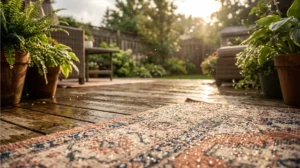
Seasonal Maintenance Calendar
Outdoor rugs age with the seasons. A simple month-by-month rhythm keeps yours fresh. It also prevents small problems from becoming replacements.
| Season | Tasks |
|---|---|
| Spring | Unroll and inspect for winter damage. Hose both sides and scrub winter grime. Dry elevated in full sun. Check the pad for flattening or mildew. |
| Summer | Sweep weekly. Hose monthly or after pollen season. Rotate the rug 180 degrees at midsummer. Spot-clean food and drink spills immediately. |
| Autumn | Clear fallen leaves weekly. They stain and trap moisture. Deep clean before storage. Check edges for fraying and trim loose threads. |
| Winter | Roll, wrap in breathable fabric, and store upright. If you leave it out, lift after storms. Sweep snow off gently and never chip ice from the weave. |
Stain Removal for Outdoor Rugs
Outdoor rugs collect the same stains as indoor textiles. They also pick up bird droppings, tree sap, and grill grease. Most outdoor rugs can be hosed, scrubbed, and sun-dried. Synthetic fibers can set oily stains if you use the wrong technique.
For any stain, blot. Don’t rub. Rubbing pushes pigment deeper into the fiber. It also fuzzes the weave. Work from the outside of the stain inward. Test a hidden corner with any cleaner first. Our stain remover for clothes guide covers product types that work on synthetics.
Common Stains and How to Treat Them
| Stain | Treatment | Internal Guide |
|---|---|---|
| Red wine | Blot immediately. Flush with cool water and dish soap. Rinse and sun-dry. | Red wine from clothes · Dried red wine stains |
| Coffee or tea | Blot. Flush with cool water and mild detergent. Rinse thoroughly. | Coffee stains · Coffee out of sheets |
| Oil or grease | Cover with cornstarch or baking soda. Brush off, then scrub with dish soap. | Oil stains from clothes |
| Turmeric or curry | Flush with water. Apply lemon juice. Dry in direct sun. | Turmeric stains |
| Marker or ballpoint pen | Dab with rubbing alcohol on a cotton ball. Wash with dish soap. | Marker stains · Ball-pen stains |
| Candle wax | Harden with ice. Crack off the bulk. Lift residue with a warm iron over paper towel. | Candle wax from fabric |
| Pet accidents | Blot. Flush with enzyme cleaner. Rinse and dry elevated. | Pee out of a mattress |
DIY Cleaning Solutions That Work
- Dish soap solution: 1 teaspoon of mild dish soap per gallon (3.8 L) of warm water. Safe for all synthetic fibers. Rinse fully.
- White vinegar rinse: 1 part vinegar to 4 parts water. Breaks down mildew and neutralizes odors. Don’t use it on natural fibers.
- Baking soda paste: 3 parts baking soda to 1 part water. Lifts oily stains and deodorizes. Scrub gently, then rinse.
- Enzyme cleaner: 1 teaspoon of enzyme detergent per quart of cool water. The reliable way to break down pet urine proteins.
- Rubbing alcohol: for ink and marker stains only. Dab, don’t pour. Flush with water after.
For set-in stains that resist these methods, dwell time matters more than scrubbing force. Our guide to taking stains off a mattress covers the same principle. A spot remover for clothes can be diluted and sprayed for even coverage. For the toughest carpet and rug stains, our dedicated guide on how to remove stains from carpet covers fiber-specific techniques. They translate directly to outdoor rugs.
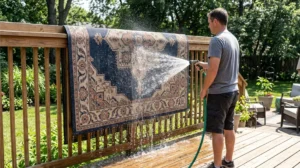
What NOT to Do With a Waterproof Outdoor Rug
Don’t seal the edges to the deck with tape or caulk. Trapped water under a sealed rug rots wood and stains concrete. Don’t use a pressure washer on a high setting. It frays the weave and voids most warranties. Our guide to the best electric pressure washers explains safe low-pressure settings. Don’t leave the rug flat on the lawn for weeks. Blocked airflow smothers the grass and breeds mildew underneath.
Don’t buy a rug with a cotton or jute backing for an uncovered patio. Natural backings absorb water and stay damp long after the top dries. Don’t drag heavy planters across the rug. Lift them instead to avoid pulling the weave. These mistakes shorten a rug’s life more than any storm.
Eco-Friendly and Sustainable Options
Outdoor rugs are almost entirely synthetic. They don’t biodegrade. Some options tread lighter than others.
- Recycled plastic (rPET) rugs — made from post-consumer bottles. They divert waste and dry almost instantly. Best end-of-life story in the category.
- Solution-dyed polypropylene — uses less water and energy in dyeing. It lasts longer, so you replace it less often.
- Reversible designs — double the wear surface. That means half the replacements.
- Natural fiber blends (with caution) — jute and sisal biodegrade. They only work on covered patios. They mold in rain.
- Recycled rubber rug pads — made from tires. Breathable, and they keep rugs from sliding.
At end of life, check your municipal recycling program. Many don’t accept synthetic textiles. Some terracycle-style programs do. Cut a worn rug into smaller pieces for garage or shed use. That extends its life before disposal.
A waterproof outdoor rug won’t make your patio maintenance-free. The right fiber and size make it close. Measure first. Pick polypropylene for wet climates. Give the rug air after storms. Keep diluted dish soap and white vinegar on hand for stains. Our stain removal guides above cover the stubborn ones. Comparing standard sizes next? Read Outdoor Rug 8×10: Buying Guide, Sizing and Top Picks before you buy.
Before you start
Tick these off as you gather them — nothing here is specialised.
0 of 7 ready · Ticks are for this visit only and aren't saved.
unsealed wood decks in rainy climates. Lift the rug to air-dry underneath. Avoid thick grass where the weave blocks airflow. Avoid low spots where standing water pools. Never park heavy planters on it. Skip bathroom use where soap scum clogs the weave.
Common questions
Are outdoor rugs really waterproof?
Most are water-resistant, not truly waterproof. Synthetic fibers shed rain and dry quickly. Water still passes through the weave. A fully sealed rug would trap moisture underneath. That causes pooling, slip hazards, and deck damage. Manufacturers design for fast drainage and airflow instead.
Can I leave my waterproof outdoor rug out in the rain?
Yes, a synthetic outdoor rug handles rain fine. Polypropylene and polyester don't absorb water. The rug dries within hours after a storm. Lift it after heavy downpours so the deck dries underneath. Roll it up during winter or long wet spells. Snow and freeze-thaw cycles wear fibers faster than rain.
What material is best for a waterproof outdoor rug?
Polypropylene, also called olefin, is the best all-round choice. It doesn't absorb water. It resists fading when UV-treated. It shrugs off stains. Polyester feels softer and dries fast. Solution-dyed acrylic offers the best fade resistance at a higher price. Avoid jute, cotton, or sisal outdoors. Natural fibers absorb moisture and break down.
Does a waterproof outdoor rug need a rug pad?
Yes, use a pad made for outdoor use. It stops the rug sliding on deck boards. It adds cushion and lets air circulate underneath. Choose a pad labeled water-repellent or open-weave. Never use a solid rubber pad that traps dampness. Replace the pad when it flattens or smells musty.
How do I clean a waterproof outdoor rug?
Sweep or vacuum weekly. Hose the rug monthly with a garden hose. Scrub spots with a teaspoon of dish soap per gallon of warm water. Use a soft brush. Rinse fully. Dry the rug elevated over a railing. Never machine-wash a large outdoor rug unless the label says it's safe.
Will a waterproof outdoor rug fade in the sun?
Some fading is normal. UV-treated fibers hold color far longer. Solution-dyed acrylic resists fading best. UV-stabilized polypropylene comes next. Rotate the rug 180 degrees each season for even exposure. Dark colors fade more visibly than mid-tones. A rug under a pergola keeps its color years longer.
Can I use an outdoor rug on grass?
You can for a party weekend. Not for the whole season. A rug blocks sunlight and airflow. That smothers the grass underneath within a couple of weeks. It also traps moisture that breeds mildew in the backing. Lift the rug every few days and move it to a fresh patch.
What size waterproof outdoor rug do I need for a patio set?
Measure your furniture footprint. Add 12 inches (30 cm) on every side. A loveseat plus two chairs usually needs a 5' × 7' rug. A 6' × 9' rug also works. A full sectional needs 8' × 10' or 9' × 12'. All chair legs should stay on the rug when pulled out.
Do waterproof outdoor rugs get moldy?
They can if they stay damp underneath. Mold grows where airflow stops. That means under rugs on unsealed decks or over poor drainage. Prevent it with a breathable weave and an open-weave pad. Lift the rug after storms. If mildew appears, scrub with diluted white vinegar. Dry the rug in full sun.
Can I put a waterproof outdoor rug on a wooden deck?
Yes, but protect the wood. Use a breathable outdoor rug pad. Moisture must not sit against the boards. Lift the rug after rain in humid climates. Sweep debris from underneath weekly. On unsealed or aging decks, roll the rug up during the wettest months. Trapped moisture causes gray staining and speeds up rot.
Does a gray outdoor rug hide dirt better?
Yes, mid-tone gray is one of the most forgiving colors. It masks dust, pollen, and leaf stains. White and beige show every mark. Charcoal hides dirt even better but shows light sand and pet hair. A heathered or patterned gray works best. It breaks up marks across the weave. That's why gray outsells most other colors.
Are outdoor rugs safe for pets?
Yes, with the right choice. Flatweave polypropylene has no loops for claws to snag. The fibers don't absorb urine or drool. Avoid jute, cotton, and high-pile rugs. They trap odor and moisture. Clean accidents immediately with an enzyme cleaner. Dry the rug elevated.
Can I use a pressure washer on an outdoor rug?
Only on the lowest setting. Use a wide fan nozzle on a flat surface. High pressure frays the weave and strips color. It also voids warranties. A garden hose with a medium spray is usually enough. If you use a pressure washer, keep the nozzle 12 inches away. Work in smooth, overlapping passes.
How do I remove mold from an outdoor rug?
Mix 1 part white vinegar to 4 parts water in a spray bottle. Saturate the moldy area. Let it dwell for 10 minutes. Scrub with a soft brush and rinse thoroughly. Dry the rug elevated in full sun. UV light eliminates remaining spores. For severe mold, use diluted oxygen bleach on solution-dyed polypropylene. Never use chlorine bleach on colored rugs.
How long do outdoor rugs last?
A quality polypropylene rug lasts five to eight years in a sheltered spot. Full sun and year-round weather shorten that to three to five years. Solution-dyed acrylic lasts longer, up to ten years. It costs more upfront. Proper storage and regular cleaning add seasons to any rug's life.
Can I put an outdoor rug on artificial grass?
Yes, but use a breathable pad underneath. It protects the turf backing from trapped moisture. Lift the rug periodically. Let the artificial grass dry and recover its pile. Avoid rubber-backed pads, which trap heat and damage turf. A reversible recycled-plastic mat is the safest choice.
Was this article useful?