Yellow marks under the arms ruin good shirts. Don’t bin them yet. Learning how to remove sweat stains from shirts saves money and rescues favorites. These stains look stubborn, but they’re just chemistry. Antiperspirant plus sweat creates the yellow color. Break that bond and the shirt comes back. This guide covers fresh marks, old stains, and every fabric type.
Before You Start: Supplies Checklist
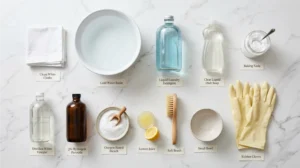
Gather these before you treat the stain. Most are already in your kitchen or laundry room.
- Clean white cloths
- Cold water and a basin
- Liquid laundry detergent (enzyme-based works best)
- Clear liquid dish soap
- Baking soda
- Distilled white vinegar
- 3% hydrogen peroxide
- Oxygen-based bleach (sodium percarbonate)
- Lemon juice (optional, for white cotton)
- A soft brush or old toothbrush
- A small bowl
- Rubber gloves
Why Do Sweat Stains Turn Yellow?
Sweat alone doesn’t cause the yellow color. The stain comes from aluminum in antiperspirant reacting with sweat salts and proteins. This mix bonds to fabric fibers and oxidizes over time. Oxidation turns it yellow, and the color deepens with each wear. White shirts show it most.
Here’s the part most guides skip. Your armpits have apocrine glands, which release fats and proteins along with water and salt. Bacteria break these down, which also feeds odor. The aluminum then locks the whole mix into the fabric. That’s why the stain feels stiff or crusty. It’s buildup, not just color.
Plain deodorant without aluminum won’t cause yellowing. The culprit is specifically aluminum-based antiperspirant. Knowing this changes your prevention plan completely, as you’ll see below. This is similar to how red wine stains bond to fabric, making them harder to remove over time.
How to Remove Sweat Stains from Shirts When They’re Fresh
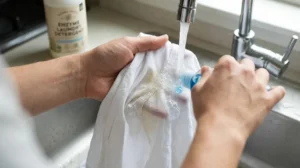
Turn the shirt inside out and rinse the underarm area with cold water. Work a few drops of liquid laundry detergent into the stain. Let it sit for 10 minutes. Rinse with cold water and wash on a cold cycle. Air dry and check.
Do this after every wear and stains never get a foothold. Here are the steps.
- Rinse from the inside. Turn the shirt inside out. Hold the underarm area under cold running water. This flushes out fresh sweat and salts.
- Apply detergent. Work a few drops of liquid laundry detergent into the damp stain with your fingers. Enzyme-based detergent breaks down sweat proteins best.
- Wait 10 minutes. Let the detergent work. Don’t let the fabric dry out.
- Rinse fully. Rinse with cold water until no soap remains.
- Wash on cold. Machine wash per the care label. Add oxygen-based bleach for white shirts.
- Air dry and inspect. Check the underarms in daylight while damp. Any yellow shadow means treating again before the dryer.
How Do You Remove Old Yellow Underarm Stains?
Mix 2 tablespoons (30 ml) of 3% peroxide with 1 tablespoon (15 ml) of dish soap. Spread it over the yellowed area and sprinkle baking soda on top. Work it in gently with a soft brush. Wait 30 to 60 minutes. Rinse cold, then wash. Repeat for deep stains.
This triple treatment tackles old, set-in yellowing. The peroxide lifts color, the soap cuts oils, and the baking soda draws out residue. Here’s the full process.
- Dampen the stain. Wet the underarm area with cold water. Blot away drips with a clean cloth.
- Mix the treatment. Combine 2 tablespoons (30 ml) of 3% peroxide with 1 tablespoon (15 ml) of dish soap in a bowl. Wear rubber gloves. Work in a ventilated room. Keep the mix away from your eyes.
- Apply and sprinkle. Spread the mix over the full yellow area. Sprinkle 1 tablespoon (15 ml) of baking soda on top.
- Work it in gently. Use a soft brush or old toothbrush with light pressure. Work from the outside of the stain inward.
- Wait 30 to 60 minutes. Older stains need the full hour. Keep the fabric damp by misting lightly if needed.
- Rinse with cold water. Flush the area fully. Check the color in good light.
- Wash and air dry. Launder per the care label with oxygen-based bleach for whites. Air dry and inspect. Repeat if a shadow remains.
Safety note: Patch test peroxide on colored shirts first, since it can lighten some dyes. Never mix it with vinegar in the same step. Rinse well between treatments.
For stubborn set-in stains, a dedicated spot remover for clothes can provide extra lifting power.
Which Method Should You Use for Sweat Stains?
Match the method to the stain’s age and your shirt. Detergent pre-treating handles fresh marks fast. Baking soda paste lifts light yellowing gently. Vinegar soaks break up waxy deodorant buildup. Peroxide plus dish soap tackles old, deep stains. Oxygen bleach soaks refresh whole shirts.
| Method | Best For | Time Needed | Fabric Note |
|---|---|---|---|
| Detergent pre-treat | Fresh sweat marks | 10 minutes | Safe for all fabrics |
| Baking soda paste | Light yellowing | 30 minutes | Safe for colors |
| White vinegar soak | Waxy deodorant buildup | 30 to 60 minutes | Rinse well after |
| Peroxide + dish soap | Old yellow stains | 30 to 60 minutes | Whites or patch-tested colors |
| Oxygen bleach soak | Whole-shirt refresh | 1 to 6 hours | Check the care label first |
| Lemon juice + sun | White cotton only | 1 hour in sunlight | Whites only, can weaken fibers |
Light yellow on a white tee? The baking soda paste usually does the trick. Deep orange-yellow on a favorite shirt? Go straight to the peroxide treatment. A laundry guide to perspiration stains backs the same order: gentle first, stronger only if needed.
Match the Method to the Stain’s Severity
Mild: Light Yellowing, No Stiffness
Catch it early and it’s easy. Pre-treat with detergent or apply a baking soda paste for 30 minutes. Wash on cold with oxygen bleach for whites. One round normally clears it.
Moderate: Visible Yellow with Waxy Buildup
The armpits feel stiff or look chalky. Soak the area in 1 cup (240 ml) white vinegar and 2 cups (480 ml) cold water. Wait 30 to 60 minutes. This dissolves the deodorant layer. Follow with the detergent pre-treat and wash. Two rounds may be needed.
How to Remove Sweat Stains from Shirts with Deep Yellowing (Severe)
Months of buildup need the full peroxide, dish soap, and baking soda treatment. Let it sit the full hour. For white shirts, follow with an oxygen bleach soak of one to six hours. Expect two or three rounds. Very old stains may fade to a faint shadow rather than vanish fully.
Does Fabric Change the Treatment?
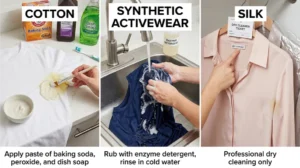
Yes. Cotton takes every method in this guide. Synthetics and activewear need gentler handling and enzyme detergent. Delicate fabrics like silk need a professional cleaner. Always check the care label and patch test first.
Cotton and Cotton Blends
The most forgiving fabric for sweat stains. Use the full fresh or old-stain method above. Oxygen bleach keeps white cotton bright. Wash whites at the warmest setting the label allows. Want a full stain system? See our guide to stain remover for clothes.
Synthetics and Activewear
Gym shirts trap odor and oils in synthetic fibers. Rinse right after wearing, every time. Use enzyme-based detergent and cool water. Skip the peroxide unless you patch test, since some dyes react. Never use fabric softener here. It coats fibers and locks in odor.
Silk, Wool, and Dry-Clean-Only
Don’t home-treat these with peroxide, vinegar, or bleach. Blot the area gently with a damp cloth. Take the shirt to a dry cleaner and mention the sweat stain. Home chemistry can ruin these fibers fast.
What NOT to Do with Sweat Stains
Wrong moves make yellow stains worse. Some even set them permanently. Avoid these.
- Using chlorine bleach. Chlorine bleach reacts with sweat minerals and can make yellowing darker. Use oxygen-based bleach instead.
- Washing in hot water first. Heat sets protein stains. Sweat is a protein stain, just like blood. Always start cold. Our guide on removing blood stains from clothes explains the same cold-water rule.
- Putting it in the dryer too soon. Dryer heat bakes the yellow bond into fibers. Air dry and inspect first, every time.
- Scrubbing hard. Aggressive scrubbing thins the underarm fabric, which is already a wear point. Gentle pressure wins.
- Using too much antiperspirant. Extra product means extra aluminum on the fabric. A thin layer works just as well.
- Leaving shirts unwashed for days. Sweat and aluminum bond tighter over time. Wash worn shirts promptly.
- Mixing vinegar and peroxide together. Used in one step, they can damage fabric. One treatment at a time, with a rinse between.
How Do You Stop Sweat Stains Coming Back?
Prevention beats treatment here. Switch to an aluminum-free deodorant if yellowing keeps returning. Let antiperspirant dry fully before dressing, which takes about two minutes. Wear a thin undershirt to shield your good shirts. Wash worn shirts the same day when you can.
- Let product dry first. Dress after your antiperspirant dries fully. Wet product transfers straight to fabric.
- Use less product. Two swipes do the job. More product just means more buildup.
- Wear an undershirt. A cheap cotton undershirt absorbs sweat before it reaches your good shirt.
- Wash promptly. Don’t let worn shirts sit in the hamper for a week. Same-day washing stops bonds forming.
- Try aluminum-free deodorant. No aluminum means no yellow reaction. It won’t block sweat as strongly, but your shirts stay white.
- Keep a stain kit ready. Dish soap, baking soda, and vinegar handle most clothing stains fast. For other common spills like coffee, see our guide on how to remove coffee stains.
Key Takeaways
- Aluminum causes the yellow. Switch deodorants to stop stains at the source.
- Start cold. Hot water and dryer heat set sweat stains permanently.
- Detergent handles fresh marks. Peroxide, dish soap, and baking soda handle old ones.
- Never use chlorine bleach. It makes yellowing worse, not better.
- Wash promptly. Same-day washing stops buildup before it bonds.
- Match the method to the fabric. Send silk and wool to a professional.
Before you start
Gather these before you treat the stain. Most are already in your kitchen or laundry room.
0 of 12 ready · Ticks are for this visit only and aren't saved.
Never use chlorine bleach or hot water on sweat stains. Chlorine bleach reacts with sweat minerals and can make yellowing darker. Hot water sets the protein in sweat, just like blood, making the stain permanent. Always start with cold water and use oxygen-based bleach for whites.
Common questions
Why do my shirts get yellow stains under the arms?
The yellow comes from aluminum in antiperspirant, not sweat alone. Aluminum reacts with sweat salts and proteins, bonds to fabric fibers, and oxidizes into a yellow color. The stain deepens with each wear and shows most on white shirts. Plain deodorant without aluminum won't cause it. Switching to an aluminum-free product stops new stains forming.
Are yellow sweat stains permanent?
Not usually. Yellow stains turn permanent mainly through heat or long neglect. A hot wash or dryer bakes the aluminum-sweat bond into fibers. Treat stains early with cold water and detergent for the best results. Old stains need the peroxide and baking soda treatment, sometimes for two or three rounds. Most lift fully with patience.
How do you remove old yellow armpit stains?
Use the triple treatment. Mix 2 tablespoons (30 ml) of 3% hydrogen peroxide with 1 tablespoon (15 ml) of dish soap. Spread it over the stain and sprinkle baking soda on top. Work it in gently with a soft brush and wait 30 to 60 minutes. Rinse with cold water and wash. For white shirts, follow with an oxygen bleach soak. Repeat if needed.
Does baking soda remove sweat stains from shirts?
Baking soda lifts light to moderate yellowing well. Mix 3 tablespoons (45 ml) of baking soda with 1 tablespoon (15 ml) of cold water into a paste. Spread it over the underarm area and wait 30 minutes. The mild alkaline paste draws out residue and freshens the fabric. Rinse with cold water and wash. It is safe for colored shirts. Deep stains need the peroxide method too.
Can hydrogen peroxide remove yellow underarm stains?
Yes, it is one of the strongest options for whites. The 3% household solution breaks down the yellowed pigment through oxidation. Mix it with dish soap and add baking soda on top for the full treatment. Use it on white shirts freely. For colored shirts, patch test a hidden seam first, since peroxide can lighten some dyes. Wear gloves and rinse well.
Does deodorant or sweat cause yellow stains?
The combination causes them. Sweat alone leaves salt marks that wash out easily. Aluminum-based antiperspirant alone leaves white marks. Together, aluminum reacts with sweat proteins and salts, bonding to fibers and oxidizing yellow. Plain deodorant without aluminum does not cause yellowing. If your shirts keep staining, the antiperspirant is the part to change.
Can you use bleach on yellow sweat stains?
Use oxygen-based bleach, never chlorine bleach. Chlorine bleach reacts with sweat minerals and can make the yellowing darker. Oxygen bleach lifts the yellow safely on whites and many colorfast fabrics. Dissolve it per the package directions and soak for one to six hours. Check the care label first. Skip bleach entirely on silk, wool, and dry-clean-only shirts.
How do you remove sweat stains from colored shirts?
Stick to color-safe methods. Pre-treat with liquid detergent and wash on cold. Use a baking soda paste for light yellowing. Try a white vinegar soak for waxy buildup. Skip hydrogen peroxide unless you patch test a hidden seam first, since it can lighten dyes. Never use chlorine bleach on colors. Wash promptly after wearing to stop stains setting.
Why do armpit stains feel stiff or crusty?
The stiffness is deodorant buildup, not just sweat. Each wear adds a thin layer of antiperspirant that doesn't fully wash out. Over weeks, these layers stack into a waxy, crusty deposit in the underarm area. A white vinegar soak dissolves this buildup best. Soak for 30 to 60 minutes, then wash. Using less product each day slows it down.
How do you prevent yellow underarm stains?
Let antiperspirant dry fully before dressing. Use a thin layer, since more product means more buildup. Wear a cotton undershirt to shield good shirts. Wash worn shirts the same day. Consider switching to an aluminum-free deodorant, which can't cause the yellow reaction. These five habits together stop most stains before they start.
Was this article useful?