Before You Start: Grab These First
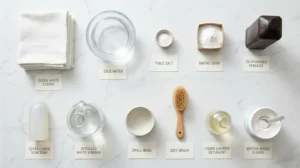
Round up your supplies before you touch the stain. You’ll move faster, and speed is everything here.
- Clean white cloths or plain paper towels
- Cold water
- Table salt
- Baking soda
- 3% hydrogen peroxide
- Clear liquid dish soap
- Distilled white vinegar
- A small bowl
- A soft brush or old toothbrush
- Liquid laundry detergent
- Oxygen-based bleach (sodium percarbonate)
Why Does Red Wine Stain a White Shirt So Badly?
Red wine gets its color from anthocyanins. These are natural pigments in grape skins, and they bond to fabric fibers fast. Tannins in the wine help lock that color in place. White fabric hides nothing, so even a faint mark stands out. And heat? Heat makes the bond permanent.
Here’s the thing most guides skip. A fresh spill sits on the surface of the fibers. Give it a few hours, and the pigment sinks deeper. Run it through a hot dryer, and the stain may never come out. That’s why every method below starts with cold water and quick action.
How to Remove Red Wine from a White Shirt When the Spill Is Fresh
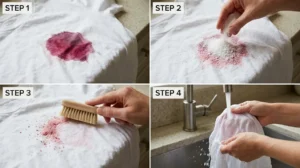
Blot the spill right away with a clean white cloth. Never rub. Flush cold water through the back of the fabric. Cover the mark with table salt for 10 minutes. Brush the salt off. Work in a drop of liquid dish soap. Rinse well with cold water. Wash on a cold cycle, then air dry.
Follow these steps in order. Each one builds on the last.
- Blot, don’t rub. Press a clean white cloth firmly onto the spill. Lift straight up. Keep turning the cloth to a fresh section. Rubbing just pushes wine deeper into the fibers.
- Flush from the back. Hold the stained spot under cold running water. Let the water flow through from the back of the fabric. This pushes pigment out the way it came in.
- Pile on the salt. Lay the shirt flat. Cover the damp stain generously with table salt. The salt draws out liquid and stops the mark from spreading.
- Wait 10 minutes. Let the salt do its job. You’ll see it turn pink as it pulls up wine. That’s a good sign.
- Brush off, then treat. Shake the salt into the bin. Add one drop of clear liquid dish soap to the stain. Work it in gently with your fingertips, moving from the outside inward.
- Rinse with cold water. Rinse the area fully. Check it in good light before moving on.
- Wash on cold. Launder the shirt on a cold cycle with your regular detergent. Add oxygen-based bleach if the care label allows it.
- Air dry and inspect. Skip the dryer for now. Check the shirt while it’s still damp. See a shadow? Repeat the treatment.
How Do You Remove a Dried Red Wine Stain from a White Shirt?
Soak the stained area in cold water for 30 minutes. This rehydrates the pigment. Then soak it in one part white vinegar and two parts cold water for another 30 minutes. Next, apply a mix of 2 tablespoons (30 ml) hydrogen peroxide and 2 tablespoons (30 ml) liquid dish soap. Let it sit 20 to 30 minutes. Work it gently with a soft brush. Rinse cold, then wash with oxygen-based bleach.
Dried stains are stubborn. They often need two rounds, so stay patient. If you’re dealing with other tough marks, a dedicated spot remover for clothes can help lift pigment that regular detergent misses.
- Rehydrate first. Fill a bowl with cold water. Submerge the stained area for 30 minutes. Dried pigment softens and loosens up.
- Vinegar soak. Mix 1 cup (240 ml) white vinegar with 2 cups (480 ml) cold water. Soak the stain for 30 minutes. This helps release set-in color.
- Mix your treatment. Combine 2 tablespoons (30 ml) of 3% hydrogen peroxide with 2 tablespoons (30 ml) of clear dish soap in a small bowl. Wear gloves. Work in a room with fresh air flowing. Keep the mix away from your eyes.
- Apply generously. Spread the mix over the whole stain. Don’t miss the edges.
- Wait 20 to 30 minutes. Let the treatment work. Don’t let it dry out completely on the fabric.
- Agitate gently. Use a soft brush or old toothbrush. Work in small circles with light pressure. Hard scrubbing damages fibers.
- Rinse, wash, and check. Rinse fully with cold water. Wash at the warmest setting the care label allows, with oxygen-based bleach added. Air dry. Inspect before the shirt goes near a dryer.
Safety note: Test hydrogen peroxide on a hidden seam first. Stick to the standard 3% household solution. And never mix it with vinegar in the same step. One treatment at a time.
Which Method Should You Use?
Match the method to the stain’s age and what you have on hand. Quick picks:
| Method | Best For | Time Needed |
|---|---|---|
| Table salt | Fresh spills, especially away from home | 10 to 15 minutes |
| Club soda | Fresh spills when you have no supplies | 5 to 10 minutes |
| Dish soap + hydrogen peroxide | Dried stains on white fabric | 30 to 60 minutes |
| Baking soda paste | Light dried marks | 30 minutes |
| White vinegar soak | Set-in stains before washing | 30 to 60 minutes |
| Oxygen bleach wash | Final wash for white shirts | One full cycle |
Fresh spill? Start with salt or club soda. Anything dried? Go straight to the peroxide and dish soap method. The stain removal guide from Vanish backs this up: quick action matters more than anything else.
Does Fabric Change How to Remove Red Wine from a White Shirt?
Yes, and this is where most guides fall short. Cotton handles the strongest treatments. Linen needs a gentler touch. Synthetics respond well to dish soap and cold water. Silk, wool, and dry-clean-only shirts belong at the professional cleaner.
Cotton
Cotton is the most forgiving fabric you’ll deal with. Use the full fresh or dried method above. Oxygen-based bleach is safe on white cotton. Wash at the warmest temperature the label allows. Want a full stain system? See our guide to stain remover for clothes.
Linen
Linen fibers weaken when wet, so go easy. Blot with extra care and skip stiff brushing. The salt method works great on fresh spills. For dried stains, cut the peroxide mix time to 15 minutes. Rinse thoroughly.
Polyester and Other Synthetics
Synthetics resist absorption, which actually helps you. Blot fast and flush with cold water. Dish soap alone often does the trick. Avoid very hot water here. It can set the stain and harm the fabric’s finish.
Silk, Wool, and Dry-Clean-Only
Don’t home-treat these fabrics. Blot gently with a dry cloth. No water, no peroxide, no vinegar. Take the shirt to a dry cleaner as soon as you can, and tell them it’s a red wine stain.
7 Mistakes That Make Red Wine Stains Worse
Know what not to do. These mistakes ruin more shirts than the wine itself.
- Rinsing with hot water first. Heat bonds wine pigment to fibers. Always start cold. Warm water comes only after pre-treating.
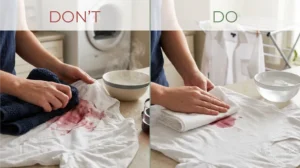
- Rubbing instead of blotting. Rubbing spreads the stain outward and drives pigment deeper. Press and lift, every time.
- Using the dryer too soon. Dryer heat can set a leftover stain permanently. Air dry and inspect first. This rule matters most of all.
- Reaching for chlorine bleach first. Chlorine bleach yellows white cotton over time and weakens fibers. Oxygen-based bleach is safer and works great on wine.
- Mixing vinegar and hydrogen peroxide. Used together, they form a harsh compound that can damage fabric. One treatment per step. Never combined.
- Blotting with a colored towel. Dye can transfer straight onto your white shirt. Stick to white cloths or plain paper towels.
- Waiting until tomorrow. Every hour makes the stain harder to lift. Even a quick blot and cold rinse now saves you real work later.
One independent test tried four methods side by side on fresh and overnight stains. The takeaway was clear: speed beats product choice, every single time.
How Do You Stop Red Wine Stains Before They Start?
A little prevention beats a lot of scrubbing. Build these habits. The same quick-action approach works for oil stains on clothes, too — the sooner you treat, the easier the cleanup.
- Keep a mini emergency kit. Toss a travel stain pen and a salt packet in your bag. Future you will be grateful.
- Use fabric protector spray. Apply it to white shirts you wear often. Reapply after several washes, following the label.
- Pour with care. Hold the glass close when pouring. Keep white shirts clear of crowded bar counters.
- Change before cooking with wine. Splashes happen fast near a hot stove.
- Act within 60 seconds. Blot and flush with cold water at once. You can do the full treatment when you get home.
Dealing with a stain that’s already dried and set? Read our guide on dried red wine stains for deeper treatments.
Key Takeaways
- Act fast. Blot at once and never rub.
- Stay cold. Cold water first, always. Heat sets wine stains permanently.
- Salt buys time on fresh spills. Peroxide and dish soap handle dried ones.
- Skip the dryer until the stain is fully gone.
- Match the method to the fabric. Send silk and dry-clean-only shirts to a professional.

Before you start
Tick these off as you gather them — nothing here is specialised.
0 of 11 ready · Ticks are for this visit only and aren't saved.
Never use hot water, chlorine bleach, or a hot dryer on a red wine stain. Heat sets the pigment permanently, and chlorine bleach can yellow white fabric and weaken fibers. Always start with cold water and oxygen-based bleach.
Common questions
How do you get red wine out of a white shirt fast?
Blot the spill at once with a clean white cloth. Flush cold water through the back of the fabric. Cover the stain with table salt for 10 minutes, then brush it off. Work in a drop of liquid dish soap, rinse with cold water, and wash on a cold cycle. Speed matters more than any product. A stain treated within minutes often vanishes completely.
Does salt really remove red wine stains?
Salt absorbs liquid fast, which stops a fresh spill from spreading. But it doesn't break down the wine pigment itself. Think of salt as first aid, not the full treatment. After the salt step, always follow with dish soap and a proper wash. Salt alone will leave a shadow on white fabric.
Can you remove a dried red wine stain from a white shirt?
Yes, in most cases. Soak the stain in cold water for 30 minutes to rehydrate it. Then soak in one part white vinegar and two parts cold water for 30 minutes. Apply a mix of equal parts 3% hydrogen peroxide and liquid dish soap. Wait 20 to 30 minutes, rinse cold, and wash with oxygen-based bleach. Repeat if needed.
Does white wine remove red wine stains?
White wine can dilute a fresh red spill, which lightens the mark. It won't remove the stain on its own, though. You still need to blot, rinse, and treat the area properly afterward. Honestly? Plain cold water or club soda does the same job without wasting good wine.
Will hydrogen peroxide damage my white shirt?
The standard 3% household solution is safe for most white cotton and linen shirts. Test it on a hidden seam first. Keep it away from silk, wool, and dry-clean-only fabrics. Wear gloves, work in a room with fresh air, and keep it away from your eyes. Rinse the fabric well after treatment.
Does baking soda remove red wine stains?
Baking soda helps with light, dried marks. Mix it with a little cold water to form a thick paste. Spread the paste over the stain and let it sit for 30 minutes. Rinse with cold water and wash as usual. For heavy or old stains, the peroxide and dish soap method works better.
Can I use bleach on a red wine stain?
Reach for oxygen-based bleach, not chlorine bleach. Oxygen bleach lifts wine pigment safely from white fabrics. Chlorine bleach can yellow the fabric and weaken fibers over time. Add oxygen bleach to the wash per the package directions after pre-treating the stain.
Does hot water set a red wine stain?
Yes. Heat bonds the wine pigments to fabric fibers and makes the stain much harder to remove. Always start with cold water for rinsing and soaking. Use warm water only after the stain has been pre-treated. And never put a stained shirt in the dryer before the mark is fully gone.
What should I do if I spill red wine at a restaurant?
Blot the spill at once with a clean napkin. Ask for club soda or plain cold water and dab the stain. If there's salt on the table, pile some on the mark to absorb liquid. Don't rub. When you get home, rinse the shirt in cold water and treat it fully before washing.
Will the dryer make a red wine stain permanent?
Yes, dryer heat can set a red wine stain for good. Always air dry the shirt after washing. Inspect it in good daylight while it's still damp. If any pink or purple shadow remains, repeat the treatment and wash again. Use the dryer only once the stain is completely gone.
Was this article useful?