You found an old wine mark on your favorite top.Don’t throw it out yet. Learning how to remove dried red wine stains takes patience, but most set-in marks still lift. Dried pigment has bonded with the fibers, so it fights harder than a fresh spill. This guide walks you through five proven methods, sorted by severity. Let’s rescue that garment. If you’re working on a fresh spill instead, our guide on how to remove red wine from a white shirt covers faster methods.
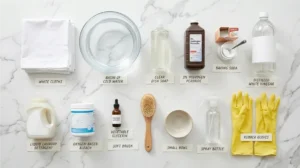
Before You Start: Supplies Checklist
Gather everything before you touch the stain. You’ll work faster.
- Clean white cloths or plain paper towels
- Cold water and a basin
- Clear liquid dish soap
- 3% hydrogen peroxide
- Baking soda
- Distilled white vinegar
- Liquid laundry detergent (enzyme-based if you have it)
- Oxygen-based bleach (sodium percarbonate)
- Vegetable glycerin (optional, helps rehydrate old stains)
- A soft brush or old toothbrush
- A small bowl and a spray bottle
- Rubber gloves
Why Are Dried Red Wine Stains So Hard to Remove?
Red wine gets its color from anthocyanins, pigments that bond to fabric fibers as they dry. Tannins then lock that color in place. Fresh spills sit on fiber surfaces, but a dried stain sinks deep. Rehydration comes first, because dry pigment can’t break down until it softens.
Wine soaks into cotton within minutes. Hours later, the water evaporates and the pigment stays. Tannins cross-link with the fiber, forming a tougher bond. A hot dryer fuses that bond even harder.
A dried stain is a two-part problem: dry pigment and a hardened bond. Water alone won’t crack it. You need something that breaks the tannin links first, then lifts the color out. That’s why the methods below start with soaking, not scrubbing.
Should You Rehydrate the Stain Before Treating It?
Yes, always rehydrate first. Soak the stained area in cold water for 30 to 60 minutes. This softens the dried pigment and loosens its grip on the fibers. Skip this step and your treatment works half as well.
For very old stains, add 1 tablespoon (15 ml) of glycerin to 1 cup (240 ml) of cold water. Soak the spot for one hour. Blot away excess liquid before applying your main treatment.
How to Remove Dried Red Wine Stains with Peroxide and Dish Soap
Mix two parts 3% hydrogen peroxide with one part clear dish soap. Spread it over the rehydrated stain. Wait 20 to 60 minutes. The peroxide breaks down wine pigment while the soap lifts it away. Rinse cold and wash as usual. Repeat for deep stains.
This is the strongest home method for whites and colorfast fabrics. Use it on white or light clothing only, unless you patch test first. If you want a ready-made backup for stubborn marks, a dedicated spot remover for clothes can help lift pigment that DIY mixes miss.
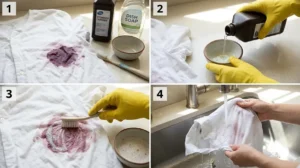
- Rehydrate the stain. Soak the marked area in cold water for 30 minutes. Press out the excess water gently.
- Mix the treatment. Combine 2 tablespoons (30 ml) of 3% peroxide with 1 tablespoon (15 ml) of dish soap in a bowl. Wear rubber gloves. Work in a ventilated room. Keep the mix away from your eyes.
- Patch test first. Dab a little mix on a hidden seam. Wait 5 minutes, rinse, and check for color loss.
- Apply generously. Spread the mix over the full stain, edge to edge. Work it in gently with a soft brush.
- Wait 20 to 60 minutes. Keep the fabric damp. Mist it lightly with cold water if it starts drying.
- Rinse with cold water. Flush the area fully from the back of the fabric. Check the stain in good light.
- Wash as usual. Launder at the warmest temperature the care label allows. Add oxygen-based bleach for white loads.
- Air dry and inspect. Skip the dryer completely. If a shadow remains, repeat the whole process before drying.
Safety note: Test hydrogen peroxide on a hidden seam first. Stick to the 3% household solution. Never mix peroxide with vinegar in the same step. Rinse well after each round.
Can Baking Soda Pull Out a Dried Wine Stain?
Yes, but it works slowly. Make a paste of three parts baking soda to one part cold water. Spread it thick over the stain. Let it dry for four to eight hours or overnight. The mild alkaline paste draws pigment out as it dries. Brush it off and rinse cold.
- Rehydrate first. Dampen the stain with cold water. Blot away any drips with a clean cloth.
- Mix a thick paste. Stir 3 tablespoons (45 ml) of baking soda with 1 tablespoon (15 ml) of cold water.
- Spread it thick. Cover the stain completely with the paste. Extend it slightly past the edges of the mark.
- Let it dry fully. Leave the paste for four to eight hours, or overnight.
- Brush it off. Use a soft brush to remove the dried paste. Work over a bin to catch the crumbs.
- Rinse with cold water. Flush from the back of the fabric. Inspect in good light.
- Wash and air dry. Launder per the care label. Air dry and check before the garment goes near a dryer.
Which Method Should You Use for Your Stain?
Match the treatment to the stain’s age and your fabric. Peroxide and dish soap suits dried stains on whites. Baking soda paste is safer for colors. Vinegar soaks help light marks. Oxygen bleach handles large or heat-set areas.
| Method | Best For | Time Needed | Fabric Note |
|---|---|---|---|
| Peroxide + dish soap | Dried stains on whites and colorfast fabric | 20 to 60 minutes | Whites only unless patch tested |
| Baking soda paste | Mild dried marks, colored clothes | 4 to 8 hours or overnight | Safe for colors |
| White vinegar soak | Light set-in stains on light colors | 30 minute soak | Rinse well before washing |
| Oxygen bleach soak | Large areas and heat-set stains | 1 to 6 hours | Check the care label first |
| Boiling water pour | Fresh-ish stains on sturdy cotton | 5 minutes | Whites only, never on delicates |
Stain dried overnight on a white shirt? Start with peroxide and dish soap. Colored blouse with a faint mark? Try the baking soda paste first. An independent test of four red wine methods found the peroxide mix cleared an overnight stain.
Match the Method to the Stain’s Severity
Mild: Dried for a Few Hours
The pigment has bonded, but not deeply. Rehydrate in cold water for 30 minutes. Then try the baking soda paste or a vinegar soak. Rinse, wash, and air dry. One round usually does the trick.
Moderate: Dried Overnight or Longer
The tannin bonds are now set. Rehydrate with the glycerin soak above. Then use the peroxide method for whites, or baking soda paste for colors. Expect two rounds. Check in daylight between rounds.
How to Remove Dried Red Wine Stains After the Dryer (Severe Cases)
Heat fuses wine pigment to fibers. This is the hardest case. Soak the garment in oxygen-based bleach for one to six hours, following the package dose. Then apply the peroxide method. Repeat up to three times. Some heat-set stains lighten but never fully vanish.
Does Fabric Change the Treatment?
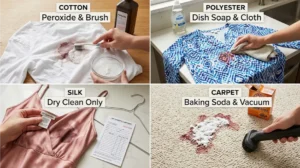
Yes. Cotton and linen take the strongest treatments, including peroxide and oxygen bleach. Synthetics respond well to dish soap and vinegar soaks. Silk, wool, and dry-clean-only garments need a professional cleaner. Always check the care label and patch test first.
Cotton and Linen
These fibers handle every method in this guide. Use the full peroxide treatment for whites. Oxygen bleach soaks work great here too. Want a full stain system? See our guide to stain remover for clothes.
Polyester and Other Synthetics
Synthetics absorb less wine, which works in your favor. Rehydrate, then work in dish soap with a soft brush. A vinegar soak helps with the rest. Skip peroxide unless you patch test first.
Silk, Wool, and Dry-Clean-Only
Don’t home-treat these with peroxide or bleach. Dab the dry stain gently with a damp white cloth. No rubbing. Take the garment to a dry cleaner quickly and point out the stain.
Carpet and Upholstery
You can’t soak carpet, so work in sections. Dampen the spot with cold water and blot. Apply the dish soap mix with a cloth. Finish with a baking soda sprinkle, let it dry, then vacuum. For deeper set-in marks on rugs and sofas, our guide on how to remove stains from carpet has more targeted methods.
What NOT to Do with a Dried Wine Stain
Dried stains tempt you to reach for stronger stuff. Hold on. These mistakes make things worse.
- Scrubbing hard. Aggressive scrubbing frays fibers and pushes pigment deeper. Gentle pressure wins.
- Using hot water first. Heat sets dried stains even harder. Always start cold, every time.
- Reaching for chlorine bleach. It yellows whites and weakens cotton over time. Oxygen bleach is safer.
- Mixing vinegar and peroxide together. Used in one step, they can damage fabric. Separate steps only.
- Letting treatments dry on the fabric. Keep it damp during treatment, unless the paste method says otherwise.
- Putting it in the dryer “to check.” Dryer heat can make a half-removed stain permanent. Air dry and inspect first.
- Using a colored towel to blot. Dye transfers onto damp fabric fast. Stick to white cloths.
- Giving up after one round. Dried stains release in stages. Two or three rounds beat one aggressive attempt.
How Do You Keep Wine Stains from Setting?
Speed is the whole game. Blot a spill within 60 seconds and rinse with cold water at once. Never let a stained garment sit overnight. If you can’t treat it now, soak it in cold water until you can.
- At the spill: Blot with a clean napkin. Flush with cold water or club soda.
- Before the wash: Check every garment before it goes in the machine. Treat first, wash second.
- After the wash: Inspect in daylight before anything touches the dryer. Air dry anything with a shadow.
- Monthly habit: Keep dish soap, peroxide, baking soda, and vinegar by the washer. You’ll act faster.
- Dinner parties: Keep white cloths and salt near the table. For other mishaps, see our guide on removing candle wax from fabric.
Dealing with a different spill altogether? Our guide on how to remove coffee stains covers another common culprit.
Key Takeaways
- Rehydrate first. Soak dried stains in cold water before any treatment.
- Peroxide plus dish soap is the strongest home method for whites.
- Baking soda paste is the safest pick for colored fabrics.
- Expect repeat rounds. Dried stains release in stages, not all at once.
- Never use the dryer until the stain is fully gone.
- Match the method to the fabric. Silk and wool belong at the dry cleaner.
Common questions
Can you remove dried red wine stains from clothes?
Yes, in most cases. Rehydrate the stain in cold water for 30 to 60 minutes first. Then treat it with a mix of 3% hydrogen peroxide and clear dish soap. Let it sit for 20 to 60 minutes, rinse cold, and wash. Dried stains often need two or three rounds, so stay patient. Air dry and inspect before using the dryer.
How do you get old wine stains out of clothes after washing?
Soak the garment in cold water first, since washing may have set the stain further. Then soak it in oxygen-based bleach for one to six hours, following the package directions. Use the warmest water the care label allows. Follow with the peroxide and dish soap treatment. Rinse cold, wash, and air dry. Repeat the cycle if a shadow remains.
Does hydrogen peroxide remove dried red wine stains?
Yes, it is one of the strongest home options. The 3% household solution breaks down wine pigment through oxidation, which fades the red color. Mix two parts peroxide with one part clear dish soap for best results. Apply it to the rehydrated stain for 20 to 60 minutes. Use it on white or colorfast fabrics only, and patch test first.
Will baking soda get dried red wine out of clothes?
Baking soda works on mild to moderate dried stains, but it acts slowly. Make a paste with three parts baking soda and one part cold water. Spread it thick over the stain and let it dry for four to eight hours or overnight. The paste draws pigment out as it dries. Brush it off and rinse with cold water. It suits colored fabrics but may need repeat rounds.
Does white vinegar remove dried red wine stains?
White vinegar helps with light dried stains, though it rarely finishes the job alone. Soak the stain in one part vinegar and two parts cold water for 30 minutes. The vinegar loosens the pigment bonds, making the main treatment work better. Use it on light-colored fabrics only, since it can affect some dyes. Rinse well before the next treatment.
Can you remove a red wine stain after it has been through the dryer?
Sometimes, but it is the hardest case. Dryer heat fuses the pigment to the fibers, which makes the bond stubborn. Soak the garment in oxygen-based bleach for one to six hours first. Then try the peroxide and dish soap treatment, and repeat up to three times. Some heat-set stains fade but never vanish fully. If the garment is valuable, a dry cleaner may help.
Will oxygen bleach remove set-in red wine stains?
Oxygen bleach works well on set-in stains, especially on whites and sturdy fabrics. Dissolve it per the package directions and soak the garment for one to six hours. Use the warmest water the care label allows. It releases oxygen that breaks down the pigment bonds gently. Do not use it on silk, wool, or leather unless the label allows it. Rinse fully after soaking.
Does boiling water remove dried red wine stains?
Boiling water helps mainly with fresh or very recent stains, not fully dried ones. Stretch the stained fabric over a bowl. Pour boiling water through it from about 8 inches (20 cm) high. The force and heat push pigment out of the fibers. Never use this on delicate fabrics or colors, since heat can set the stain. Use it on sturdy white cotton only.
Can white wine remove a dried red wine stain?
White wine does little for dried stains. It can dilute a fresh spill, which lightens the mark before it sets. But once the stain has dried, pouring white wine over it adds liquid without breaking the pigment bonds. Cold water does the same job for free. Save the white wine for dinner and reach for peroxide or baking soda instead.
Why won't my dried red wine stain come out?
The most common reason is heat. If the garment went through a hot wash or dryer, the pigment bonds fused to the fibers. Skipping rehydration is another cause, since dry pigment resists treatment. Try the oxygen bleach soak followed by the peroxide method, with two or three full rounds. Some heat-set marks only fade, never vanish.
Was this article useful?