Blood on clothing needs quick, calm action. I still remember the first time I had a nosebleed on a brand-new white shirt. Panic set in—until I remembered the one rule that has saved countless garments since: cold water only. Learning how to remove blood stains from clothes comes down to that single principle. Blood is a protein stain, and heat locks it in permanently. Treat it right and most marks lift fully. This guide covers fresh stains, dried marks, and every common fabric, with methods I’ve personally tested over years of writing about stain removal.
Before You Start: Supplies Checklist
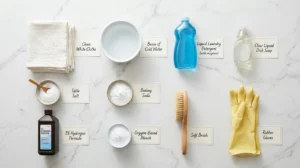
Gather these before you touch the stain. Put on rubber gloves first—it’s a basic hygiene habit that also protects your hands from the cleaning agents.
- Clean white cloths or paper towels
- Cold water and a basin
- Liquid laundry detergent with enzymes
- Clear liquid dish soap
- Table salt
- Baking soda
- 3% hydrogen peroxide
- Oxygen-based bleach (sodium percarbonate)
- A soft brush or old toothbrush
- Rubber gloves
Why Do Blood Stains Set So Fast?
Blood is mostly protein, chiefly hemoglobin, and protein bonds to fabric fibers quickly. Fresh blood is still water-soluble, so cold water rinses it away. Hot water denatures the protein, which means it coagulates and locks into the weave. Once that happens, the stain resists normal washing.
Here’s what most guides underplay. Enzyme detergents break protein into tiny fragments that rinse out. That’s why they beat plain soap on blood. Hydrogen peroxide works differently: it oxidizes the iron in hemoglobin, which fades the red color. Two different chemistries, both useful.
Dried blood adds another layer. The protein has hardened and bonded over hours or days. Rehydration comes first, because dry protein resists treatment. Soak before you scrub, always. I learned this the hard way after ruining a shirt by attacking a dried stain with hot water and a stiff brush—never again.
How to Remove Blood Stains from Clothes When They’re Fresh
Hold the stained area under cold running water, back side up. Blot gently with a clean cloth. Work enzyme-based liquid detergent into the stain. Wait 10 to 15 minutes. Rinse with cold water and wash on a cold cycle. Air dry and check. Fresh stains often vanish with this alone.
Speed matters most here. Follow the steps in order.
- Rinse from the back. Hold the fabric under cold running water with the stained side down. Water pushes the stain out the way it came in.
- Blot gently. Press a clean white cloth onto the area. Lift straight up. Never rub, since rubbing spreads the stain.
- Apply enzyme detergent. Work a small amount of enzyme-based liquid detergent into the damp stain. Use your fingers or a soft brush with light pressure.
- Wait 10 to 15 minutes. Let the enzymes break down the protein. Don’t let the fabric dry out.
- Rinse with cold water. Flush the area fully until the water runs clear.
- Wash on cold. Machine wash per the care label. Add oxygen-based bleach for white loads.
- Air dry and inspect. Check the fabric in daylight while damp. Any trace means treating again before the dryer.
How Do You Remove Dried Blood Stains from Clothes?
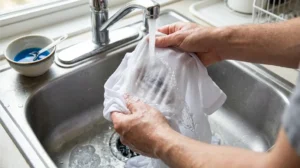
Soak the stained area in cold water for 30 to 60 minutes. Work enzyme detergent into the softened stain and wait 30 minutes. For whites, dab 3% hydrogen peroxide on the mark and let it fizz. Rinse with cold water, then wash on cold. Repeat the cycle for stubborn marks.
Dried stains need patience, not force. Here’s the full process.
- Soak in cold water. Submerge the stained area in a basin of cold water for 30 to 60 minutes. Add a spoonful of enzyme detergent to the soak.
- Work in enzyme detergent. Apply enzyme-based liquid detergent directly to the softened stain. Gently work it in with a soft brush.
- Wait 30 minutes. Give the enzymes time to break down the hardened protein. Keep the fabric damp.
- Rinse with cold water. Flush fully and check the color in good light.
- Peroxide for whites. On white or light fabrics, dab 3% hydrogen peroxide onto any remaining mark. Let it fizz for a few minutes. Patch test colored fabrics first. Wear gloves and keep it away from your eyes.
- Rinse and wash cold. Rinse fully, then machine wash on a cold cycle per the care label.
- Air dry and inspect. Skip the dryer. Repeat the soak-and-treat cycle if a shadow remains. Old stains often need two or three rounds.
Safety note: Work in a ventilated room when using peroxide. Never mix it with vinegar in the same step. Wash your hands after handling, and rinse the fabric well.
Which Method Should You Use for Blood Stains?
Match the method to the stain’s age and your fabric. Cold water and enzyme detergent handle most cases. Salt paste helps fresh stains. Baking soda paste lifts dried marks gently. Peroxide finishes stubborn spots on whites. Oxygen bleach soaks rescue set-in areas. For other tough stains, our guide to stain remover for clothes covers a full range of options.
| Method | Best For | Time Needed | Fabric Note |
|---|---|---|---|
| Cold rinse + enzyme detergent | Fresh stains | 15 minutes | Safe for all washable fabrics |
| Salt paste | Fresh stains, quick pre-treat | 10 minutes | Safe for colors |
| Baking soda paste | Dried stains | 30 to 60 minutes | Safe for colors |
| Hydrogen peroxide dab | Stubborn marks on whites | 5 to 10 minutes | Whites or patch-tested colors |
| Oxygen bleach soak | Set-in stains on whites | 1 to 6 hours | Check the care label first |
| Vinegar soak | Light fresh stains | 15 to 20 minutes | Rinse well after |
Fresh mark on a cotton shirt? Cold water and enzyme detergent usually does the trick. Dried stain on white sheets? Soak, enzyme-treat, then peroxide. StainWired’s blood stain guide recommends the same order: gentle methods first, stronger ones only if needed. I’ve found that advice holds true across dozens of stains I’ve treated.
Match the Method to the Stain’s Severity
Mild: Fresh, Still Damp
Rinse under cold water right away and work in enzyme detergent. Most fresh stains clear in one round. A salt paste also works: mix salt with cold water, apply for 10 minutes, then rinse.
Moderate: Dried for Hours or Days
Soak in cold water for 30 to 60 minutes first. Then use the enzyme treatment above. A baking soda paste left for 30 to 60 minutes helps lift the rest. Expect two rounds.
How to Remove Blood Stains from Clothes After Heat Drying (Severe)
Run the full dried-stain process. For whites, add an oxygen bleach soak of one to six hours after the enzyme step. Repeat up to three times. Heat-set protein stains are the hardest case and may only fade to a faint shadow. I’ve only seen a handful of these that couldn’t be fully saved—most improve dramatically with patience.
Does Fabric Change the Treatment?
Yes. Cotton and sturdy blends handle every method in this guide. Synthetics need gentler handling and cool water. Silk, wool, and dry-clean-only garments need a professional cleaner. Enzyme products don’t suit silk or wool, so check the care label first.
Cotton and Cotton Blends
The most forgiving fabric for this stain. Use the full fresh or dried method above. Peroxide and oxygen bleach are safe on white cotton. Wash whites at the warmest setting the label allows after pre-treating. For a complete stain-fighting toolkit, see our guide to spot remover for clothes.
Polyester and Other Synthetics
Blot fast and rinse with cold water. Enzyme detergent works well here. Skip the peroxide unless you patch test first, since some dyes react. Keep water cool, not warm.
Silk, Wool, and Dry-Clean-Only
Don’t home-treat these with peroxide, bleach, or enzyme products. Blot gently with a damp cloth. Take the garment to a dry cleaner and point out the stain. Home treatments can damage these fibers.

What NOT to Do with Blood Stains
These mistakes set the stain permanently. Avoid every one of them.
- Using hot or warm water. Heat coagulates the protein and locks it into fibers. Cold water only, at every stage.
- Rubbing the stain. Rubbing spreads it wider and pushes protein deeper. Blot and lift instead.
- Putting it in the dryer. Dryer heat sets any remaining trace for good. Air dry and inspect first.
- Using bar soap with hot water. The classic mistake. Soap plus heat cooks the protein in. Cold water with enzyme detergent is the fix.
- Mixing peroxide with vinegar. Used together in one step, they can damage fabric. One treatment at a time, with a rinse between.
- Skipping the patch test. Peroxide can lighten dyes. Test a hidden seam on any colored garment first.
- Waiting days to treat it. Dried protein bonds harder over time. Even a quick cold soak now saves real work later.
How Do You Stop Blood Stains from Setting?
Act within minutes when you can. Rinse with cold water at once, even if you can’t do the full treatment yet. Keep enzyme detergent where you treat stains. Never let a stained garment sit in a warm hamper. Cold and quick is the whole strategy. If blood reaches your mattress or carpet, our guides on how to clean a mattress and how to remove stains from carpet have you covered.
- Rinse immediately. Cold water within minutes prevents most stains from bonding.
- Soak if you can’t treat now. A basin of cold water holds the stain until you’re ready.
- Keep enzyme detergent handy. It handles protein stains of all kinds.
- Check before drying. Inspect every load in daylight before it hits the dryer.
- Wash stained items separately. This stops any transfer to other clothes in the wash.
- Stock a stain kit. Enzyme detergent, peroxide, and baking soda cover most clothing stains.
Key Takeaways
- Cold water only. Heat coagulates protein and sets the stain.
- Enzymes break down protein. Use enzyme detergent as your first treatment.
- Peroxide is for whites. It fades the red through oxidation. Patch test colors.
- Soak dried stains first. Rehydrate for 30 to 60 minutes before treating.
- Skip the dryer until the stain is fully gone.
- Match the method to the fabric. Send silk and wool to a professional.

Before you start
Gather these before you touch the stain. Put on rubber gloves first as a basic hygiene habit.
0 of 10 ready · Ticks are for this visit only and aren't saved.
Never use hot or warm water on blood stains. Heat denatures blood protein, causing it to coagulate and bond permanently to fabric fibers. Also avoid chlorine bleach on colored garments, as it strips dye and damages fibers. Always start with cold water and use enzyme-based detergent. Skip the dryer until the stain is completely gone.
Common questions
How do you get fresh blood out of clothes?
Hold the fabric under cold running water with the stained side down. Blot gently with a clean cloth. Work enzyme-based liquid detergent into the stain and wait 10 to 15 minutes. Rinse with cold water and wash on a cold cycle. Air dry and check in daylight. Most fresh stains clear fully with this routine. Speed makes the biggest difference.
How do you get dried blood out of clothes?
Soak the stained area in cold water for 30 to 60 minutes to rehydrate the protein. Work enzyme detergent into the softened stain and wait 30 minutes. Rinse with cold water. For whites, dab 3% hydrogen peroxide on any remaining mark and let it fizz. Rinse, wash on cold, and air dry. Dried stains often need two or three full rounds.
Does hydrogen peroxide remove blood stains?
Yes, especially on white and light fabrics. The 3% household solution oxidizes the iron in hemoglobin, which fades the red color. You'll see it fizz on contact. Apply it after a cold rinse, wait a few minutes, then rinse cold. It can lighten dyes, so patch test colored fabrics first. Wear gloves and keep it away from your eyes.
Will hot water set a blood stain?
Yes. Heat denatures blood protein, causing it to coagulate and bond firmly to fibers. Once set by heat, the stain resists nearly every treatment. Always use cold water for rinsing, soaking, and washing. Never put a stained garment in the dryer before the mark is fully gone. This cold-only rule is the single most important part of blood stain removal.
Does cold water remove blood stains?
Cold water alone often removes fresh stains, since fresh blood protein is still water-soluble. Hold the fabric under cold running water with the stained side down. For dried stains, cold water won't finish the job alone. Soaking for 30 to 60 minutes loosens the protein. Always follow with enzyme detergent for full removal.
Can you remove blood stains from white clothes?
Yes, whites respond best to treatment. Start with the cold rinse and enzyme detergent routine. For remaining marks, dab 3% hydrogen peroxide directly on the stain and let it fizz. Rinse cold and wash with oxygen-based bleach. Air dry and inspect. Repeat if needed. White cotton usually recovers fully, even from dried stains.
How do you remove blood stains from colored clothes?
Stick to color-safe methods. Rinse with cold water and treat with enzyme-based detergent. Try a salt paste for fresh marks or a baking soda paste for dried ones. Skip hydrogen peroxide unless you patch test a hidden seam first, since it can lighten dyes. Never use chlorine bleach on colors. Wash on cold and air dry.
Does baking soda remove dried blood?
Baking soda helps lift dried blood gently. Mix 3 tablespoons (45 ml) of baking soda with 1 tablespoon (15 ml) of cold water into a paste. Spread it over the stain and wait 30 to 60 minutes. The mild paste loosens the hardened protein. Rinse with cold water and wash. It is safe for colored fabrics. Stubborn marks may need the enzyme step too.
Can blood stains be removed after washing and drying?
Sometimes, but heat makes it much harder. A hot wash or dryer coagulates the protein and bonds it to fibers. Soak the garment in cold water with enzyme detergent for one hour. Try the peroxide dab on whites. Repeat two or three times. Some heat-set stains only fade to a faint shadow. If the garment matters, a dry cleaner may help.
Why won't my blood stain come out?
The most common cause is heat. A warm wash or dryer coagulates the protein and locks it in. Skipping the soak is another cause, since dried protein resists treatment. Rubbing instead of blotting also drives it deeper. Try the full enzyme soak followed by peroxide on whites, with two or three rounds. Some heat-set marks only fade, never vanish.
Was this article useful?